
Òwónrín Ìròsùn is a mixed Odù in Ifá’s 256-part corpus. Òwónrín Ìrosùn’s selected narratives confront two failures of religious service: deliberate fraud and unbounded self-sacrifice. A group of practitioners damages trust by deceiving a population, then seeks rescue through elder and ancestral mediation. Awó Itaná helps everyone regardless of payment but repeatedly ignores warnings to attend to his own limits. The pairing refuses to equate good intention with sufficient judgment, while distinguishing a helper’s vulnerability from a practitioner’s exploitation of others.
A question to carry through the study: What limit protects the people you help as well as your ability to continue helping?
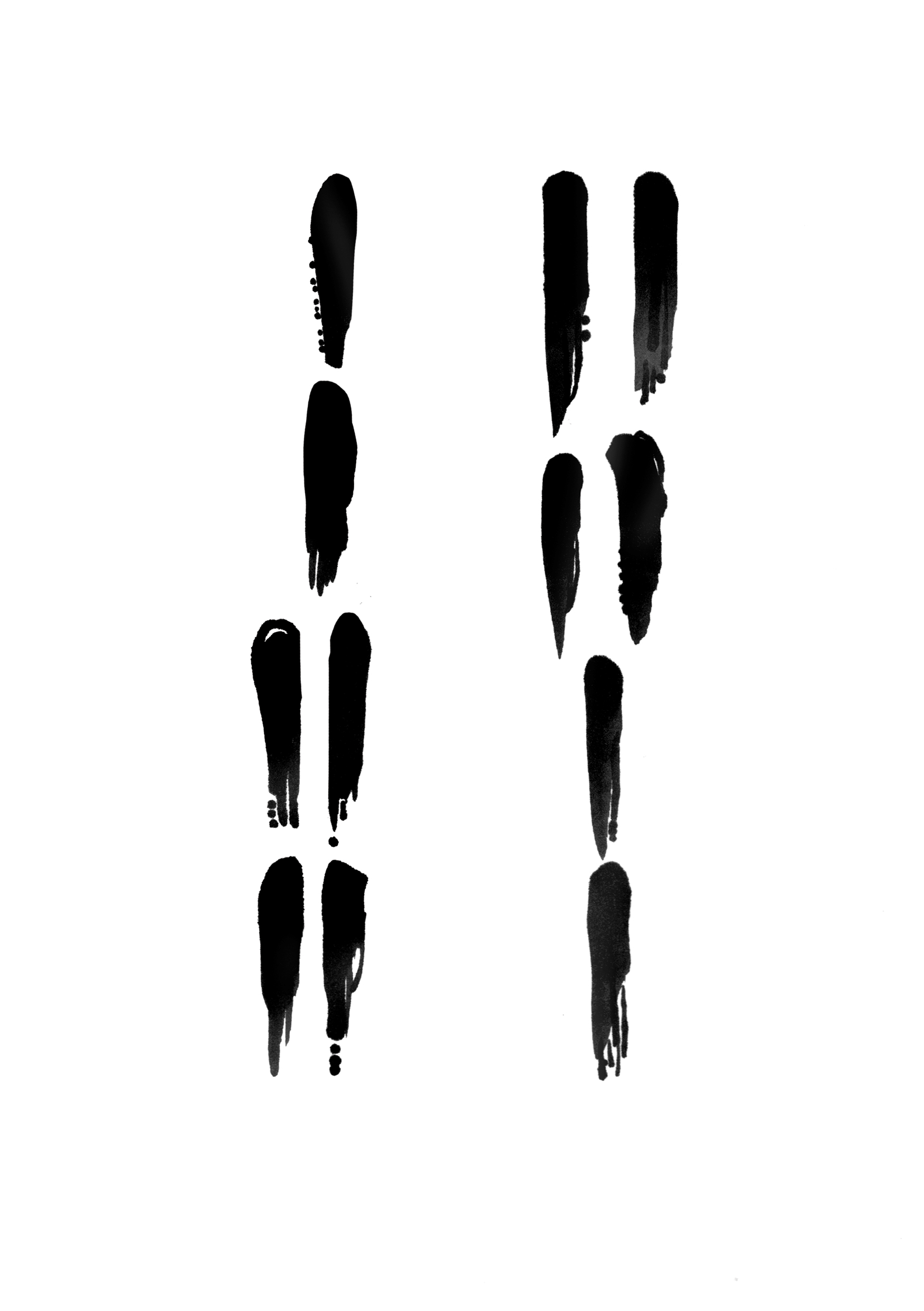
This Academy reads the right column first, then the left. Each row carries a single or double mark.
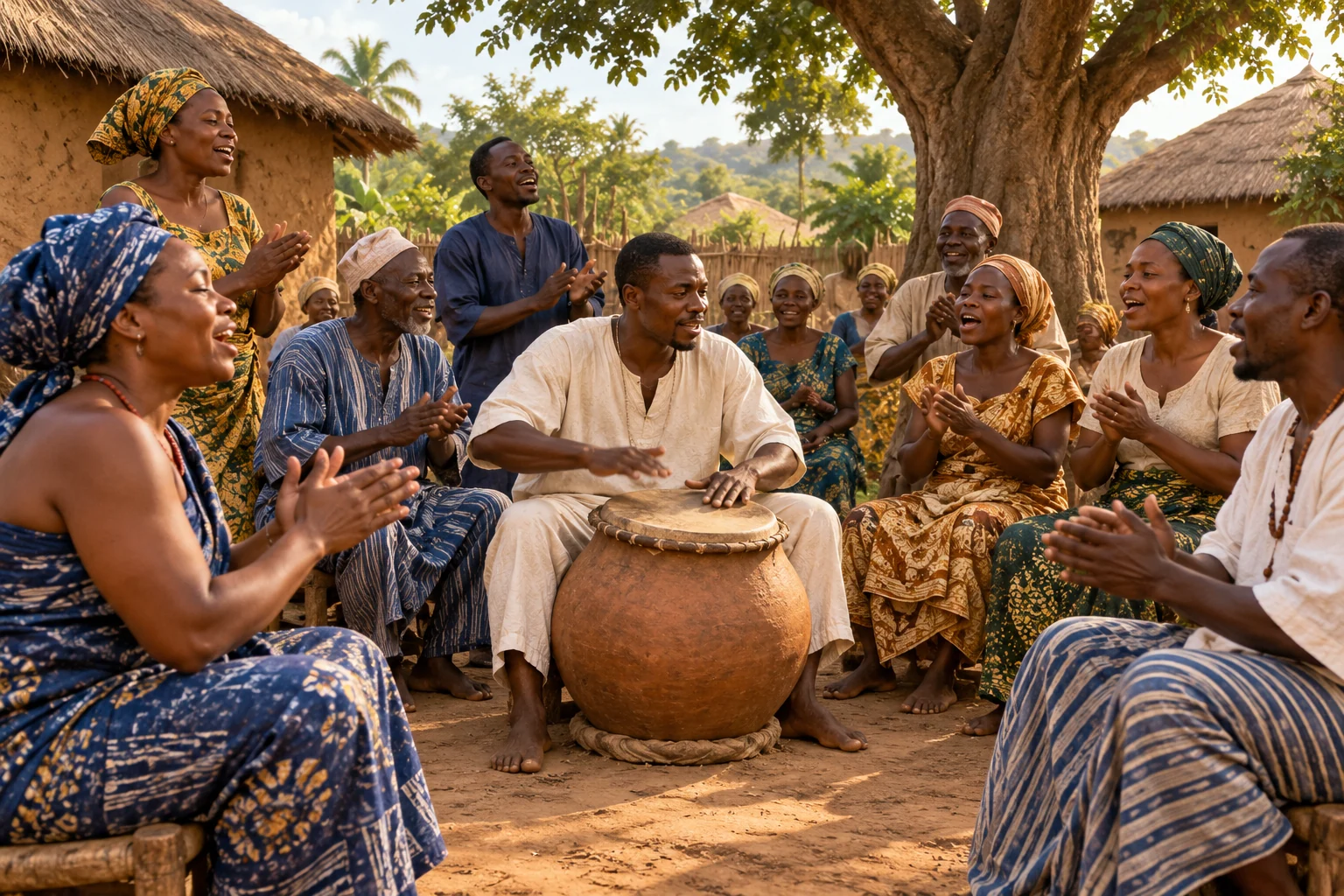
Where this Odù belongs
Òwónrín Ìròsùn belongs to the Òwónrín family in this Academy’s study sequence. It is a mixed Odù, distinct from Ìròsùn Òwónrín. The order matters. Its teaching is approached through its own narratives, rather than by adding two general descriptions of the principal signs together.
Key Òrìṣà and sacred relationships
The figures below are selected for their roles in the accounts discussed here. They offer connected reading paths through the tradition.
-
Baba Ẹ̀gún. Agba Egun mediates in the fraud account, while Awó Ikuku appears as Itaná’s deceased twin. These distinct ancestral relationships are retained instead of treated as one undifferentiated spirit.
-
Ṣàngó. Ṣàngó’s light calls ancestral figures into the world of Itaná’s story. His involvement frames the twin’s visits within a specific religious account of communication and care.
-
Yewá. Yewá is named in the deceased twin’s account of the realm and protection associated with him. The source varies spellings and place names, so the relationship is kept narrow.
-
Ọ̀rúnmìlà. Òrúnmìlà’s consultation is the boundary Itaná repeatedly bypasses. The story locates unchecked helping inside a religious discipline rather than treating compassion alone as sufficient authorization for every intervention.
Key myths and their meanings
Fraud makes the whole institution less trusted
Practitioners separated from their elder boast about knowledge while deceiving the people of their land. The public begins losing confidence in Ifá itself. Trying to recover control, the group commits a further wrong against Olofin’s messenger and then cannot complete what follows. They seek an elder, his godchild, and finally Olofin. An ancestral medium provides mediation, but their misuse of Ifá is openly condemned.
The harm extends beyond individual clients because the practitioners’ conduct changes how a whole tradition is perceived. Later assistance does not erase that public responsibility. The account can support scrutiny of professional fraud without endorsing the idea that disagreement with an elder automatically proves wrongdoing. Its actual narrated basis is deception and abuse, not mere institutional independence or a competing interpretation.
Narrative setting: Spanish Cuban-style account.
The helper who repeatedly neglects his limits
Itaná assists people whether they can pay or not, but acts without the consultation his tradition requires and becomes overwhelmed. His deceased twin Ikuku sees his suffering and offers guidance. Itaná improves, then resumes the same unbounded pattern. During another intervention the twin warns him to attend to himself first. Itaná continues, dies within the story, and leaves a successor who must address the unfinished responsibilities.
The narrative’s severe ending should not be used to blame exhausted helpers or explain an actual death. Its useful distinction is between generosity and an inability to assess whether one can safely undertake a particular task. The successor also matters: work does not end when a helper becomes unable to continue. Sustainable care includes limits, consultation, and a clear account of who inherits unresolved obligations.
Narrative setting: Spanish account of Awó Itaná.
Divine gifts are mistaken for danger until Ògún recalls a neglected relation
Before earthly arrival, Òwónrín is warned about irritability and overreliance on friends’ advice. He establishes relations with several powers, including Ògún, who agrees to accompany him. On earth, divine objects appear at his doorway while he is absent. Friends call them dangerous, so he throws them away and later abandons the dwelling when they return. In hardship, his guardian sends him to a threshold consultation that identifies the rejected gifts and neglected Ògún relation. After his response, Ògún recalls him to the old house. The gifts remain, his inspired conduct becomes intelligible to neighbors, and other priests help establish his recognized work.
The story reverses the initial interpretation of the objects without treating their spiritual significance as imaginary. The gifts really come from the divine visitor within the account, and Ògún’s relation really accompanies the protagonist from heaven. What fails is recognition, intensified by the advice of peers. The later public shift is equally important: neighbors first read his behavior as disorder, then recognize meaningful religious proclamation and help support a priestly role. That sequence should not be converted into a claim that every unusual behavior is possession or that medical care and religious understanding are mutually exclusive.
Compared with the earlier fraudulent practitioners and the overextended helper, this account distinguishes a neglected genuine calling from false authority or uncontrolled service. Contemporary interpretation can examine how a community learns to recognize what it has misread, while preserving the witness’s specific divine gifts and refusing to diagnose another person by resemblance to the protagonist’s crisis.
Narrative witness and setting: Cromwell Osamaro, Òwónrín’s earthly recognition as a priest
Olukoro’s protective drum changes the sound of communal life
The people of Olukoro live under repeated attacks in which husbands and wives are taken captive. They call a diviner to address the fear of another assault. After consultation and a completed response, a pot becomes a drum, and they are told to sound it periodically in a relation through which Èṣù will avert danger. The community follows the counsel. After a sustained period of peace, men and women gather to sing and dance with the drum. The account contrasts their earlier daily dread with a shared celebration that publicly remembers the consultation and the relief they have received.
The drum belongs to an ongoing sacred relation rather than functioning only as a warning device or military technology. The source credits Èṣù with averting danger when the community follows counsel. Sound also changes social meaning across the episode: people who lived in anticipation of capture eventually use the same instrument to celebrate safety together. Compared with the earlier boundless helper’s death, this is not one practitioner absorbing every demand without limit. A community participates in a recurring responsibility and later gives collective acknowledgment.
Contemporary interpretation can examine how fear narrows communal life and how a shared practice may preserve memory after a crisis. It should not claim that music alone prevents war or that a drum is a substitute for concrete protection. The narrative’s peace is a sacred outcome in this witness, not a verified historical measurement or a promise that communities who repeat the form will remain free from attack.
Narrative witness and setting: Cromwell Osamaro, a settlement’s response to repeated raids
What was born in this Odù
“Born” can name an explicit traditional origin association or what emerges through a story: a capacity, relationship, practice or order of life. Interpretations drawn from a narrative are labelled below, so their basis remains clear.
Candlelight
Selected traditional source association.
The explicit origin list associates the sign with lighting candles. In the selected twin account, light accompanies communication and recognition, but the association is not expanded into a universal procedure or claim of efficacy.
Consultation with spirits
Selected traditional source association.
The list names consultations with spirits, and the fraud account includes a medium’s ancestral mediation. This is a local religious relationship, not proof that any claimed message is valid or an instruction to diagnose another person through it.
Correlations to life dimensions
These questions bring the selected stories into contemporary life. They are interpretive invitations for study.
Work and resources
The fraudulent group tries to restore income by recovering control over clients rather than repairing the basis of trust. The account exposes the danger of making a profession’s survival depend on renewed dependence instead of intelligible, accountable service.
Reflect: What repair would address the reason trust was lost?
Relationships and family
Itaná’s twin seeks to protect a brother who cannot stop attending to others. The relationship introduces someone able to see the helper’s need, though the source’s final explanation remains a particular religious narrative rather than an account of ordinary bereavement.
Reflect: Who is allowed to tell you that you need care first?
Character and inner life
Good intention repeatedly brings Itaná into work he has been warned not to undertake. The story can prompt examination of the wish to be indispensable, without denying compassion or assuming that every limit is an excuse to avoid responsibility.
Reflect: What makes saying no feel harder than overextending yourself?
Community and responsibility
Itaná’s successor receives an unfinished obligation. Communities should know what happens when a principal helper cannot continue, so dependence on one generous person does not leave clients and family members without a supported route forward.
Reflect: Who can carry the work if the usual helper stops?
A deeper reading of the sacred relationships
A calling includes relations that precede public recognition
Òwónrín’s priestly role does not begin when neighbors finally applaud him. The account establishes divine gifts, a guardian, and Ògún’s agreement before public understanding catches up. His response renews those relations rather than inventing them to obtain status. Olukoro’s drum similarly remains linked to consultation and Èṣù, even when it later becomes the center of celebration. This religious logic explains why the objects and actions matter beyond their visible social effects. Contemporary interpretation may discuss recognition and communal support, but should not make those effects the only reality of the stories or infer a hidden calling from someone’s present distress.
Advice can misclassify what it hopes to explain
The friends repeatedly interpret divine gifts as an attack, and their explanation makes the protagonist abandon both objects and dwelling. Later, the community’s reading of his inspired behavior changes when its content becomes recognizable. The earlier fraudulent-practitioner story supplies a different danger, where religious standing itself conceals harmful conduct. Together these selections resist the assumption that either skepticism or acceptance is always sufficient. Contemporary interpretation can ask what supports an interpretation and how it can be corrected. The source does not authorize bypassing ordinary care or declaring a friend malicious merely because advice was mistaken. Its precise issue is consequential misrecognition within a narrated sacred relation.
Collective relief requires a public memory
Olukoro’s later singing does more than announce that people are no longer afraid. It recalls the earlier threat, the consultation, and the response through which peace became possible in the account. The protagonist’s return to his old doorway also restores memory: gifts once rejected are recognized and thanks are given. Both scenes make acknowledgment part of the changed condition. Contemporary comparison can ask what a community remembers after danger recedes and whose contribution becomes visible. It should not turn gratitude into an obligation to ignore unresolved harm. The narratives describe particular recoveries, and their celebratory endings do not establish that every participant’s experience of danger has been exhausted.
Questions that deepen the study
Does the protagonist’s unusual behavior establish a diagnosis of possession for readers?
It establishes how this witness narrates one divinely connected protagonist’s recognition. His heavenly preparation, gifts, neglected Ògún relation, guardian’s intervention, and later priestly work are all part of that account. A resemblance in outward behavior does not supply those particulars in another person’s life. Contemporary interpretation can explore the limits of social judgment while avoiding both dismissal of the source’s spiritual world and an unsupported diagnosis of a living person. The religious meaning should be explained within the narrative, with ordinary care left intact rather than framed as an opponent of every spiritual understanding.
Why is the Olukoro drum more than a musical symbol?
The account links its making and periodic sounding to a completed response and Èṣù’s protection. The instrument therefore participates in a sacred relation with consequences for the settlement. Its later music also gathers people in acknowledgment of a peace they contrast with repeated capture and fear. Contemporary reflection can discuss how shared sound carries memory and coordination, but those social effects do not replace the religious explanation. Nor does the story supply proof that an instrument can universally avert war. The source narrates a particular settlement’s relief, and an article should retain that scope while making the actual claim intelligible.
How do these accounts differ from the earlier overextended helper?
The earlier helper’s difficulty concerns service that does not stop when warnings appear. The new protagonist must recover a neglected relation and accept a role others initially misread. Olukoro then places responsibility across a community rather than only on one person. These differences matter: refusing every demand, accepting every demand, and recognizing a particular calling are not the same response. Contemporary interpretation can ask where responsibility actually belongs and what form of support makes it sustainable. Within the new witness, however, the answer also includes Ògún, a guardian, divination, and Èṣù. Their agency should remain visible rather than becoming a modern vocabulary of boundaries alone.
What the four narratives reveal together
The new Òwónrín Ìrosùn accounts place religious recognition beside collective protection. A protagonist rejects divine gifts because peers misread them, then returns through a guardian’s warning and Ògún’s intervention to a calling the community learns to recognize. Olukoro receives a drum through consultation and later uses its sound to remember relief from capture and fear. The earlier false authority and exhausted helper stories add necessary contrasts: a claim to religious standing can be harmful, and service can exceed a person’s limits.
No single rule about accepting or rejecting spiritual claims can replace those differences. The witness instead makes specific relations consequential. Contemporary interpretation can discuss discernment, shared responsibility, and public memory while avoiding a diagnosis of unusual behavior, an accusation against a reader’s advisers, or a promise that music and sacred response universally prevent violence.
Living with this Odù
A continuing life or initiatory relationship
A received relationship with Òwónrín Ìròsùn can sustain a distinction between serving people and making one’s own judgment endlessly available. Itaná’s generosity has real value, yet his repeated neglect of the consultation his tradition requires leaves responsibilities that a successor must carry. The fraudulent practitioners supply another problem: claimed knowledge used deceptively damages public trust in Ifá beyond the individuals involved. Limits and integrity concern the life of an institution as well as one person’s stamina.
Òwónrín’s rejected gifts add a relation in which friends’ advice misidentifies what has appeared. The guardian and Ògún help restore a specific sacred history, while other priests participate in recognized work. Olukoro’s protective drum then makes communal relief a remembered relation after repeated captivity and fear. Across a life, reflection may concern overextension, dishonest claims, whose interpretation is trusted, or how a community remembers protection once ordinary life resumes. The person is not destined for exhaustion or conflict. The sign invites service that remains accountable and situated, while preserving Itaná’s deceased twin, the ancestral medium, Yewá, Ògún, and Èṣù as distinct presences in their witnesses.
A particular consultation and its question
In consultation, Òwónrín Ìròsùn helps distinguish a helper’s limit from misuse of an office. Itaná acts beyond the guidance his tradition requires; the separated practitioners instead boast and deceive. A client who is tired cannot therefore be assumed fraudulent, and a person’s generosity cannot by itself establish the integrity of their claims. The actual question must clarify which responsibility is present.
The doorway gifts add the possibility that an interpretation supplied by trusted friends has obscured an actual sacred relation. That does not authorize declaring unknown objects divine or another person’s caution spiritually wrong. The witness’s guardian, threshold consultation, and Ògún remain its own religious mechanism. Olukoro’s drum adds a collective timescale, where protection is remembered through shared sound after a period of relief. A practitioner may examine whose knowledge is guiding the client, what support an intervention requires, and what happens to communal acknowledgment after immediate danger recedes. These are situated distinctions rather than a diagnosis or prediction. A present result cannot forecast Itaná’s death, identify a familial spirit, or establish a permanent vocation to serve without limit merely because the client recognizes the stories.
Constructive and adverse possibilities
Constructive unfolding may include service governed by accountable discernment, specific spiritual relations recognized, and communal relief remembered after fear loosens its hold. Olukoro’s shared celebration has a history in consultation and Èṣù’s protection, not simply in the acoustics of a drum.
Adverse unfolding can involve generosity making self-attention seem illegitimate, deceptive claims discrediting a wider institution, or dependence on advice that never examines the relation behind an appearance. Itaná’s narrated death does not justify predicting an outcome for helpers or describing illness as deserved. The rejected gifts also do not make every alarming object a blessing. These contrasts ask how service, interpretation, and remembrance remain connected. They preserve the named ancestral and spiritist vocabulary without claiming scientific validation, and they do not determine a real consultation’s condition automatically from the sign.
An illustrative situation in everyday life
Imagine a hypothetical mutual-aid organizer who accepts every request, stops consulting the experienced group that once supported decisions, and leaves no clear account of unfinished commitments. When a problem occurs, a less careful volunteer promises solutions beyond his knowledge to protect the group’s reputation. Itaná and the fraudulent practitioners distinguish overextension from dishonest authority. Olukoro’s remembered relief adds the value of communal acknowledgment after a crisis instead of immediate return to limitless demand. The organizer may feel that setting a limit betrays the people served. Shared review and realistic commitments could preserve service more responsibly. This example predicts no collapse or death and identifies no spiritual cause; it examines what the actual arrangement asks one person and an institution to carry.
Sources and reading context
The first two narrative witnesses
These are Spanish Cuban-style accounts with distinct spiritist and ancestral vocabulary. Named ancestors and Yewá remain separate. Disputed place spellings are not converted into historical geography, and the final death is not presented as a prediction or a justified punishment.
Narrative motifs are summarized independently. The life-dimension reflections are contemporary interpretation. How these reference studies are built explains the wider source approach and the distinction between a reference article and personal divination.
Additional named witnesses
- Cromwell Osamaro. The explicit heading supports the divine-gift and Ògún calling narrative and the later Olukoro drum account.
The source uses translated diagnostic language for behavior it later recognizes religiously; that is not applied to living people. The peace interval is a narrated outcome, not independently verified history. No drum-making or protective procedure is supplied.
Bibliographic identification
- C. Osamaro Ibie. Ifism: The Complete Work of Orunmila. Lagos; multivolume publication beginning 1986. Library catalogue record. Related bibliographic record for the named narrative witness. Exact volume, edition and page of the transmitted account have not been independently matched.
Read the source method and wider scholarly context.
The catalogue links identify published works and their authors. They are separate from proof of an individual episode’s wording or attribution. Contemporary comparisons and the synthesis above are editorial interpretation. The author’s books and Academy companions below provide further study; their sales links are separate from the source references.