
Òwónrín Òsá is a mixed Odù in Ifá’s 256-part corpus. Òwónrín Òsá’s selected accounts connect forgotten contributions with dependence hidden by apparent success. Dog and cat cooperate to recover a household’s lost ring, but cat arrives first and lets dog receive punishment instead of credit. A prosperous mule carrier neglects religious work and later depends on Elegbá to return home after losing his bearings. Both narratives ask what remains invisible when the final arrival or the growing business is treated as the whole story.
A question to carry through the study: Whose effort disappears when only the final result is rewarded?
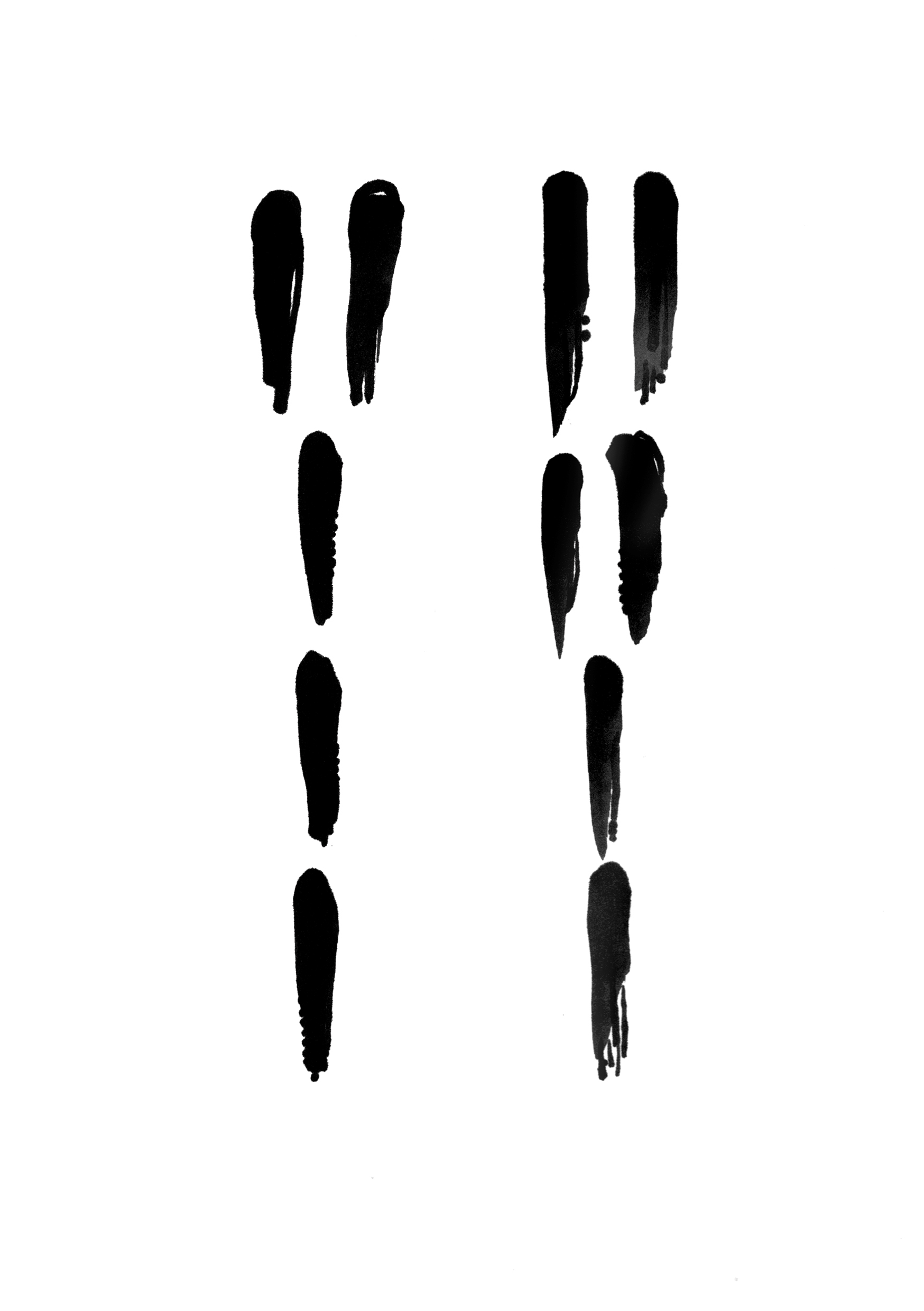
This Academy reads the right column first, then the left. Each row carries a single or double mark.

Where this Odù belongs
Òwónrín Òsá belongs to the Òwónrín family in this Academy’s study sequence. It is a mixed Odù, distinct from Òsá Òwónrín. The order matters. Its teaching is approached through its own narratives, rather than by adding two general descriptions of the principal signs together.
Key Òrìṣà and sacred relationships
The figures below are selected for their roles in the accounts discussed here. They offer connected reading paths through the tradition.
-
Ọ̀rúnmìlà. Òrúnmìlà repeatedly advises the carrier to consider a future beyond strenuous transport work, then receives him after his crisis and helps him change direction within the story.
-
Èṣù. Elegbá guides the mule train home when the carrier cannot remember the route. His intervention makes an established working system temporarily capable of supporting its own operator.
-
Baba Ẹ̀gún. A deceased former ruler of carriers appears in the transport account, resenting another’s greater success. This is a particular ancestral antagonist, not a description of ancestors generally.
Key myths and their meanings
The dog who carried the unacknowledged work
A household sells a ring without knowing that its prosperity depends on it. Dog and cat decide to recover it, using a mouse’s help to reach the stored object. Dog carries cat across the river in both directions, but cat travels faster on land and arrives first with the ring. The household rewards cat and beats dog for supposedly doing nothing; cat remains silent, and hostility begins.
The final deliverer appears to have accomplished the entire task because earlier labor is absent from the observers’ view. Cat’s silence converts a misunderstanding into an advantage, while the owners punish before asking. The mouse’s coerced participation also prevents a wholly innocent teamwork story. The account can illuminate attribution without accepting violence against dog or the exploitation of a smaller helper as ordinary necessities.
Narrative setting: Spanish Cuban-style ring fable.
The carrier whose business outgrows his preparation
An Awó devotes himself to transporting goods with mule trains despite Òrúnmìlà’s warnings to prepare for a time when he cannot sustain that labor. His business expands. In another region he encounters a resentful deceased carrier and loses his bearings. Elegbá guides the animals home. After consultation, the man gives up the transport business, serves the community through Ifá, and keeps the panniers as a reminder for descendants.
The trade’s growth does not answer the question of its operator’s future capacity. The narrative’s supernatural and memory-loss elements remain contextual, not medical explanation. Its useful concern is resilience when a livelihood depends on one person’s continuous physical and mental availability. The retained panniers make the earlier work part of memory rather than treating a changed vocation as grounds to despise the labor that came before.
Narrative setting: Spanish mule-train account.
A vulnerable speaker challenges the Creator’s account of the world
Òwónrín comes to earth after completing only the preparations he can afford and suffers greatly. At a divine assembly, God rebukes the powers for allowing falsehood to prevail and proposes withdrawing Truth. Òwónrín challenges the rebuke, comparing the world to a house whose defective roof remains the builder’s responsibility. Others try to silence him and interpret his speech as madness. God prevents their attack and orders an inquiry. At the next assembly, the divinities confirm his soundness, and God accepts the force of his criticism. Òwónrín is thereafter required at divine meetings, marking a change in his earthly standing.
This is a theological dispute inside the witness’s sacred world, not a declaration that religious belief has been disproved. The speaker addresses the Creator as the maker whose responsibility exceeds that of the house’s occupants. God’s protection of the challenge and acceptance of its force are therefore central to the account. The narrative also retains a severe conclusion about Truth’s withdrawal; a summary should not smooth it into an uncomplicated triumph of optimism. Compared with the earlier dog and cat dispute over credit, the new story raises responsibility to a cosmic scale: who can be blamed for conditions built into the world?
Contemporary interpretation can examine whether distress causes a truthful objection to be dismissed. It must not infer that unusual speech or mental suffering guarantees insight, and the compilation’s diagnostic language should not be applied to living people. The episode preserves one witness’s unusually bold account of divine accountability without establishing a uniform Yorùbá theodicy.
Narrative witness and setting: Cromwell Osamaro, the divine assembly and the withdrawal of Truth
Borida’s feet carry his hidden royal identity through captivity
Prince Borida is captured in war and sold into successive royal households. Assigned to attend a ruler’s head, he first acknowledges his own feet and head, asking that his feet take him where his head belongs. Rulers react by selling him onward. In Benin, he is enclosed in a chest and cast into the water, but Èṣù protects him. Otun’s succession divination has announced a ruler arriving from the sea. The chest is recovered, an elder recognizes the missing prince, and Borida is crowned. He later gathers the rulers he served and reveals the identity they had not known.
Borida’s act maintains a relation to his own destiny while performing an imposed service. Head and feet are not merely decorative symbols: the prayer links rightful destination with the means of reaching it, and Èṣù’s protection enables the passage through what is intended to end his life. The rulers’ failure to know his identity does not create his worth, though the royal ending makes that hidden status decisive to recognition. Contemporary interpretation should acknowledge that limitation rather than imply that enslavement is wrong only when the captive is secretly a prince.
Compared with the earlier carrier’s changed vocation, this account concerns a return to a displaced identity instead of leaving an old role behind. It also ends with celebration among former masters, without narrating their accountability for captivity and attempted killing. Those unresolved costs should remain visible alongside the witness’s theology of Orí, survival, and a destination not erased by present subordination.
Narrative witness and setting: Cromwell Osamaro, the enslaved prince’s return to Otun
What was born in this Odù
“Born” can name an explicit traditional origin association or what emerges through a story: a capacity, relationship, practice or order of life. Interpretations drawn from a narrative are labelled below, so their basis remains clear.
Nervous system
Selected traditional source association.
The explicit born list names the nervous system. This is a sacred anatomical association in the source, not an account of physiology, a diagnostic category, or evidence that the sign causes memory problems or neurological conditions.
Credit for the whole journey
Contemporary interpretation from the selected myth.
As a contemporary interpretation, dog’s unacknowledged crossings suggest the emergence of shared credit beyond the final delivery. This reading is grounded in the ring fable and is not presented as a traditional born-list association.
Correlations to life dimensions
These questions bring the selected stories into contemporary life. They are interpretive invitations for study.
Work and resources
Dog’s contribution is indispensable at the river but invisible at the doorway. Reward based only on the final handover can erase planning, transport, and support, making a complete account of the work essential to fair distribution.
Reflect: What work happened before the result became visible?
Relationships and family
Cat could correct the household’s false account but benefits by remaining silent. The story asks when accepting praise becomes participation in another person’s mistreatment, especially where the praised person knows the missing facts. The dog’s silence is not the only relevant silence.
Reflect: What correction do you owe when praise rests on an omission?
Character and inner life
The mule carrier treats continued expansion as sufficient proof of security. The account can prompt reflection on limits without condemning ambition, asking whether growth has also increased dependence on an arrangement that cannot continue unchanged forever.
Reflect: What future limit has present success made easy to ignore?
Community and responsibility
The carrier keeps the panniers for descendants after changing work. This preserves a material account of earlier labor and its lessons, allowing a community to honor a previous livelihood while learning why a different arrangement became necessary.
Reflect: What object could help others remember the work behind a change?
A deeper reading of the sacred relationships
Orí and divine responsibility appear at different scales
Borida’s head and feet remain joined in his prayer for a rightful destination, while Èṣù protects the passage that carries him there. The divine-assembly episode asks a larger question about the Creator’s responsibility for the conditions of earthly life. Both belong to an internally religious inquiry: one person’s destiny and the world’s order are addressed through powers the witness treats as real. Contemporary explanation can distinguish these scales without reducing Orí to ambition or God to a metaphor for government. Neither story authorizes an article to reveal a reader’s destiny or claim that every hardship has a visible place in a recoverable divine plan.
The right to object is not limited to the secure
The assembly’s challenger has suffered and is regarded as unstable, yet the Creator protects his speech and requires the others to assess it. Borida also acts from a subordinated position when he acknowledges his own head before serving another’s. Their positions do not make every claim correct, but neither should vulnerability make a claim inaudible. Contemporary interpretation can ask whether status or apparent distress is replacing attention to what is actually said. The source’s diagnostic vocabulary requires care: it belongs to the narrated dispute and is not a method for judging living people. The theological challenge succeeds through a specific exchange, not through a general sanctification of suffering.
Recognition can arrive without complete accountability
Borida’s former masters rejoice when they discover that he is now a king, but the account does not narrate reparation for his sale or attempted killing. The assembly’s speaker gains a required place at meetings, yet Truth’s withdrawal remains a severe condition of the world. These endings supply recognition without resolving every cost. The earlier dog-and-cat episode also warns that credit and burden may be distributed unjustly. Contemporary comparison can ask what a celebratory ending leaves untouched. Preserving those limits does not deny the witness’s sacred success; it prevents success from being expanded into a claim that all injuries and contradictions have disappeared.
Questions that deepen the study
Is the challenge to God an argument against religion?
Within this witness it is addressed to God at a divine assembly, and God protects the speaker and accepts the force of the objection. The account therefore stages a religious argument about creation and responsibility rather than placing the speaker outside the sacred world. It also retains a troubling account of Truth’s withdrawal, so the result should not be simplified into an easy reconciliation. Contemporary interpretation may examine accountability and the dismissal of vulnerable speech. The story does not establish the theology of every Yorùbá community, nor does it make psychological distress a reliable sign that someone has special access to divine truth.
Why does Borida attend to his feet before another ruler’s head?
His prayer connects the feet that carry him with the place his own head is meant to reach. The act preserves a claim to destiny while he is forced to serve someone else’s sacred responsibility. The rulers interpret that priority as an offense, and repeated sale follows. Within the witness, the later return vindicates the relation rather than merely an ambition to obtain status. Contemporary reflection can discuss the survival of selfhood under coercion while acknowledging that Borida’s royal birth shapes the ending. It should not make hidden nobility a condition of dignity or turn the sequence into a promise that every oppressed person will receive a crown.
Does the ending hold the former masters responsible?
The account gathers them at Borida’s celebration and reveals who he was, but does not narrate compensation or punishment for what they did. That absence is a real limit, even though the prince’s survival and coronation are favorable outcomes within the witness. Contemporary interpretation can distinguish recognition from reparation and ask what remains unresolved after an extraordinary return. The source should not be supplied with an invented reconciliation process to make the ending complete. Nor should its celebration be taken as endorsement of enslavement. The religious account concerns a protected passage toward a known destiny, while the social injuries remain part of its history.
What the four narratives reveal together
The added Òwónrín Òsá narratives address responsibility under conditions that appear to deny a vulnerable person’s standing. One speaker challenges the Creator’s rebuke by asking who built the world; another attends to his own head and feet while enslaved in royal service. God’s protection of the challenge and Èṣù’s protection of Borida make sacred agency central to both reversals. The earlier disputes over credit and vocation add other forms of misrecognition. Together these accounts permit a demanding comparison of destiny, authority, and the right to speak. They also preserve unresolved endings: Truth withdraws, and former masters celebrate without narrated reparation. Contemporary interpretation can make those tensions readable without diagnosing living people, universalizing this witness’s theodicy, or promising that suffering proves hidden royalty or will inevitably end in public vindication.
Living with this Odù
A continuing life or initiatory relationship
A received relationship with Òwónrín Òsá can sustain attention to the difference between arriving with a result and carrying the work that made it possible. Dog’s river labor disappears behind Cat’s faster arrival, while the recovered ring’s prosperity includes the unexamined coercion of Mouse. The account cannot become a clean celebration of cooperation without hearing those asymmetries. The carrier’s expanding business adds responsibility for a future in which the same labor may no longer be sustainable.
Òwónrín’s challenge to God introduces speech from a vulnerable position that calls an account of responsibility into question. Borida’s passage through captivity preserves relation to feet and head while denying that imposed status contains his identity. His eventual royal recognition belongs to the narrative, but dignity cannot depend on being secretly a prince. Across changing circumstances, reflection may concern uncredited work, preparation for changing capacity, the right to challenge authority, or personhood under coercion. The sign does not promise vindication or turn enslavement into a developmental opportunity. It invites character able to see who carries an arrangement, who can speak about its defects, and what continuing care requires beyond the immediate gain.
A particular consultation and its question
In consultation, Òwónrín Òsá helps distinguish a result’s visible bearer from the distribution of labor and force beneath it. Dog’s contribution is misjudged, while Mouse’s constrained participation remains another issue. A practitioner may examine credit and coercion separately rather than assume that everyone involved in success has cooperated freely. The carrier’s account adds a different question about continuity when a growing activity depends on a capacity that may change.
The divine assembly asks whether criticism from a vulnerable speaker has been dismissed as unsound before its actual argument is heard. Borida’s captivity introduces a more severe condition, where a person is bought and disposed of by others. His sacred relation with feet, head, and Èṣù remains part of that witness; it does not justify the coercion or classify an actual captive through a hidden royal destiny. The present consultation determines which questions bear on the client’s concern. It cannot announce eventual fame, explain memory loss, or identify a person’s birth status. Its contribution is situated discernment about labor, voice, agency, and the arrangements needed for a life to continue with dignity.
Constructive and adverse possibilities
Constructive unfolding may include credit that remembers the actual work, preparation for changing capacity, and an authority willing to investigate a vulnerable person’s criticism. Òwónrín’s argument reaches the divine assembly through a particular sacred encounter, while Borida’s own head and feet remain consequential within his passage.
Adverse unfolding can involve the first arrival receiving every reward, growth masking an unsustainable dependence, or imposed status erasing personhood. Cat’s silence and the household’s violence against Dog both matter; injustice cannot be attributed to misunderstanding alone. Borida’s eventual crown also does not make captivity an appropriate path to recognition. These contrasts preserve the gravity of coerced labor and silenced speech. They do not forecast restoration, assign actual cognitive difficulty a spiritual cause, or determine a real consultation’s condition. Continuing care remains a responsibility even where immediate success is celebrated.
An illustrative situation in everyday life
Imagine a hypothetical campaign whose spokesperson returns with a successful agreement after colleagues have arranged travel, gathered evidence, and sustained participants through difficult conditions. Public gratitude goes entirely to the visible representative, while one exhausted worker is blamed for arriving late. Dog and Cat make hidden transport labor visible; the carrier’s future warning adds the question of whether success depends on a capacity being used beyond sustainability. Òwónrín’s challenge asks whether the least powerful person can describe a defect without being dismissed. The spokesperson may fear that sharing credit diminishes the achievement. An honest account could instead change recognition and future provision. This illustration does not equate voluntary campaign work with captivity; it preserves the distinct question of who actually carries the arrangement.
Sources and reading context
The first two narrative witnesses
Both selections are Spanish Cuban-style narratives. Anatomical and memory-loss claims remain local religious imagery, not medical explanation. The first story includes coercion of the mouse, which is not omitted from ethical analysis. A second emergence motif is explicitly interpretive.
Narrative motifs are summarized independently. The life-dimension reflections are contemporary interpretation. How these reference studies are built explains the wider source approach and the distinction between a reference article and personal divination.
Additional named witnesses
- Cromwell Osamaro. The explicit heading supports the divine-assembly argument and Borida’s royal-service journey.
Theological language about Èṣù and Truth is this witness’s formulation, not a universal definition. Translated psychiatric labels remain historical narrative language. Captivity and attempted killing are summarized without procedural detail; enslavement is not justified by the royal ending.
Bibliographic identification
- C. Osamaro Ibie. Ifism: The Complete Work of Orunmila. Lagos; multivolume publication beginning 1986. Library catalogue record. Related bibliographic record for the named narrative witness. Exact volume, edition and page of the transmitted account have not been independently matched.
Read the source method and wider scholarly context.
The catalogue links identify published works and their authors. They are separate from proof of an individual episode’s wording or attribution. Contemporary comparisons and the synthesis above are editorial interpretation. The author’s books and Academy companions below provide further study; their sales links are separate from the source references.