
Òwónrín Òyèkú is a mixed Odù in Ifá’s 256-part corpus. Òwónrín Òyèkú’s selected accounts turn on testing an accusation rather than accepting its circulation. Èṣù visits Agayú as a beggar after hearing that he denies food, and discovers the rumor is false. In a separate episode, Olofin plants roasted maize to trap Òrúnmìlà, while Èṣù and Ṣàngó replace it with viable grain. The pairing raises questions about evidence, hospitality, and tests designed to confirm a hostile conclusion.
A question to carry through the study: What direct observation would you need before repeating a damaging claim?
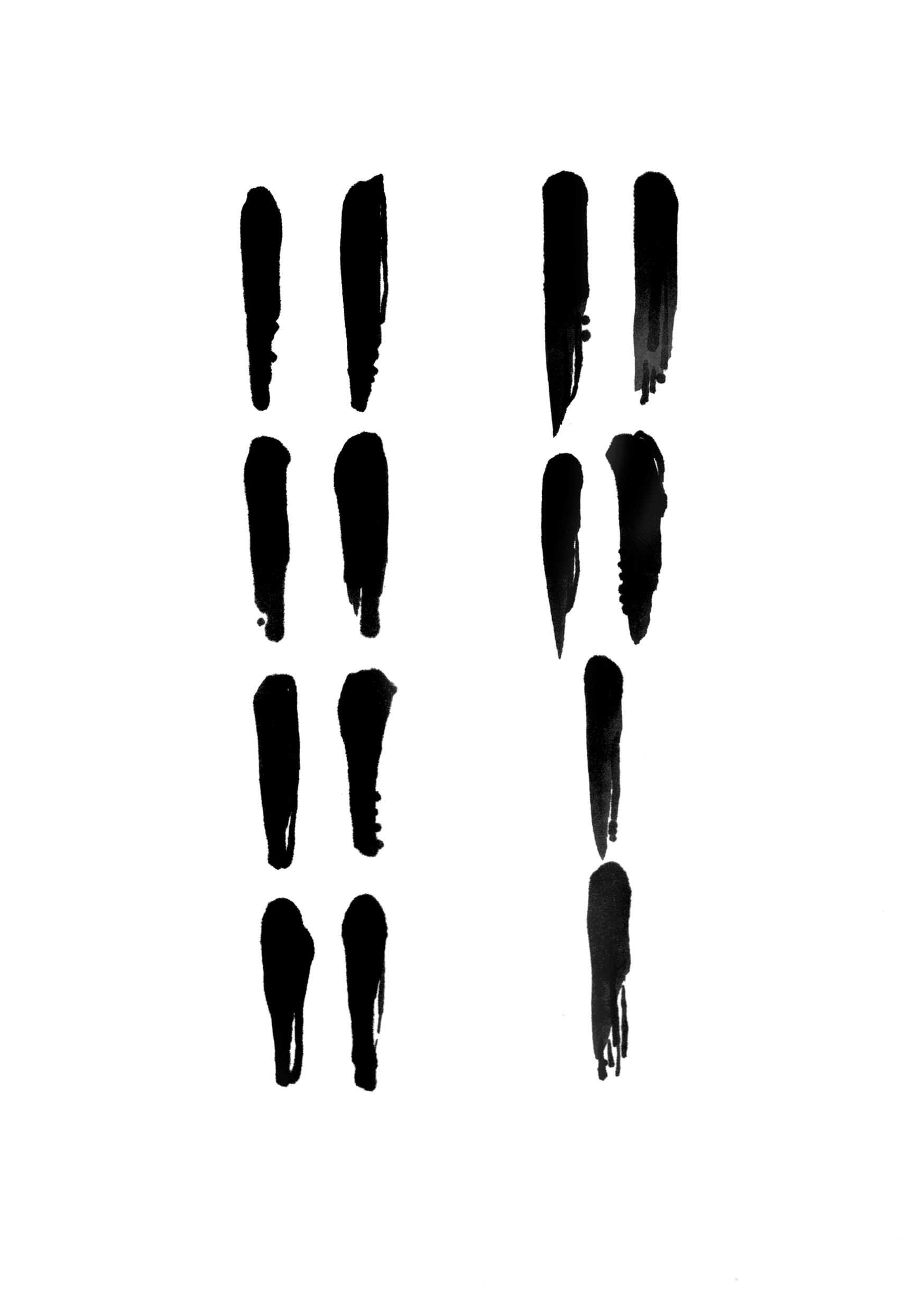
This Academy reads the right column first, then the left. Each row carries a single or double mark.
Where this Odù belongs
Òwónrín Òyèkú belongs to the Òwónrín family in this Academy’s study sequence. It is a mixed Odù, distinct from Òyèkú Òwónrín. The order matters. Its teaching is approached through its own narratives, rather than by adding two general descriptions of the principal signs together.
Key Òrìṣà and sacred relationships
The figures below are selected for their roles in the accounts discussed here. They offer connected reading paths through the tradition.
-
Èṣù. Èṣù investigates the accusation against Agayú through a disguised request for food and also identifies the roasted-maize trap. His role distinguishes checking a claim from simply joining its circulation.
-
Aganjú. Agayú is accused of stinginess but supplies food to the disguised visitor. His actual conduct contradicts the reputation others are attempting to establish about him.
-
Ọ̀rúnmìlà. Òrúnmìlà is threatened with consequences for a prediction about maize whose hidden condition has been manipulated. His situation makes the examiner’s control over evidence ethically consequential.
-
Ṣàngó. Ṣàngó works with Èṣù to replace the nonviable grain and provide rain, so the story’s resolution is collaborative rather than the diviner’s solitary display of superior knowledge.
Key myths and their meanings
The beggar checks the accusation
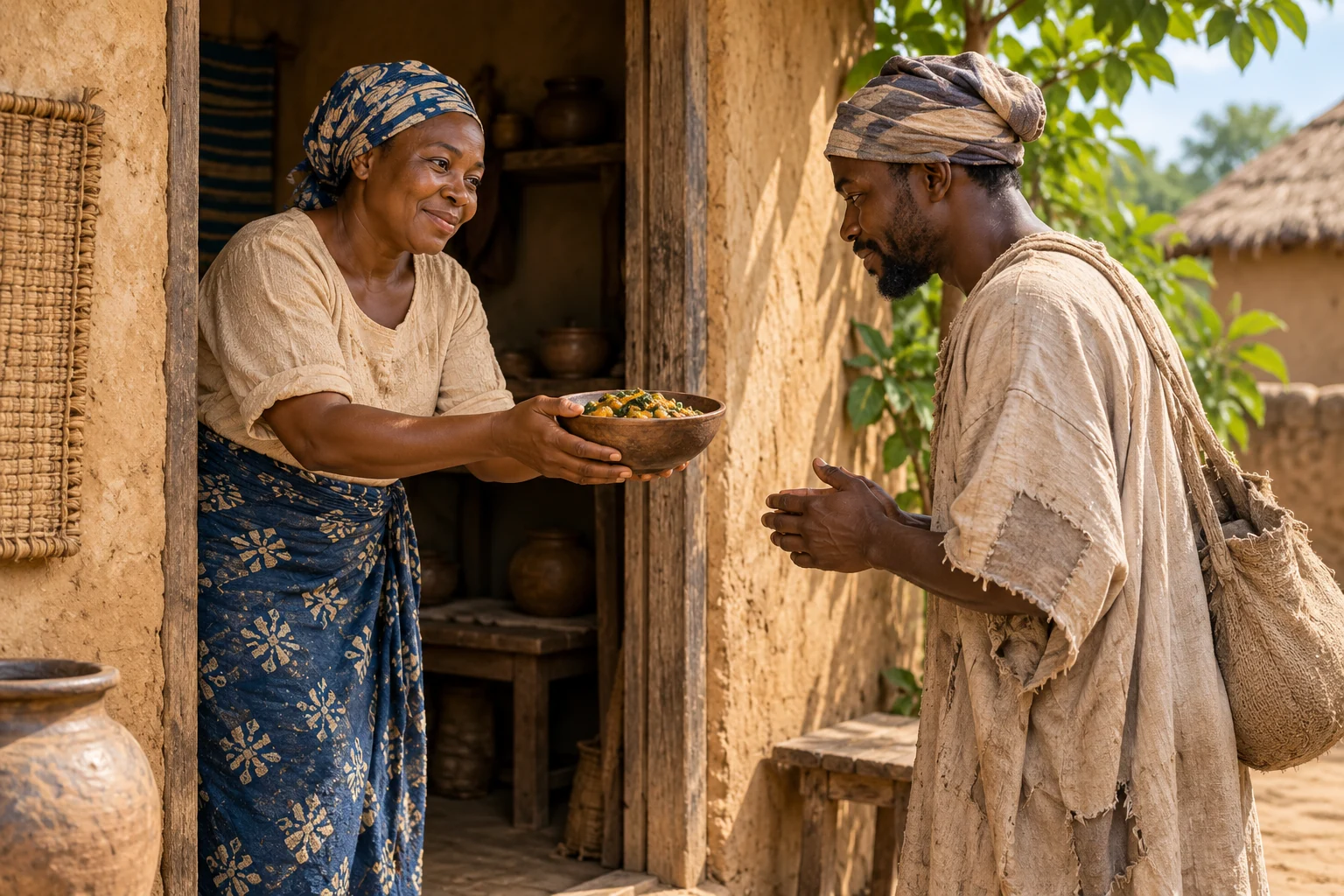
People accuse Agayú of being miserly and refusing even hungry visitors. Èṣù does not treat repetition as proof. Disguised as a beggar, he visits and receives food. The episode concludes that the accusation was false and attributed to resentment of Agayú’s circumstances. Its entire action consists of a claim being tested against a concrete response to need.
The disguise gives the visitor access to conduct that a prestigious guest might not encounter. Still, one episode cannot establish every aspect of a person’s character. The concern is the responsibility to seek evidence before spreading harm. The source’s explanation by envy remains part of its narrative; a careful reading need not assume that all criticism of prosperous people is motivated by jealousy.
Narrative setting: Brief Spanish Cuban-style account.
The field planted to make someone fail
Olofin roasts maize before planting it and asks Òrúnmìlà to predict its growth, threatening him if it does not emerge. Èṣù recognizes the trap and recruits Ṣàngó. They replace the roasted seed with viable grain and prepare the field for rain. Maize appears, and Òrúnmìlà returns to claim payment, leaving the examiner surprised by the failure of the engineered test.
A person controlling the test can conceal a condition that makes another’s failure inevitable. The story’s solution uses covert intervention, which should remain morally open rather than translated into ordinary advice. Its strong analytical value lies in distinguishing a good-faith assessment from a trap. Both the procedure and the evaluator’s intention matter when a result is used to justify consequences.
Narrative setting: Spanish maize account.
The axe returns while the handle is broken and discarded
Axe and Handle consult before going to war against the trees. Both are advised to complete a response so that they can survive the campaign and return safely. Axe does so, while Handle declines. They nevertheless leave together and take part in the same cutting work. During the struggle, Handle breaks, is discarded, and does not return. Axe survives and comes home after the trees have been felled. The short account joins two physically interdependent participants in one undertaking, then gives their different religious responses and different fates separate attention rather than treating the tool as a single undivided agent.
The story’s force comes from a shared task that does not guarantee a shared outcome. Axe depends on a handle to work, yet the narrative distinguishes the parts when responsibility and survival are considered. The discarded handle also makes visible the unequal durability of participants whose labor appears inseparable. Within the witness, however, that difference is explicitly connected with completing or refusing counsel, not explained solely through material wear. Contemporary interpretation can compare the hidden costs of a joint undertaking and ask who is expected to absorb breakage.
It must not claim that an actual worker’s injury proves religious neglect. Compared with the earlier maize substitution that protects Òrúnmìlà from a ruler’s trap, this episode has no elaborate escape maneuver: the contrast is stark and compressed. The source’s brevity should be preserved rather than supplied with invented dialogue, motives for Handle’s refusal, or a historical theory of how axes were first assembled.
Narrative witness and setting: Cromwell Osamaro, paired journey of axe and handle
A private account of palace work becomes a public invitation
Òrúnmìlà prepares through daily consultation before working at the palace. After the ruler schedules a substantial response for the following day, he tells a friend about the work. The friend announces a palace feast, drawing an unexpected crowd. That morning, a new consultation tells Òrúnmìlà not to attend despite his appointment. He stays home and responds to the ruler’s messenger. The ruler feeds the waiting people. When the diviner arrives the next day, the guests confirm that he did not invite them, and the planned work proceeds. A private description has created a public expectation that must be disentangled from the actual commission.
The episode makes renewed consultation consequential even after a plan has received royal approval. Òrúnmìlà’s earlier preparation does not eliminate the need to attend to the next day’s changed circumstances. Nor is the absent practitioner simply vindicated by leaving a crowd hungry: the ruler feeds them, and their testimony later clarifies who made the invitation. The social and sacred strands therefore cooperate in the resolution. Compared with the earlier disguised-beggar test, another apparent fact about a person is corrected by examining what actually occurred rather than accepting a circulating account.
Contemporary interpretation can discuss the distance between sharing information and authorizing a public commitment. The protagonist’s reported excuse for absence should not be silently converted into a general endorsement of deceptive communication. The narrative shows a particular divinatory withdrawal and a later clarification; it does not establish that missing an appointment is always spiritually justified or that every rumor should be answered by waiting.
Narrative witness and setting: Cromwell Osamaro, daily consultation and unintended feast guests
What was born in this Odù
“Born” can name an explicit traditional origin association or what emerges through a story: a capacity, relationship, practice or order of life. Interpretations drawn from a narrative are labelled below, so their basis remains clear.
Framboyan’s nighttime sound
Selected traditional source association.
The explicit origin list names the framboyan’s cracking or rustling at a certain nighttime hour. This is a source-specific natural association, not a universal omen or a reason to interpret ordinary sounds as warnings.
Oyá’s ashere
Selected traditional source association.
The origin list names Oyá’s ashere. It gives a local association with sound and a religious implement without specifying construction, restricted use, or an identity with Ṣàngó’s different musical objects.
Correlations to life dimensions
These questions bring the selected stories into contemporary life. They are interpretive invitations for study.
Work and resources
The maize test conceals the condition that determines viability. Anyone evaluated through a process they cannot inspect is exposed to the evaluator’s integrity, making transparency of criteria and materials a substantive part of fair professional judgment.
Reflect: What hidden condition could invalidate an assessment?
Relationships and family
The beggar episode makes hospitality visible without a public audience or prestigious visitor. It can prompt attention to how people respond to need when no reward is obvious, while avoiding a universal requirement to admit every stranger into a home.
Reflect: How can generosity be practiced with sensible boundaries?
Character and inner life
Èṣù interrupts the ease of repeating a negative story. The episode suggests slowing the movement from hearing to believing, especially when the claim fits a satisfying view of someone whose position one already resents. The beggar’s reception supplies a different concrete fact.
Reflect: Which rumor feels convincing because you want it to be true?
Community and responsibility
The two accounts show reputations shaped by stories and staged results. Communities need ways to challenge both, so that authority is not granted solely to the loudest accusation or the person who controls the terms of an examination.
Reflect: Who can question the fairness of a public test?
A deeper reading of the sacred relationships
Consultation can address a changing moment
Òrúnmìlà consults before the first palace visit and again before the scheduled return. The second result changes what he does even though the commission remains. That sequence presents divination as a living relation with circumstances rather than a single permission that permanently settles every later action. The axe and handle also receive counsel before a shared journey, but respond differently. Together the accounts make responsibility specific to both participant and occasion. Contemporary reflection may discuss revising a plan as conditions change. The religious explanation should remain explicit, however: the witness attributes the redirection to Ifá, not merely to a cautious professional’s calculation about a possible embarrassment.
Shared work does not erase unequal exposure
Axe and Handle participate in the same campaign, yet one survives through the other’s breakage. The palace crowd also enters a shared event under different understandings: ruler, diviner, friend, and guests do not possess the same information. These are different inequalities, one embodied in the tool and the other produced by communication. Contemporary comparison can ask who bears a joint undertaking’s costs and who has actually agreed to its terms. It should not erase the source’s own sacred account of survival or make the handle a historical portrait of a particular laboring class. The story supplies a precise contrast, not a complete social theory.
A circulating claim needs a traceable speaker
The crowd’s confirmation that Òrúnmìlà did not invite them separates the original palace commission from the friend’s announcement. This resembles the earlier beggar episode’s distinction between reported character and an actual response to a visitor. In both, an apparently settled judgment depends on whose account has been accepted. The palace ruler’s decision to feed the guests prevents clarification from becoming simple punishment of people who acted on the message. Contemporary interpretation can examine how responsibility travels with information. The narrative does not give a modern communications policy, but it does make authorship of a claim matter when a person is held accountable for an event they did not authorize.
Questions that deepen the study
Does the handle’s fate prove that all injuries follow neglected counsel?
The account links these two figures’ different responses with their different fates in a specific sacred journey. It does not supply a universal explanation of injury. Extending that pattern to an actual worker would turn a narrative contrast into an accusation without evidence. A contemporary reading can still ask how interdependent participants face different risks and how a shared achievement may conceal someone’s breakage. Within the witness, completing counsel remains consequential and should not be omitted. The careful distinction is between explaining this narrated outcome and claiming authority to explain every similar-looking event in another person’s life.
Why is a second consultation necessary after the palace appointment?
The situation has changed because a private account of the planned work has become a public feast announcement. The next morning’s consultation redirects Òrúnmìlà before he enters that altered setting. The story therefore gives daily attention a role that an earlier plan cannot replace. Contemporary interpretation can recognize the need to reassess circumstances without treating the account as advice to disregard commitments whenever uncertainty appears. Its religious explanation is specific: Ifá directs the withdrawal, the ruler communicates through a messenger, the guests are fed, and later testimony distinguishes the diviner’s commission from the friend’s invitation.
What prevents the crowd from becoming merely the object of blame?
The ruler feeds the waiting people after learning that the diviner will not arrive that day. When Òrúnmìlà returns, the crowd also contributes evidence by confirming that he did not invite them. They are therefore recipients of care and witnesses, not only an embarrassing mass of uninvited guests. This detail matters to a contemporary comparison of rumor and responsibility: people can act on a mistaken announcement without having invented it. The source does not fully explain the friend’s motives or any later consequence for him. An article should preserve that limit rather than manufacture a punishment to complete the moral.
What the four narratives reveal together
The additional Òwónrín Òyèkú material places a joint journey beside a disrupted appointment. Axe and Handle act together but do not share the same response or fate. The palace participants converge on one event while holding different accounts of what it is. Both selections make apparent unity insufficient: one tool contains distinct vulnerabilities, and one gathering contains distinct responsibilities. Consultation remains a real religious relation in each, including the capacity to redirect a plan after circumstances change.
The earlier beggar and maize episodes add further cases in which appearances or traps require a more exact response. Contemporary interpretation can examine unequal exposure, changing conditions, and the traceability of a public claim. It should leave the handle’s refusal unexplained where the source does, avoid blaming actual injuries on neglected counsel, and retain the ruler’s care for people drawn together by another person’s announcement.
Living with this Odù
A continuing life or initiatory relationship
A received relationship with Òwónrín Òyèkú can sustain a distinction between repeated claims and examined conduct. Èṣù’s visit to Agayú tests an accusation against an actual response to need rather than treating repetition as evidence. The roasted maize introduces a different problem: an authority has arranged failure before asking for proof. These accounts ask how the conditions of judgment are made, not merely whether a person should appear more convincing.
Axe and Handle add physically interdependent partners whose shared task does not give them identical fates. The palace announcement gives another relation to communication: a private account creates a public expectation that differs from the commission. Across a life, reflection may concern rumor, a hostile test, a contributor’s distinct exposure, or the consequences of speech traveling beyond its intended circle. The person is not fixed as accused or deceptive. The sign invites character able to verify a claim, recognize the terms of an assessment, and consider who will bear a message’s effects. Sacred preparation and Èṣù’s intervention retain their actual role in the witnesses; checking evidence does not explain away the religious relations through which the narrated outcomes change.
A particular consultation and its question
When Òwónrín Òyèkú appears in consultation, the narratives help distinguish a reputation in need of verification from a test already structured to deny success. Agayú’s concrete generosity answers a particular accusation; it does not prove every statement about him false. The maize account exposes an engineered examination, but cannot authorize a client to substitute evidence or manipulate a present assessment. The actual question must determine what has been tested and how.
Axe and Handle introduce unequal exposure within a genuinely shared undertaking. A practitioner may ask whether one partner’s survival or success has obscured what another carries. The palace story adds private speech transformed into a public invitation by someone else. Its resolution involves daily consultation and a changed attendance, not simply better publicity. These possibilities can sharpen inquiry into who said what, what permission existed, and which consequence belongs to the client. They do not identify a secret plot or make every unexpected crowd hostile. A situational result remains distinct from lifelong identity. The sign’s stories provide differentiated questions about judgment and communication rather than a prediction of accusation, loss, or eventual vindication for anyone associated with it.
Constructive and adverse possibilities
Constructive unfolding may include a claim examined through concrete conduct, a misleading expectation disentangled from an actual commission, and distinct contributors recognized within a shared task. Èṣù’s testing of Agayú retains sacred agency while making repetition insufficient as proof.
Adverse unfolding can involve rumor replacing encounter, an examiner designing failure, or a message creating obligations its subject never accepted. The axe’s return does not erase Handle’s separate vulnerability, and the religious explanation of their different outcomes cannot justify treating a supporting partner as disposable. These contrasts do not establish that every accusation is false or every difficult assessment engineered. They ask how evidence, permission, and exposure become related. No actual reading’s direction follows automatically, and the maize reversal cannot become practical advice to defeat a test through concealment or an assurance that a client’s reputation will be restored.
An illustrative situation in everyday life
Imagine a hypothetical neighborhood organizer who privately tells a friend that a council meeting will discuss possible food support. The friend announces a free public meal, and a crowd arrives expecting provision. Rumors then describe the organizer as dishonest. The unintended feast account separates the actual commission from the circulating invitation. Èṣù’s visit to Agayú adds the importance of checking conduct rather than accepting the loudest accusation. The organizer may want to attack the friend or make an impossible promise to save face. A clearer response would acknowledge the crowd’s real need while establishing how the expectation arose. This illustration neither declares a real person blameless nor reproduces daily divination; it explores the specific gap between communication, responsibility, and public judgment.
Sources and reading context
The first two narrative witnesses
Both selections are Spanish Cuban-style accounts. A longer translated section titled as a beggar story actually concerns a merchant; that mismatched heading is not used. Gendered dominance claims in the origin material are excluded rather than generalized.
Narrative motifs are summarized independently. The life-dimension reflections are contemporary interpretation. How these reference studies are built explains the wider source approach and the distinction between a reference article and personal divination.
Additional named witnesses
- Cromwell Osamaro. Explicit heading supports the axe-handle account and the subsequent palace sequence.
The handle narrative is brief and provides no motive beyond refusal. The palace account does not explain the friend’s later fate. Its reported excuse for absence is retained as a narrative complication, not made into general advice.
Bibliographic identification
- C. Osamaro Ibie. Ifism: The Complete Work of Orunmila. Lagos; multivolume publication beginning 1986. Library catalogue record. Related bibliographic record for the named narrative witness. Exact volume, edition and page of the transmitted account have not been independently matched.
Read the source method and wider scholarly context.
The catalogue links identify published works and their authors. They are separate from proof of an individual episode’s wording or attribution. Contemporary comparisons and the synthesis above are editorial interpretation. The author’s books and Academy companions below provide further study; their sales links are separate from the source references.