
Òwónrín Ìwòrì is a mixed Odù in Ifá’s 256-part corpus. Òwónrín Ìwòrì’s selected stories make concentration of resources and fragmentation of power different obstacles to collective survival. Ikan controls a mountain of maize but refuses requests during famine until Èṣù dislodges him and the food is distributed. In a separate descent-to-earth narrative, Òrúnmìlà learns that several powers must form an alliance against domination. Both ask how what someone possesses becomes socially effective without allowing possession itself to become an absolute right over others.
A question to carry through the study: What do you control that others need in order to live or contribute?

This Academy reads the right column first, then the left. Each row carries a single or double mark.
Where this Odù belongs
Òwónrín Ìwòrì belongs to the Òwónrín family in this Academy’s study sequence. It is a mixed Odù, distinct from Ìwòrì Òwónrín. The order matters. Its teaching is approached through its own narratives, rather than by adding two general descriptions of the principal signs together.
Key Òrìṣà and sacred relationships
The figures below are selected for their roles in the accounts discussed here. They offer connected reading paths through the tradition.
-
Ọ̀rúnmìlà. Òrúnmìlà counsels Ikan to distribute according to need and later seeks an alliance among distinct powers. His role concerns the terms under which capacity can become collective benefit.
-
Èṣù. Èṣù observes Ikan’s refusals, tests him directly, and ends the monopoly within the fable. He also stands within the witnessed alliance, joining distribution to a negotiated relation among powers.
-
Òsanyìn. Osanyin descends with other named powers and joins the alliance after Òrúnmìlà recognizes that isolated effort is insufficient. His knowledge remains distinct within the collective rather than absorbed into a single figure.
Key myths and their meanings
The owner who would not release maize
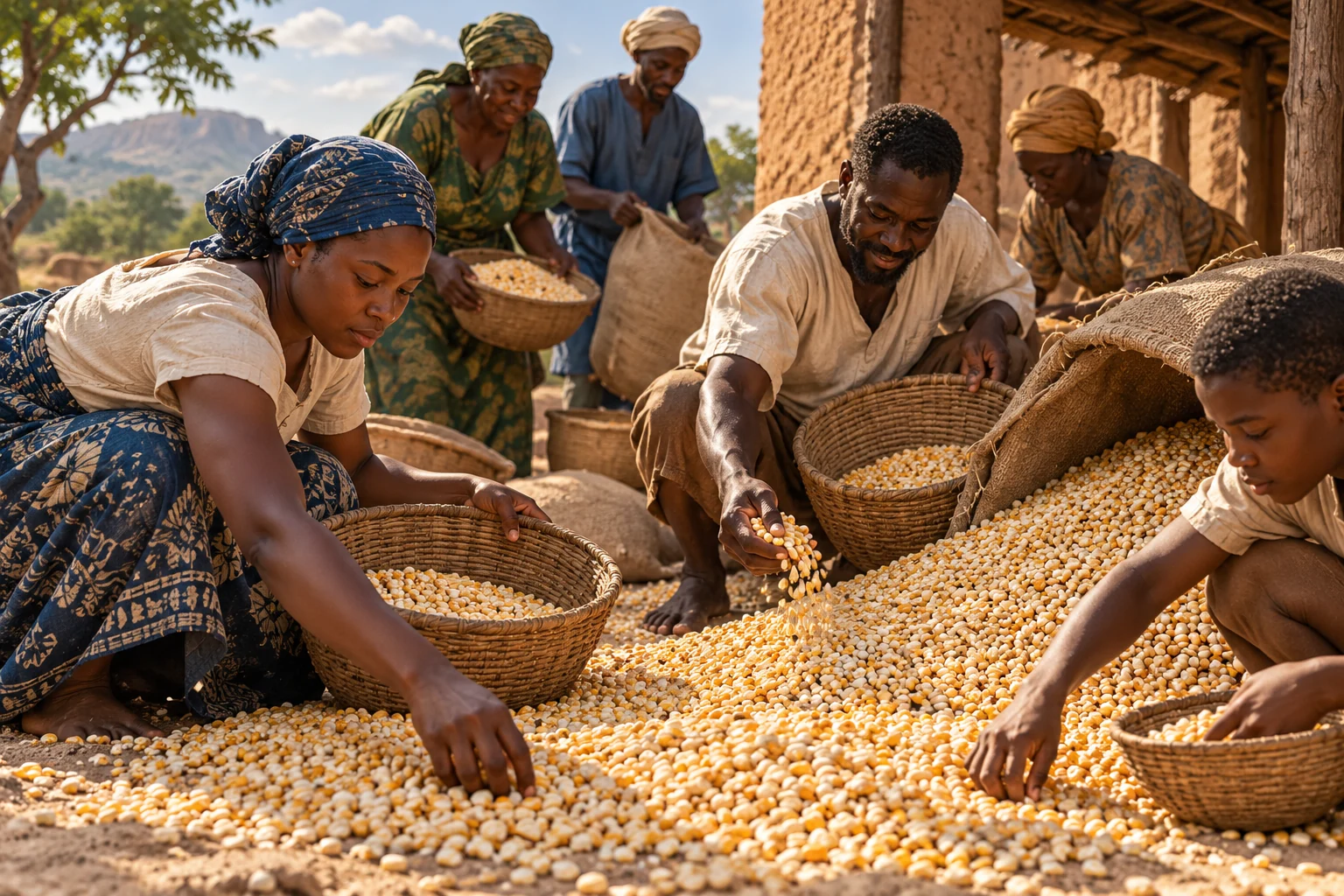
Ikan gains control of a mountain of maize, the people’s staple food. During scarcity he consults Òrúnmìlà but rejects counsel to meet actual needs, fearing that any distribution will leave him with nothing. Others die after his refusals. Èṣù asks for food, is also rejected, and dislodges Ikan from the mountain. The maize scatters, allowing people to take what they need.
The account distinguishes measured provision from indiscriminate giving: the counsel is to recognize need, not empty the store without judgment. Ikan treats ownership as sufficient reason to ignore dependence, even when scarcity makes that position lethal. The forceful ending is a fable resolution, not practical authorization for attacking owners. Its usable ethical concern is stewardship of resources whose value depends on continued collective life.
Narrative setting: Spanish Cuban-style famine fable.
Distinct powers learn to stand together
Several divine powers prepare to descend to earth and receive warnings about a hostile world. On arrival, domination and betrayal prevent them from acting effectively in isolation. Òrúnmìlà seeks help and recognizes the need for an alliance. He invites the other powers to gather, and a witnessed agreement establishes a collective response. Osanyin and ancestral presences participate without losing their separate names.
The story presents collaboration as something learned from limits rather than an automatic property of proximity. Sharing a world is not yet sharing a purpose. A responsible reading can examine how different capacities agree to cooperate while retaining their identities. Its supernatural opposition should not be turned into a diagnostic claim about actual neighbors, critics, or people outside a religious institution.
Narrative setting: Spanish descent-to-earth account.
Maize secures many children but leaves their protection unfinished
Maize seeks counsel before going to the farm to produce children. She completes the response associated with having many offspring but leaves a second protective response undone. Her children appear abundantly. Èṣù tells humans, birds, and animals that they are good to eat. Maize tries to prevent their consumption by drying them, but another disclosed preparation makes even the dried kernels edible. The account associates the sound of their cooking with the sign’s refrain. It distinguishes obtaining children from preserving them and narrates the grain’s food qualities through a mother’s failed efforts to keep her offspring beyond others’ reach.
The mother’s perspective makes the same abundance appear differently to producer and consumer. What people receive as food, Maize experiences as the loss of children. This is not identical to the earlier hoarder’s refusal to share stored maize: the new witness gives the crop itself a maternal voice and locates its vulnerability in an incomplete sacred response. Èṣù’s disclosure of edibility changes the relation between the plant and those who eat it. Contemporary interpretation can compare successful production with the later work needed to sustain what has been produced.
It should also acknowledge the limit of that comparison: the story offers a sacred explanation of a crop’s condition, not an accusation against bereaved parents or an agricultural manual. Drying does not end vulnerability because another relation and another use become possible. The narrative’s religious logic consequently exceeds the modern idea that a clever technical adjustment can always replace an unfinished responsibility.
Narrative witness and setting: Cromwell Osamaro, maize as a mother whose children become food
Expensive food requires people to take their tools to the fields
Yams, palm produce, maize, and other foods have become expensive. Divination is performed for Ìwòrì, and the high prices are explicitly recognized. A response is advised so that food can become more accessible. After it is completed, the diviner tells people to take their hoes and cutting tools and work on the farms. The account ends by linking relief from want with labor. Sacred response and agricultural work appear in the same sequence: the divination does not conclude with an offering that leaves cultivation unnecessary, and the instruction concerns food’s accessibility rather than an isolated individual’s accumulation of money.
The account is especially useful because it gives an explicit practical act after the sacred response. It should not be summarized as a choice between religious action and ordinary labor. The witness presents them together while making production consequential to affordability. Compared with the earlier maize-hoarding story, high prices here are answered by collective cultivation rather than redistribution of one person’s stock. The new maize-mother account adds a further difference: increased production is not the whole question when the producer is imagined as seeking protection from consumption.
These perspectives should not be forced into one economic model. Contemporary interpretation can ask whether a response to scarcity addresses supply, circulation, and the work required, while recognizing that the short narrative does not analyze all causes of actual food prices. Its final emphasis on labor must not become a claim that poverty proves laziness or that every shortage can be solved by individual effort alone.
Narrative witness and setting: Epega Afolabi, explicitly attributed account of food prices
What was born in this Odù
“Born” can name an explicit traditional origin association or what emerges through a story: a capacity, relationship, practice or order of life. Interpretations drawn from a narrative are labelled below, so their basis remains clear.
Avarice
Selected traditional source association.
Avarice is explicitly named in the origin list and concretely developed through Ikan’s maize. The association identifies a narrative moral problem; it does not label people who receive this sign as inherently ungenerous or justify ignoring their own needs.
Spirituality and spiritist practice
Selected traditional source association.
The list names spirituality and scientific spiritism as distinct items. These belong to the compilation’s local religious vocabulary and are not scientific validation of spiritism or evidence of one universal relationship between it and Ifá.
Correlations to life dimensions
These questions bring the selected stories into contemporary life. They are interpretive invitations for study.
Work and resources
Ikan’s store has social significance because maize is a staple. The fable makes access during scarcity a responsibility that cannot be settled by repeating that the owner acquired the resource through personal skill or cleverness.
Reflect: What changes about stewardship when others depend on the resource?
Relationships and family
Requests for maize include children’s needs, but Ikan hears only a threat to his possession. The story asks whether a person can distinguish being asked for help from being asked to surrender all independence or security.
Reflect: What would giving according to actual need require?
Character and inner life
Ikan imagines that any provision empties his future. The account gives fear a role inside greed, allowing inquiry into why enough can feel impossible even while the owner sits on an extraordinary reserve. His fear increases while others’ need becomes urgent.
Reflect: What would count as enough to let you act generously?
Community and responsibility
The alliance requires distinct powers to recognize mutual limits and make a witnessed commitment. A community can read this as a question about shared purpose and accountable cooperation, rather than a demand that every participant become identical.
Reflect: What difference can remain intact inside a shared commitment?
A deeper reading of the sacred relationships
Sacred response and practical work belong to one sequence
Epega’s account places the response before an explicit instruction to cultivate. The religious act does not displace the work, and the work does not make the prior divination disappear. Osamaro’s maize narrative gives another sequence in which the first completed response does not accomplish the distinct task of protection. Together they resist treating religious action as a single undifferentiated transaction that should produce every desired outcome. Their internal logic distinguishes purposes, relations, and subsequent responsibilities. A contemporary explanation can preserve that structure without reproducing a procedure or claiming that a reader’s economic situation discloses which sacred action has been omitted.
Abundance has a standpoint
The same kernels represent children to Maize and nourishment to those Èṣù informs. The food-price account views crops through people who need affordable provisions. The earlier hoarder story adds another standpoint, where stored abundance is withheld from a community. These perspectives illuminate different relationships to food rather than supplying one final definition of prosperity. Contemporary interpretation can ask who calls a resource abundant, who can access it, and what losses are hidden by that description. The narratives do not establish an ecological theory or condemn ordinary eating. Their distinctive contribution is to make the interests surrounding one crop visible through different sacred and social positions.
An initial success can leave another task open
Maize obtains many children but does not secure their protection. The farmers complete a response and still have cultivation ahead of them. The earlier alliance of powers likewise depends on relations that prevent one capacity from becoming domination. Across these selections, achieving one condition does not automatically settle the next. Contemporary comparison can examine what is needed after an opening, a production increase, or an agreement. That does not mean success is always precarious or that every loss follows unfinished work. The source offers particular sequences in which different tasks remain distinct; its value lies in resisting a premature declaration that the whole undertaking is complete.
Questions that deepen the study
Does the food-price account make sacrifice a substitute for farming?
It explicitly directs people to take tools to the fields after the response is completed. The sequence therefore includes both religious action and cultivation. A summary that mentions only one would distort what this witness actually says. Contemporary interpretation can discuss the need to connect an intention with the work that makes food available. It should not present the short account as a complete theory of inflation or imply that people who remain poor have failed to work. The stated problem is expensive food, and the narrated response addresses accessibility through a collective movement toward production.
Why does drying not save Maize’s children?
Èṣù discloses another way people can prepare the dried kernels, so Maize’s technical adjustment does not remove them from the relation of consumption. Within the witness, she has completed the response for offspring but not the distinct response for their protection. Contemporary reflection can recognize that solving one part of a problem may leave another relation unchanged. The account should remain a sacred crop narrative. It does not explain actual childhood death, and no parent’s loss can responsibly be attributed to this story’s pattern. Its maternal language gives the crop a standpoint that differs from the standpoint of those who need food.
How is this different from the earlier hoarder’s maize?
The earlier selection concerns a person withholding stored grain and a reversal that redistributes it. Osamaro’s new account personifies Maize as a mother trying to protect her offspring, while Epega’s account addresses expensive food through cultivation. The shared crop does not make these the same narrative. They concern circulation, preservation, and production respectively. A contemporary comparison can make those differences useful without claiming that the sign contains a single economic policy. Their religious agencies also remain specific: Èṣù discloses edibility in one, while divination leads to collective farm work in another. Each should be attributed to its actual witness.
What the four narratives reveal together
The added Òwónrín Ìwòrì witnesses deepen the existing material by separating production, protection, and access. Maize’s successful motherhood does not preserve her children from becoming food. Expensive provisions, in Epega’s account, require people to cultivate after completing the sacred response. The earlier hoarder and alliance stories add questions about circulation and the distribution of power. Together these accounts make abundance relational: what is plentiful for one participant may be inaccessible to another or experienced as a loss by the figure who produced it.
Their spiritual structure should remain clear. Distinct responses have distinct purposes, Èṣù’s communication changes what consumers know, and divination can lead directly into ordinary work. Contemporary interpretation can compare the tasks without blaming bereavement on omitted rites, reducing poverty to laziness, or claiming that a small set of sacred narratives supplies a complete theory of food economies.
Living with this Odù
A continuing life or initiatory relationship
For someone carrying Òwónrín Ìwòrì within a received spiritual history, possession and flourishing require attention to who can actually receive what life needs. Ikan’s fear of having nothing makes a mountain of staple food unavailable while people die. The alliance of distinct powers gives another response to exposure: isolated capacity becomes effective through a witnessed agreement that preserves Osanyin and ancestral presences as particular participants rather than interchangeable energy.
Maize’s desired offspring add a painful distinction between abundance and protection, with a mother’s personhood retained within the grain’s food narrative. Epega Afolabi’s food-price witness then places sacred response beside cultivation, rather than allowing either to make the other unnecessary. Across a life, reflection may concern resource control, the terms of alliance, what an achievement leaves exposed, or the labor needed for access. The person is not defined as hoarder or natural provider. The sign invites responsibility that can hear real need and recognize differentiated contributions without reducing children, crops, and divine powers to one economic metaphor. Its varied witnesses keep the sacred relation active while asking how a shared world remains materially possible.
A particular consultation and its question
In consultation, Òwónrín Ìwòrì can help distinguish a genuine shortage from blocked access to an existing staple. Ikan has maize, yet fear prevents release; the food-price account instead addresses expensive provisions through a sacred response followed by agricultural work. The actual question must establish the condition before advising greater production or distribution. The narratives do not make one economic measure appropriate everywhere.
The alliance witness adds the possibility that distinct capacities remain ineffective because they have not established a trustworthy collective relation. Maize introduces another configuration: obtaining abundance has left protection unfinished, but its offspring imagery cannot justify blaming parents for actual loss. Èṣù, Osanyin, and the named ancestral presences retain their particular religious roles. A practitioner can examine what is available, who can reach it, what labor remains necessary, and whether an agreement preserves the participants’ separate agency. These are situated questions, not findings about an unknown client’s generosity or hidden enemies. The consultation does not prescribe a distribution procedure, guarantee food security, or confer a permanent identity of scarcity. It brings a particular arrangement into relation with several sacred precedents whose differences remain necessary to understanding.
Constructive and adverse possibilities
Constructive unfolding may include access responsive to actual need, an alliance whose members retain distinct roles, and work that carries a sacred response into cultivation. The food-price witness explicitly leaves people with tools and fields to attend to; material labor is not canceled by religious acknowledgment.
Adverse unfolding can involve fear making an existing abundance inaccessible, isolated powers unable to meet a hostile environment, or a desired gain treated as complete while its continuing protection remains unaddressed. Maize’s personified loss cannot become a moral account of actual child mortality. Ikan’s fall also does not establish that every private store is unjust. These contrasts concern the concrete relation among resources, access, agency, and continuation. They neither endorse the source’s scientific-spiritism vocabulary as a scientific conclusion nor determine a real reading’s direction by the name of the sign.
An illustrative situation in everyday life
In a hypothetical example, a community pantry has substantial reserves, but its committee continually delays distribution because members fear future scarcity. Meanwhile, food prices rise and several local growers lack access to tools. Ikan and the food-price witness distinguish blocked availability from the conditions of further cultivation. The alliance account adds the possibility of cooperation without making growers, distributors, and recipients identical roles. The committee’s inner anxiety is understandable, yet it has present consequences for hungry households. Examining those consequences could change both release and production arrangements. This illustration does not prescribe an economic policy or reproduce a sacred response. It uses the narratives to ask whether protecting a resource has become detached from the life that resource is meant to sustain.
Sources and reading context
The first two narrative witnesses
The selected accounts are Spanish Cuban-style material. The term scientific spiritism is reported as source vocabulary, not endorsed as a scientific conclusion. Named Orun/Egun presences in the alliance are not collapsed into generic deities or reconstructed as ritual instructions.
Narrative motifs are summarized independently. The life-dimension reflections are contemporary interpretation. How these reference studies are built explains the wider source approach and the distinction between a reference article and personal divination.
Additional named witnesses
-
Cromwell Osamaro. The named heading supports the maize-mother account and its separate purposes of birth and protection.
-
Epega Afolabi. The explicit heading introduces the food-price narrative and its instruction to cultivate.
The maize narrative is sacred personification, not child-health or botanical evidence. The source’s final labor maxim is not generalized into an explanation of poverty. The witnesses are African in attribution; Portuguese does not establish a Brazilian lineage.
Bibliographic identification
-
C. Osamaro Ibie. Ifism: The Complete Work of Orunmila. Lagos; multivolume publication beginning 1986. Library catalogue record. Related bibliographic record for the named narrative witness. Exact volume, edition and page of the transmitted account have not been independently matched.
-
Afolabi A. Epega and Philip John Neimark. The Sacred Ifa Oracle. San Francisco: HarperSanFrancisco, 1995. Library catalogue record. First-edition bibliographic record. The particular edition underlying the narrative witness has not been established.
Read the source method and wider scholarly context.
The catalogue links identify published works and their authors. They are separate from proof of an individual episode’s wording or attribution. Contemporary comparisons and the synthesis above are editorial interpretation. The author’s books and Academy companions below provide further study; their sales links are separate from the source references.