
Ìròsùn Ọ̀ṣẹ́ is a mixed Odù in Ifá’s 256-part corpus. Ìrosùn Òṣé’s selected accounts show two very different transmissions of useful knowledge. Ṣàngó passes the divining board to Òrúnmìlà, but resentful assistants block the work and a violent intervention follows. In a cooking-origin narrative, Kushe learns from Banga through Osanyin and carries knowledge back to human homes. The pairing makes the quality of transmission depend on cooperation, care, and the purposes for which specialized knowledge is shared.
A question to carry through the study: Does a transfer of responsibility also include the cooperation needed to carry it?
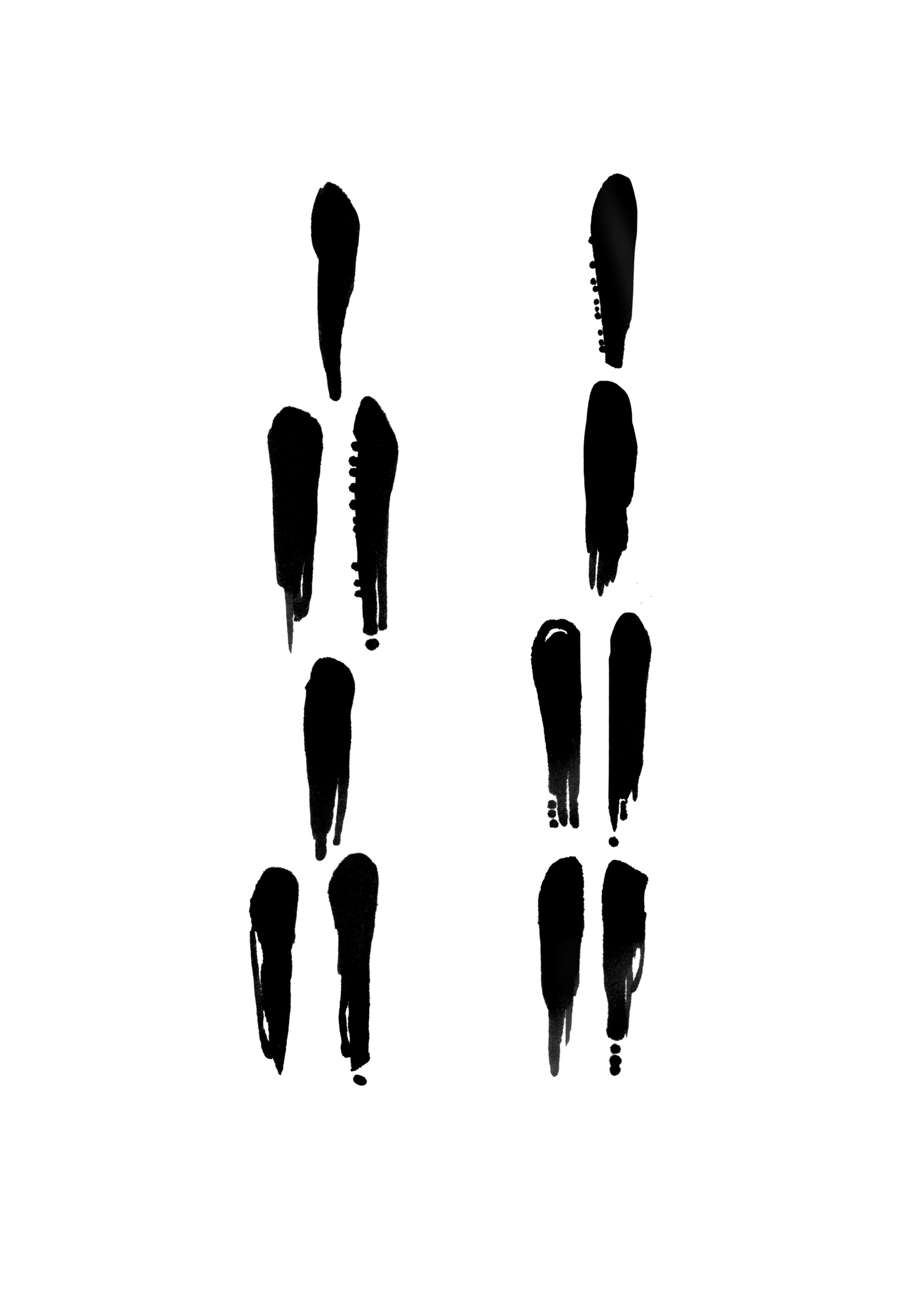
This Academy reads the right column first, then the left. Each row carries a single or double mark.
Where this Odù belongs
Ìròsùn Ọ̀ṣẹ́ belongs to the Ìròsùn family in this Academy’s study sequence. It is a mixed Odù, distinct from Ọ̀ṣẹ́ Ìròsùn. The order matters. Its teaching is approached through its own narratives, rather than by adding two general descriptions of the principal signs together.
Key Òrìṣà and sacred relationships
The figures below are selected for their roles in the accounts discussed here. They offer connected reading paths through the tradition.
-
Ṣàngó. Ṣàngó transfers the board and later responds violently when the succession is obstructed. His authority solves one institutional problem while inflicting serious harm that the narrative does not require a reader to endorse.
-
Ọ̀rúnmìlà. Òrúnmìlà receives the board, depends on others’ cooperation, and cares for the injured Osanyin. In the cooking account he directs Banga’s knowledge toward human benefit.
-
Òsanyìn. Osanyin resents the succession in one narrative but guides Kushe toward Banga in the other. These distinct roles show knowledge becoming obstructive or contributive according to its relationships.
-
Èṣù. Eleguá withholds delivery after losing the succession contest and later acknowledges the obstruction. His role locates results in the integrity of the chain between instruction and destination.
Key myths and their meanings
A succession without cooperation
Ṣàngó transfers the divining board to Òrúnmìlà because he cannot meet its demands. Eleguá and Osanyin expected to inherit it and refuse to cooperate. Work becomes ineffective until Ṣàngó intervenes with a destructive storm that gravely injures Osanyin. Òrúnmìlà then receives and cares for the injured figure. Osanyin and Eleguá acknowledge their obstruction and accept a renewed working relationship.
Responsibility cannot be transferred by handing over an object while leaving indispensable collaborators resentful and unconsulted. The narrative’s violence must remain ethically visible; injury is not evidence of deserved disability. Òrúnmìlà’s care offers a different response from retaliation, but the ending also raises a question about whether obedience obtained through fear is the same as cooperation freely rebuilt after conflict.
Narrative setting: Account explicitly labeled Cuba.
Knowledge carried home to the hearth
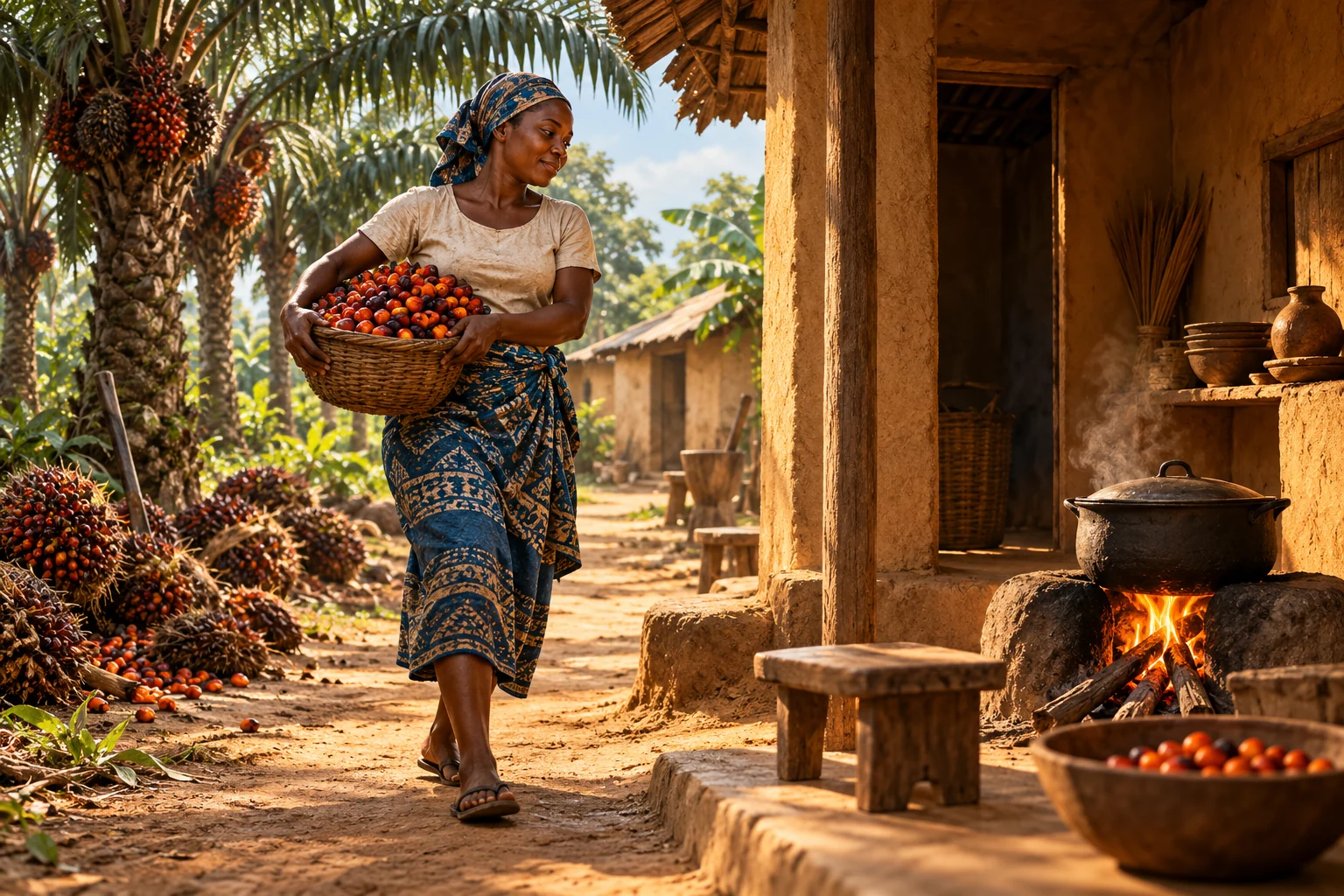
Banga is associated with the oil palm and knowledge of life. Òrúnmìlà directs that knowledge toward human benefit. Kushe, a hunter learning about fire and cooked food, encounters Osanyin and is taken to Banga. He learns how the palm’s resources can sustain cooking and illumination. Returning to his land, he brings knowledge that enables people to maintain fire in their homes.
The account gives practical culture a chain of teachers, materials, and transport. Cooking is not represented as an isolated flash of genius: it depends on relationships with a plant and with people who know its uses. This can support recognition of domestic labor and shared knowledge, while the narrative’s origin claims remain sacred explanation rather than a historical account of how humans discovered fire or oil.
Narrative setting: Account explicitly labeled Cuba.
Paraka’s sleep is recovered through a warning heard by night powers
Paraka cannot sleep because nocturnal birds disturb him. He seeks divination and completes the response given to him. Èṣù then uses a speaking drum to announce that Paraka is armed and ready for the beings who approach at night. The night powers hear the message and withdraw. The account presents the return of sleep as the outcome of this intervention. No physical battle is narrated. Its decisive event is a communication that changes what the disturbing beings believe they will encounter, allowing the masquerade’s rest to become possible after counsel has been received and answered.
The compact story gives protection an auditory form. What changes is not Paraka’s public identity but the way an approaching power hears his situation. Èṣù’s mediation is therefore central: the protagonist’s response establishes a relation through which a message can act at a distance. The earlier transfer of Ṣàngó’s board involved obstructed movement and retaliatory violence; this episode creates a boundary through warning before an encounter occurs. It also complements the account of domestic fire by placing ordinary needs inside a sacred field without equating them with one another.
Sleep is not treated as a trivial concern merely because the protagonist is a masquerade. Contemporary interpretation can discuss the force of a credible boundary, but should not identify real birds, sleeplessness, or nighttime sounds as evidence of hostile spiritual beings. The source reports a specific sacred episode; its brief form does not disclose a general diagnostic system or authorize readers to reproduce its protective response.
Narrative witness and setting: Cromwell Osamaro, account of the masquerade Paraka
A loyal son’s game opens a route to his father’s acquittal
Òrúnmìlà resists a ruler’s wife after a guardian reminds him of earlier counsel, but she falsely accuses him and he is condemned. Most people withdraw; his son remains. The boy consults without fully understanding the result, then brings an elder who can interpret it when his grieving father cannot. Through the response, Èṣù draws royal children to play ayò at the condemned man’s house. A new accusation places the ruler’s own son under the same threatened penalty. The ruler cannot accept that consequence. Counsel exposes the unequal standard, the woman confesses, and Òrúnmìlà is released and acknowledges those who helped.
The father’s expertise does not make him self-sufficient in a crisis. Grief interrupts his ability to interpret, while the son’s loyalty and the elder’s knowledge complete work he cannot perform alone. The guardian’s earlier reminder matters too: the story states that Òrúnmìlà refused the approach, so the later conviction is not presented as deserved punishment for a secret offense. Èṣù’s intervention makes the court confront a sentence from the position of its own household. The game is the social opening through which isolated people become connected again.
Compared with the earlier board-transfer story, religious objects and relations here support a sequence of rescue rather than a contest over ownership. Contemporary interpretation can examine unequal justice and distributed knowledge. It should also retain the narrative’s troubling mechanism: another accusation is used to expose the first. The story’s outcome does not authorize false charges as an acceptable practice outside this particular sacred reversal.
Narrative witness and setting: Cromwell Osamaro, Òrúnmìlà’s false conviction and the game of ayò
What was born in this Odù
“Born” can name an explicit traditional origin association or what emerges through a story: a capacity, relationship, practice or order of life. Interpretations drawn from a narrative are labelled below, so their basis remains clear.
Cooking
Selected traditional source association.
The explicit origin list names the art of cooking, and the Banga story supplies a concrete account of its transmission. This is a sacred cultural origin association, not archaeological evidence or a recipe for fire preparation.
Water extinguishes fire
Selected traditional source association.
The origin list names putting fire out with water. It provides a local image of regulating a powerful transformation, without establishing a universal elemental doctrine or inviting reenactment of the source’s practices.
Correlations to life dimensions
These questions bring the selected stories into contemporary life. They are interpretive invitations for study.
Work and resources
The board account shows that specialist work depends on collection, interpretation, and delivery performed by different people. A new leader needs those relationships as well as the visible instrument of office, making consultation before succession materially consequential.
Reflect: What cooperation does your new responsibility still depend on?
Relationships and family
Kushe returns with knowledge usable in households. The account brings domestic provision into a religious history of culture, allowing care work to appear as learned expertise rather than an automatic or lesser function. Maintaining the hearth depends on what has been learned.
Reflect: Which household skill deserves recognition as knowledge?
Character and inner life
The assistants’ disappointment becomes obstruction, while Òrúnmìlà cares for someone who opposed him. The pairing asks how a person can acknowledge resentment without allowing it to determine every use of their skill or every response to another’s vulnerability.
Reflect: What can you contribute even while disappointed?
Community and responsibility
The cooking account distributes discovery among several contributors, whereas the succession account concentrates conflict around who receives a role. Communities need ways to credit teaching and support so that appointment does not erase the knowledge surrounding it.
Reflect: How can succession recognize those who were not chosen?
A deeper reading of the sacred relationships
A guardian’s warning does not eliminate earthly injustice
Òrúnmìlà remembers counsel and refuses the ruler’s wife, yet he is still accused and condemned. The guardian’s protection therefore cannot be summarized as immunity from adversity. Religious responsibility shapes what he does within a dangerous situation; further help must come through the son, elder, and Èṣù. Paraka likewise seeks a response to an already disturbed condition rather than relying on an invulnerable sacred identity. These accounts give consultation and spiritual relations real efficacy without making every difficulty evidence of disobedience. A contemporary article can preserve that distinction, particularly when readers might otherwise turn the existence of suffering into an accusation against the person who suffers.
Knowledge can be distributed across unequal capacities
The son can remain and seek help but cannot interpret the divinatory result. The father has knowledge but grief limits his use of it. The elder can read what the boy brings, and Èṣù can move the social situation toward disclosure. Their capacities are different and sequentially necessary. The earlier cooking account adds another form of knowledge associated with substances and household activity, while Paraka’s rescue depends on a heard message. Contemporary interpretation may ask what kind of help a person can provide without possessing every competence. The stories support a precise account of collaboration rather than a vague claim that good intentions alone can replace expertise.
A public verdict can conceal a broken standard
The court initially appears certain enough to condemn Òrúnmìlà. That certainty falters when the same consequence threatens the ruler’s son. The comparison reveals a standard the ruler cannot bear when it reaches his own household. This is not merely a tale in which a fortunate hero escapes: the court’s reasoning becomes visible through an unequal exposure to punishment. Paraka’s warning supplies a different use of communicated expectation, changing the course of an encounter before force occurs. Contemporary interpretation can compare how claims become credible and whose vulnerability is counted. It should acknowledge that the acquittal depends on a sacred reversal rather than presenting the account as documentary legal history.
Questions that deepen the study
Why does the son matter when his father already knows Ifá?
His contribution is loyalty and the decision to seek the help his father cannot provide at that moment. He brings a divinatory result he does not fully understand, then finds an elder who can interpret it. The episode separates knowledge from the present capacity to exercise it. Òrúnmìlà’s distress is not used to deny his stature; it makes another person’s assistance necessary. Contemporary interpretation can recognize that expertise does not abolish the need for care or collaboration. Within the witness, however, the rescue also requires actual divination and Èṣù’s intervention, so the son’s affection alone should not be made the whole explanation.
Does Paraka’s story explain why someone cannot sleep?
It explains Paraka’s particular condition within a short sacred account about night powers, consultation, and Èṣù’s warning drum. It does not establish how to interpret another person’s symptoms or the ordinary presence of birds at night. The useful comparative point is that a need for rest receives serious religious attention and that protection can take the form of mediated communication. A contemporary reading can ask how a boundary becomes effective without promising that a symbolic warning will end actual sleeplessness. The source gives neither a full medical account nor enough contextual information to turn the episode into a universal religious diagnosis.
What does the game contribute to the false-accusation episode?
Ayò brings the ruler’s children into contact with a household abandoned after condemnation. The condemned man’s son does not begin as a master strategist; play becomes the social route through which Èṣù’s reversal can proceed. That matters because isolation had made the original verdict seem final. The game reconnects worlds divided by punishment and status, then exposes the ruler’s inability to apply the same penalty to his own son. Contemporary interpretation can examine the unexpected social force of play while preserving the specific religious agency the account gives Èṣù. It should not recast the episode as a method for manipulating an actual court.
What the four narratives reveal together
The two additional Ìrosùn Òṣé accounts move between a short protective intervention and an extended reversal of wrongful condemnation. In both, a relation changes because a message or encounter reaches those who had seemed beyond the protagonist’s control. Paraka’s night visitors hear a warning; the ruler confronts his own sentence through his son; the condemned diviner receives help from a child and elder whose capacities differ from his own.
The earlier board transfer and domestic fire narratives make this sign’s selected material especially rich in the movement of knowledge and power among people, objects, and divinities. Its religious logic should remain explicit: guardians, divination, and Èṣù act within the stories. Contemporary reflection can examine boundaries, care, and unequal standards without making misfortune proof of neglected counsel or turning either episode into a diagnosis of a reader’s life.
Living with this Odù
A continuing life or initiatory relationship
For someone whose received life or initiatory history includes Ìròsùn Ọ̀ṣẹ́, succession can leave necessary cooperation unresolved. Ṣàngó transfers the board, yet Eleguá and Osanyin’s expected inheritance continues to shape the work. The eventual care for injured Osanyin does not make the destructive storm an ordinary model for resolving resentment. Banga and Kushe offer another route through difference: knowledge passes among distinct capacities before becoming useful at the hearth.
Paraka’s restored rest adds communication that changes what approaching powers expect, while the loyal son’s ayò episode makes an unequal penalty visible when it reaches the ruler’s own household. Across a life, reflection may concern an inherited office, collaborative knowledge, the conditions of rest, or loyalty capable of seeking an interpreter when an overwhelmed person cannot. These are changing situations rather than a personality of dependence or conflict. The son’s partial understanding matters: commitment does not require pretending to possess every competence. The sign invites character able to acknowledge contributors, make room for care after harm, and examine whether a rule becomes intolerable only when it touches someone protected by status. Its sacred agents retain their particular actions beyond the modern comparisons.
A particular consultation and its question
In consultation, Ìròsùn Ọ̀ṣẹ́ can help distinguish possession of office from the cooperation required to practice it. The board’s transfer is accomplished, but the relationship among its expected inheritors is not. The hearth account adds a constructive arrangement of distinct knowledge, rather than a demand that one practitioner supply every capacity. The actual concern may therefore involve succession, learning, or a damaged working relation, with different implications.
Paraka’s night disturbance introduces the effect of a message without a physical battle. That sacred communication through Èṣù cannot promise that an announcement alone will resolve a client’s difficulty. The son’s intervention adds another distinction: the person who remains loyal may still need another interpreter. Its counter-accusation exposes unequal judgment within the witness, but cannot justify manufacturing a charge in present life. A practitioner can examine whose participation is necessary, what overwhelms understanding, and whether a rule is applied consistently across status. These possibilities require the actual question and divinatory setting. They do not validate a false allegation, prescribe retaliation within initiation or succession, or transform the present result into a permanent identity as neglected heir, indispensable helper, or loyal child.
Constructive and adverse possibilities
Constructive unfolding may bring distinct capacities into cooperation, care that recognizes injury without requiring immediate harmony, and loyalty willing to seek competent interpretation. Banga’s knowledge reaches the hearth through a sequence of religious and human encounters, rather than becoming one person’s solitary invention.
Adverse unfolding can involve an inherited expectation obstructing work, force used to compel acknowledgment, or a penalty that seems acceptable only while another household bears it. The son’s game makes the asymmetry visible, but the narrative’s success does not render false accusation a constructive modern method. Paraka’s release also retains Èṣù’s sacred communication rather than a universal rule that threats ensure rest. These contrasts examine cooperation, care, and consistency without deciding a real reading’s state. They preserve the difference between a relationship repaired after harm and a claim that the harm was necessary or deserved.
An illustrative situation in everyday life
Imagine a hypothetical family business passed to one sibling while two others expected to inherit its main responsibilities. The new owner has formal authority but cannot operate without their knowledge. One younger relative sees the conflict clearly yet cannot interpret the financial details and asks an experienced adviser to help. The succession and loyal-son accounts distinguish office, cooperation, commitment, and competence. Banga’s hearth adds the possibility of knowledge becoming useful through several contributors. The owner may feel that seeking agreement weakens the inheritance, while the others mistake obstruction for recognition. A revised working arrangement could acknowledge different capacities without staging a punitive confrontation. This illustration makes no claim about sacred succession or the necessity of the narrative’s violence.
Sources and reading context
The first two narrative witnesses
Both selected narratives are explicitly labeled Cuban. Banga and Kushe are retained as named figures without invented deity keys or etymologies. Bodily injury and fire preparation remain contextual; neither stigmatizing disability explanations nor procedural material is reproduced.
Narrative motifs are summarized independently. The life-dimension reflections are contemporary interpretation. How these reference studies are built explains the wider source approach and the distinction between a reference article and personal divination.
Additional named witnesses
- Cromwell Osamaro. Explicit heading governs the Paraka episode and the account of Òrúnmìlà’s son, elder, and ayò game.
Paraka’s episode is compact and supplies no extended backstory. The accusation sequence is represented as this witness tells it, including its morally difficult use of a second accusation. Neither is converted into clinical or legal instruction.
Bibliographic identification
- C. Osamaro Ibie. Ifism: The Complete Work of Orunmila. Lagos; multivolume publication beginning 1986. Library catalogue record. Related bibliographic record for the named narrative witness. Exact volume, edition and page of the transmitted account have not been independently matched.
Read the source method and wider scholarly context.
The catalogue links identify published works and their authors. They are separate from proof of an individual episode’s wording or attribution. Contemporary comparisons and the synthesis above are editorial interpretation. The author’s books and Academy companions below provide further study; their sales links are separate from the source references.