
Òdí Òtúrúpòn is a mixed Odù in Ifá’s 256-part corpus. Òdí Òtúrupòn’s selected narratives link neglect with isolation and recognition with renewed support. Yobodo forgets Yemayá after she raises and teaches him, then discovers how little reciprocal help he has cultivated. In a separate ancestral account, a ruler who denies Egun depends on his initiated son to reach a protective religious institution. The stories make interdependence visible through a crisis, while leaving the reader to ask how care could be maintained beforehand.
A question to carry through the study: What sustaining relationship do you remember only when support becomes urgent?
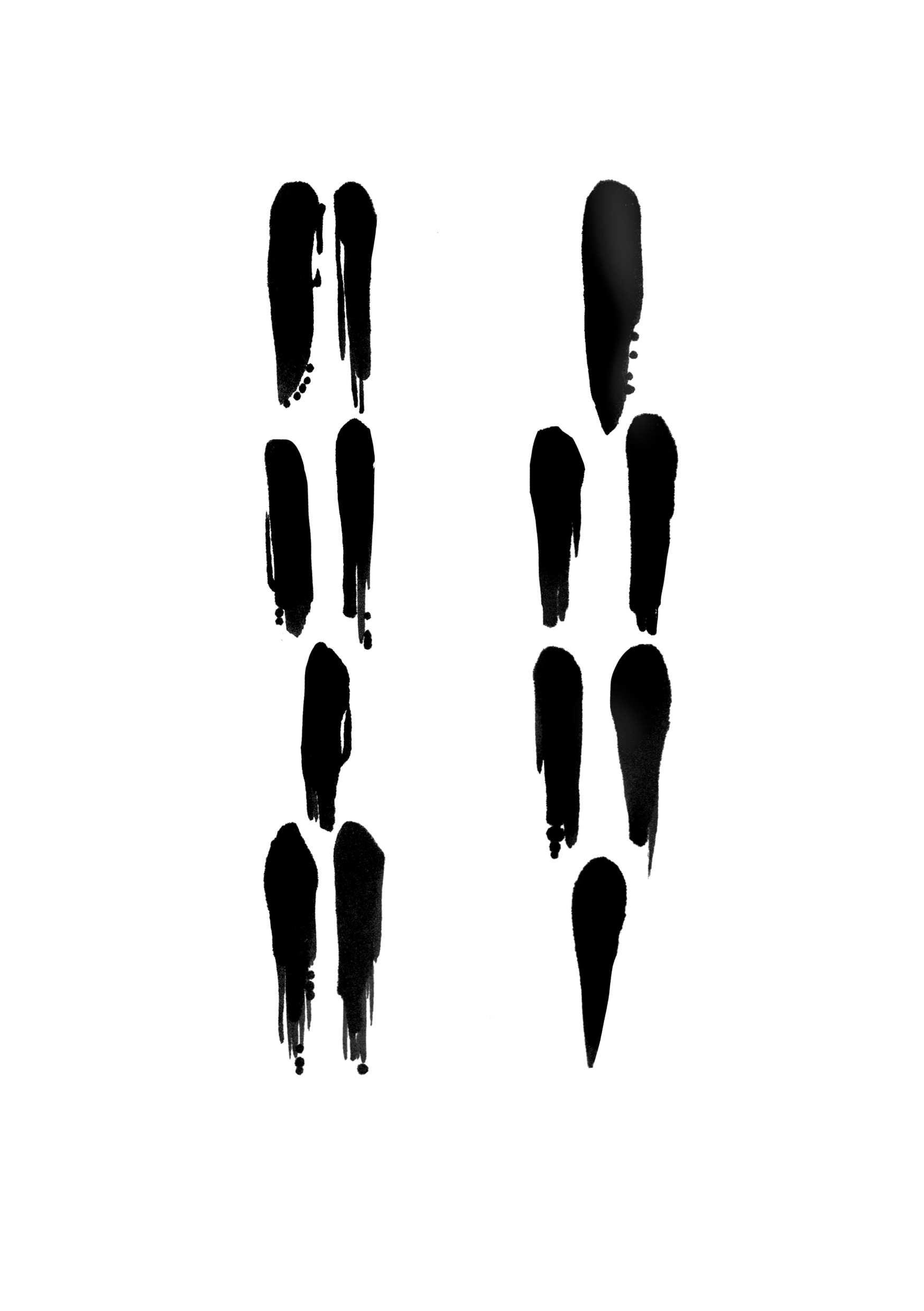
This Academy reads the right column first, then the left. Each row carries a single or double mark.
Where this Odù belongs
Òdí Òtúrúpòn belongs to the Òdí family in this Academy’s study sequence. It is a mixed Odù, distinct from Òtúrúpòn Òdí. The order matters. Its teaching is approached through its own narratives, rather than by adding two general descriptions of the principal signs together.
Key Òrìṣà and sacred relationships
The figures below are selected for their roles in the accounts discussed here. They offer connected reading paths through the tradition.
-
Yemọja. Yemayá raises and teaches Yobodo, receives his later appeal, and remains capable of care while confronting his neglect. Her role combines nurture, authority, and a demand for acknowledgment.
-
Ọ̀rúnmìlà. Òrúnmìlà interprets Yobodo’s situation and, as Okolonsho Alapini in the second account, organizes an ancestral institution that the ruler initially rejects.
-
Baba Ẹ̀gún. Egun are the ancestral presences central to Okolonsho Alapini’s institution. The ruler’s son already participates in that relationship and brings it into the response to his father’s crisis.
-
Ṣàngó. Ṣàngó appears in Yemayá’s conditions for Yobodo’s restored relationship. His role is named within that particular settlement rather than developed as a separate narrative in this selection.
Key myths and their meanings
The pupil who forgot his teacher
Yemayá raises Yobodo and teaches him religion. Once grown, he ignores her calls and attends poorly to others. A period of affliction reveals that he has little support because he has offered little. He consults Òrúnmìlà and returns to Yemayá. She reproaches him but also permits renewed contact with her sea, making care available without pretending that neglect never occurred.
The story distinguishes care from unqualified approval. Yemayá’s willingness to help does not erase her account of what Yobodo has done. The concern is a relationship maintained only as an emergency resource. Its illness imagery must remain contextual; no reader should be told that a bodily condition is deserved punishment for ingratitude or evidence of a neglected deity.
Narrative setting: Account explicitly labeled Cuba.
The skeptical ruler and his initiated son
Okolonsho Alapini establishes an Egun institution in a land dominated by Alosin. The ruler Awolu Kolu denies ancestral presences, but his son Ghoaba is initiated. When the ruler becomes endangered, the son seeks the practitioner’s help. A sustained religious intervention confronts Alosin, the ruler recovers within the story, and he requests entry into the ancestral protection he had previously dismissed.
The son’s knowledge supplies access that authority alone cannot provide. The ruler must receive assistance from a relationship whose legitimacy he denied. This supports reflection on humility and the value of younger people’s participation. It does not establish the historical existence of the named land, prove supernatural causation of illness, or imply that disbelief makes someone responsible for an actual crisis.
Narrative setting: Spanish ancestral account in the same compilation.
Ògún’s inhabited house begins to travel
Ògún is troubled that he has no followers and seeks divination. After completing the response, he builds a long house and sits eating at its entrance. Children come to play, and Èṣù encourages people to occupy the rooms until the house is full. Èṣù then directs its doors to be closed. Ògún begins moving the inhabited house, first gradually and then with a faster rhythm, away from the settlement. The account identifies this traveling house with the railway locomotive and its role in public transport. Following and provision become a shared movement rather than a stationary household alone.
This is a sacred technological origin within a modern narrative world, not a documentary claim about the engineering invention of railways. That distinction need not empty it of religious meaning. Ògún’s ability to sustain followers is made effective through divination, building, and Èṣù’s gathering of people; the moving house gives an actual form to that newly established relation. The doors’ closure also introduces an unresolved issue about those carried along, whose own voices are not described. A contemporary reading may ask about a leader’s responsibility to people dependent on a shared vehicle, while the source’s primary concern remains Ògún obtaining a populated and productive following.
The earlier Yobodo account gives a contrasting relation between care and independence: a grown pupil leaves a nurturer unattended, rather than a household becoming collective movement. The ancestral ruler’s story adds another case where a leader needs a relationship already sustained by his son. These comparisons broaden following beyond numerical popularity.
Narrative witness and setting: Account explicitly headed Revelações de Cromwell Osamaro
Igana’s loom belongs to a different order than war
Igana is surrounded by hostile troops and its people seek divination. The response brings materials associated with weaving into a sacred action against the siege. The accompanying speech addresses the relation between particular leaves, a loom’s proper use, and the prospect of the invaders leaving in fear. Rams are also called into the response. The enemy withdraws without a battle. The episode does not depict residents becoming better armed than their opponents; it narrates a change in the attackers’ ability to remain before a religiously constituted defense using objects whose ordinary place is productive work.
The loom is not simply a pacifist emblem inserted into a military scene. Within this witness, its relation to weaving and the diviner’s addressed speech contribute to an effective sacred action. The account thus gives words, materials, and divine response a force beyond descriptive commentary. That religious logic should be stated before a contemporary comparison with the protection of civilian life is offered. The withdrawal without combat also differs from the moving house’s gathering of followers: one sacred action disperses a threatening assembly, while the other creates an inhabited collective.
The earlier ancestral narrative adds an institution capable of confronting Alosin through a sustained relation with Egun and Orun, not through ordinary weapons. The four stories therefore present several forms of power that do not reduce to the size of an armed force. Nevertheless, the source does not provide an independently verifiable military history, and its ending should not be turned into a promise that a particular object or utterance guarantees protection in an actual conflict.
Narrative witness and setting: Account explicitly headed Revelações de Cromwell Osamaro
What was born in this Odù
“Born” can name an explicit traditional origin association or what emerges through a story: a capacity, relationship, practice or order of life. Interpretations drawn from a narrative are labelled below, so their basis remains clear.
Yewá’s drum, with a variant attribution
Selected traditional source association.
The initial origin line names Yewá’s drum, while a later Portuguese passage names Yemanjá’s drum. Preserve the disagreement as a source variant; do not silently choose one and present it as universally established.
Recognition of received care
Contemporary interpretation from the selected myth.
As a contemporary interpretation, Yobodo’s return suggests the emergence of accountable gratitude when independence has become neglect. The interpretation concerns relationship, not the narrative’s supernatural explanation of bodily affliction or a traditional born item.
Correlations to life dimensions
These questions bring the selected stories into contemporary life. They are interpretive invitations for study.
Work and resources
Yobodo receives teaching that enables adult independence, then treats the source of that knowledge as dispensable. The story makes educational labor part of the resources a person carries, even when no continuing transaction makes that debt visible.
Reflect: How do you acknowledge the labor invested in teaching you?
Relationships and family
Yemayá’s rebuke and continuing care coexist. The relationship is not repaired by denying resentment, but by naming neglect and permitting a changed encounter. This offers a specific image of care that can retain boundaries and memory.
Reflect: What acknowledgment must precede a renewed relationship?
Character and inner life
Awolu Kolu’s authority does not make his son’s knowledge unnecessary. His eventual request requires revising a previous certainty. The narrative can prompt examination of whether identity as a leader makes receiving help feel like defeat.
Reflect: What belief becomes difficult to reconsider because others know you hold it?
Community and responsibility
Ghoaba’s established participation connects his father with an institution that can respond. The episode highlights continuity across generations and the practical significance of maintaining relationships before an emergency makes their value obvious. The son’s participation becomes useful before the ruler believes.
Reflect: Which community relationship needs attention before a crisis?
A deeper reading of the sacred relationships
Addressed speech acts through a sacred relation
The Igana episode makes the diviner’s speech part of what changes the siege. The loom’s established identity and the named materials are not presented as a private metaphor that persuades residents to feel braver; they participate in the religious action itself. In Ògún’s house account, rhythmic utterance accompanies a structure’s movement, while Èṣù’s cooperation gathers its inhabitants. The earlier ancestral narrative likewise treats calls and presences as effective within its institution. A calm account can explain this logic of spiritually consequential speech without reproducing chants or constructing a ritual recipe. Contemporary reflections on confidence or coordination may be added, but they should not displace the witness’s understanding of how the narrated outcome occurs.
A collective can be gathered or dispersed for different purposes
Ògún seeks inhabitants and gains a traveling following. Igana seeks relief and its besiegers leave. Yobodo has failed to maintain supportive relationships and discovers the cost when he needs care. The skeptical ruler benefits from an ancestral connection that his son already sustains. These arrangements differ in direction and obligation. More people together is not always the desired result, just as departure is not always abandonment. The relevant question is what the collective makes possible and whose life it supports or threatens. Contemporary interpretation can examine leadership and participation through that distinction, while keeping the spiritual mechanisms of gathering, protection, and ancestral mediation specific to their respective accounts.
Productive objects carry a history into extraordinary action
A long house supplies rooms before it becomes a vehicle; a loom belongs to weaving before entering a response to siege. Their ordinary functions remain necessary to the extraordinary transformations, because the religious accounts work through what those objects already do or are understood to be. The earlier Yobodo account similarly gives the sea a particular relationship with Yemayá, not a generic cleansing function detached from her. The ancestral institution has its own named forms of support and passage. Preserving these material histories prevents symbols from becoming a free-floating inventory. A contemporary writer can ask what an object contributes to the episode without claiming that its meaning is universal across every lineage or every use.
Questions that deepen the study
What makes the railway episode religious rather than merely fanciful?
Its sequence begins with Ògún’s consultation and response, develops through Èṣù’s gathering of inhabitants, and moves through an act in which rhythm accompanies the house’s transformation. These relations explain why the new collective becomes possible within the narrated world. Calling it a sacred technological origin preserves that explanation while distinguishing it from engineering history. The same story can carry modern transport imagery without being dismissed as meaningless or claimed as ancient technical evidence. Its religious interest concerns Ògún’s relation to followers and provision, together with Èṣù’s role in bringing people into the arrangement. That interest is more specific than a general assertion that technology is powerful.
Does the loom mean the people of Igana reject all force?
The passage does not give such a general doctrine. It describes a particular sacred response in which the enemy leaves without battle and productive materials contribute to the outcome. Rams and forceful addressed speech remain part of the scene, so translating the loom into an absolute modern pacifist symbol would simplify it. A contemporary reader may value the avoidance of combat and ask what protects civilian life. The source’s own explanation, however, rests on divination and spiritually effective action, not a political manifesto about every war. Its specific achievement is a narrated siege ending without the residents being required to match the attackers’ arms.
What responsibilities follow obtaining a large following?
The moving house links followers with a structure able to contain and transport them, suggesting that number alone is not the whole concern. The source’s attached application emphasizes sustaining dependents, while the actual story leaves the inhabitants’ own perspectives largely unspoken. The earlier Yobodo account adds a useful distinction: receiving care creates a continuing relationship, even when one grows independent. The skeptical ruler’s son shows another responsibility, maintaining a connection that can later benefit someone else. Contemporary analysis can therefore ask about provision, reciprocity, and participation without assuming that every large following is beneficial or that people become a leader’s property by entering a shared arrangement.
What the four narratives reveal together
The new accounts broaden Òdí Òtúrupòn through sacred gathering and sacred dispersal. Ògún’s long house becomes an inhabited movement identified with the locomotive; Igana’s loom enters an effective defense that sends invaders away without battle. The earlier Yobodo and ancestral ruler stories add different forms of dependence, one neglected and one already maintained by a son. These differences keep the discussion from treating community as a simple numerical good. What matters is the relation through which beings live together, what they owe, and which powers enable or interrupt the arrangement.
The source world includes effective divination, Èṣù’s mediation, Ògún’s movement, and addressed speech whose materials carry real religious force. Contemporary questions about transport, leadership, and civilian protection can deepen the study only if they remain clearly additional to that theological account and do not become claims of historical invention or guaranteed efficacy.
Living with this Odù
A continuing life or initiatory relationship
For someone carrying Òdí Òtúrúpòn in a received spiritual history, interdependence can remain a question before a crisis makes it obvious. Yobodo’s return to Yemayá brings care together with reproach; help does not require pretending that earlier neglect never happened. The skeptical ruler receives access through the initiated son whose relationship he did not recognize. Age and office therefore do not exhaust the sources of knowledge on which a life may depend.
Ògún’s inhabited moving house adds the responsibility of gathering others into shared movement. Its closed doors also leave a question about the voices of those carried. Igana’s loom introduces another form of protection, where productive materials participate in an effective sacred defense rather than becoming ordinary weapons. Across changing circumstances, the person may need to maintain a teacher’s relation, receive younger knowledge, reassess the responsibility of leadership, or protect the conditions of civilian life. These are not one personality profile. Egun and Orun retain the institutional meanings of their witness, while Ògún and Èṣù remain active in the railway account. The sign invites attention to what support asks of the recipient and what following asks of the one who leads.
A particular consultation and its question
When Òdí Òtúrúpòn appears in consultation, the narratives help distinguish having few supporters from carrying responsibility for people already gathered. Yobodo’s isolation exposes a relation maintained only when help becomes urgent. Ògún’s moving house creates another situation: people depend on a shared vehicle whose direction and closure are not narrated through their own voices. The appropriate inquiry differs in each case.
The ancestral ruler adds a question about access supplied by someone whose participation has been dismissed. A practitioner might ask whether the client can receive knowledge from a younger or less powerful person without reducing that person to a conduit. Igana’s defense further distinguishes the protection of a community from becoming a stronger attacker. Its loom, addressed speech, and religious response remain part of the witness’s sacred logic, not a practical guarantee against conflict. These possibilities do not establish that a real illness is caused by ingratitude or disbelief. The actual consultation determines the relevant concern and the responsibilities that follow. A present result may clarify a neglected relationship, a leadership arrangement, or the kind of protection being sought; it does not confer a permanent identity or turn every gathered community into an image of the moving house.
Constructive and adverse possibilities
Constructive unfolding may include maintained relations before emergency, humility toward knowledge carried by younger people, and provision that remains attentive to those it gathers. Yemayá’s help can coexist with an honest account of neglect. In the ancestral witness, Egun and Orun remain particular religious relations through which protection becomes available.
Adverse unfolding can appear when care is treated as an unlimited emergency resource, authority dismisses knowledge it later needs, or collective movement obscures the agency of those being carried. Igana’s withdrawal of attackers gives a different direction from gathering followers, so dispersal and assembly cannot be assigned fixed moral values. These contrasts concern what an arrangement protects and requires. They neither make disbelief an explanation for actual illness nor promise safety through a material object, and they do not assign ire or osogbo to an unknown reading.
An illustrative situation in everyday life
Imagine a hypothetical community transport project begun by a respected organizer. Riders appreciate the service, but schedules change without consultation and younger volunteers’ concerns are dismissed. When a breakdown occurs, a younger mechanic supplies the knowledge that keeps the project operating. The initiated son and moving house help distinguish receiving support from assuming that leadership already contains every needed competence. The organizer may feel that listening threatens authority, while riders fear losing a service on which they depend. A better arrangement could include reliable communication and shared deliberation. This is a modern illustration of the narrative questions, not evidence that the project reproduces Ògún’s sacred vehicle or that technical competence replaces the ancestral relationships of the separate witness.
Sources and reading context
The first two narrative witnesses
The Yobodo account is labeled Cuban; the second uses a specific Egun/Orun institutional vocabulary. Orun is not merged with a generic ancestor deity. The sole explicit drum origin varies between Yewá and Yemanjá, so origin coverage is partial.
Narrative motifs are summarized independently. The life-dimension reflections are contemporary interpretation. How these reference studies are built explains the wider source approach and the distinction between a reference article and personal divination.
Additional named witnesses
-
Cromwell Osamaro. The explicit heading covers Ògún’s moving house and the Igana siege precedent.
-
Cuban narrative sequence. The earlier Yobodo account is marked Cuba; the Egun/Orun ruler account remains in its adjacent Spanish sequence.
The railway episode is treated as sacred technological narration, not invention history. Igana’s siege has not been independently historicized. A nearby Ukpe/trumpet account has unstable botanical identifications and is not combined with these selected episodes. No operative speech or ritual directions are supplied.
Bibliographic identification
- C. Osamaro Ibie. Ifism: The Complete Work of Orunmila. Lagos; multivolume publication beginning 1986. Library catalogue record. Related bibliographic record for the named narrative witness. Exact volume, edition and page of the transmitted account have not been independently matched.
Read the source method and wider scholarly context.
The catalogue links identify published works and their authors. They are separate from proof of an individual episode’s wording or attribution. Contemporary comparisons and the synthesis above are editorial interpretation. The author’s books and Academy companions below provide further study; their sales links are separate from the source references.