
Òkànràn Òwónrín is a mixed Odù in Ifá’s 256-part corpus. Okanran Owonrin gives maize two different social settings: a farm whose workers are overextended and unpaid, and a planting that obstructs a neighbor’s access. In both cases the owner initially sees production without adequately considering the relationships around it. Consultation brings the grievance into view, and an offer changes the conflict. The sign’s practical emphasis is the difference between possessing a productive asset and maintaining the agreements that let it function.
A question to carry through the study: Whose work or access is being taken for granted by a project you consider your own?
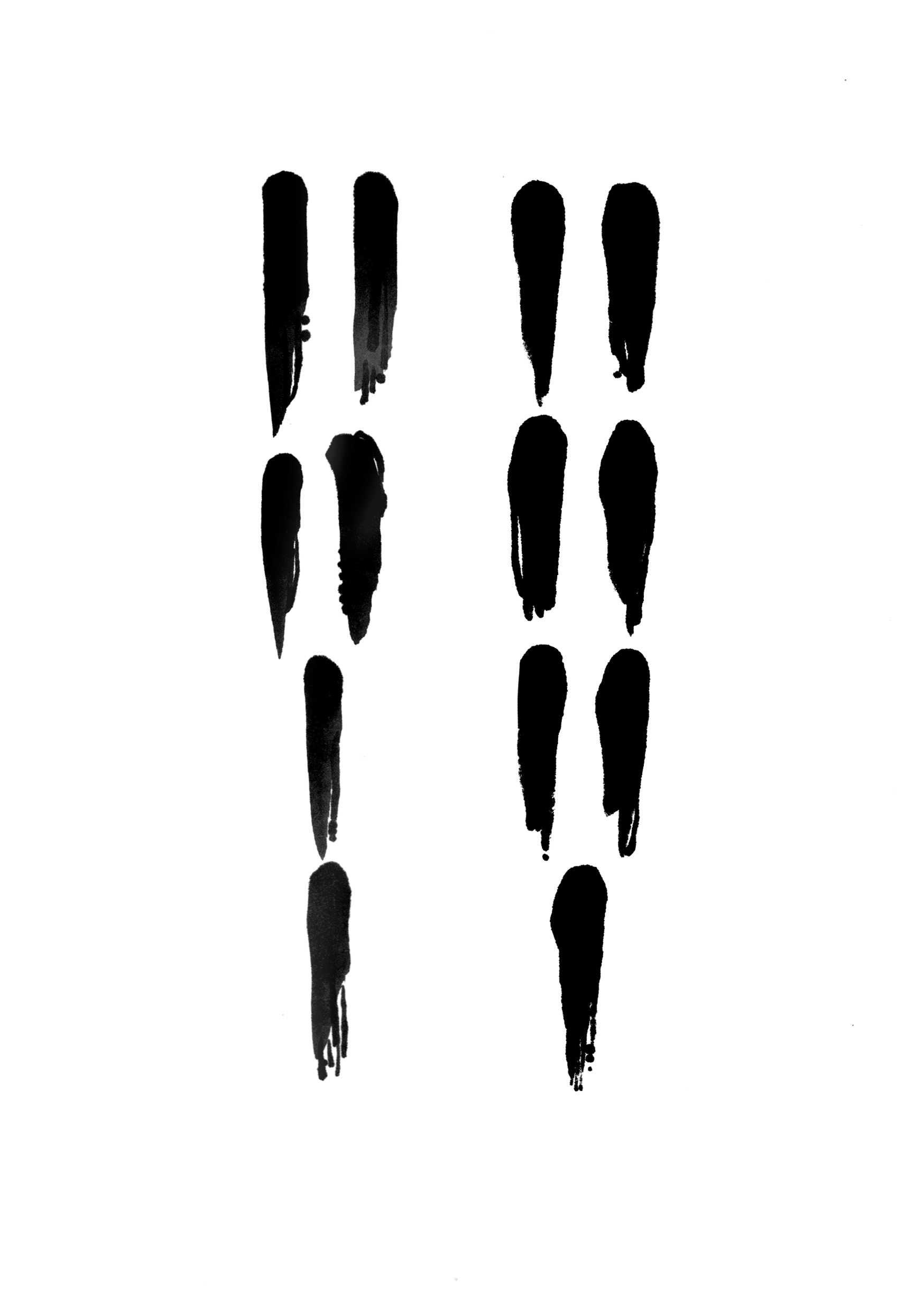
This Academy reads the right column first, then the left. Each row carries a single or double mark.
Where this Odù belongs
Òkànràn Òwónrín belongs to the Òkànràn family in this Academy’s study sequence. It is a mixed Odù, distinct from Òwónrín Òkànràn. The order matters. Its teaching is approached through its own narratives, rather than by adding two general descriptions of the principal signs together.
Key Òrìṣà and sacred relationships
The figures below are selected for their roles in the accounts discussed here. They offer connected reading paths through the tradition.
-
Èṣù. He is an absent farm worker whose promised payment is withheld, then a neighbor obstructed by maize. His grievances differ and should not be flattened into arbitrary anger.
-
Ọ̀rúnmìlà. He names the unpaid debt in the farm story and identifies the neighbor’s access problem in the second, turning diffuse misfortune into a specific relational issue.
-
Ìbejì. The broken vow of inseparable twins appears in the origin list. This is an association only; the twins do not participate in the selected maize narratives.
Key myths and their meanings
The worker’s deferred meal
A farm’s work is divided between Esu and Oluwo Popo. When Esu is away, the remaining worker cannot manage the whole area. Esu returns and asks for a promised provision before continuing, but the owner repeatedly delays it. The farm’s customer access collapses until consultation identifies the unresolved agreement.
The owner’s crop depends on labor, return routes, and customers, not simply ownership of land. Esu’s retaliatory conduct is severe, yet the initial grievance is concrete: completed work and a promise left unmet. A contemporary discussion can focus on fair payment and workload without claiming that financial hardship indicates divine punishment.
Narrative setting: Cuban/Lukumí patakín in a multilingual source compilation; no individual narrator is established.
A planting across the path
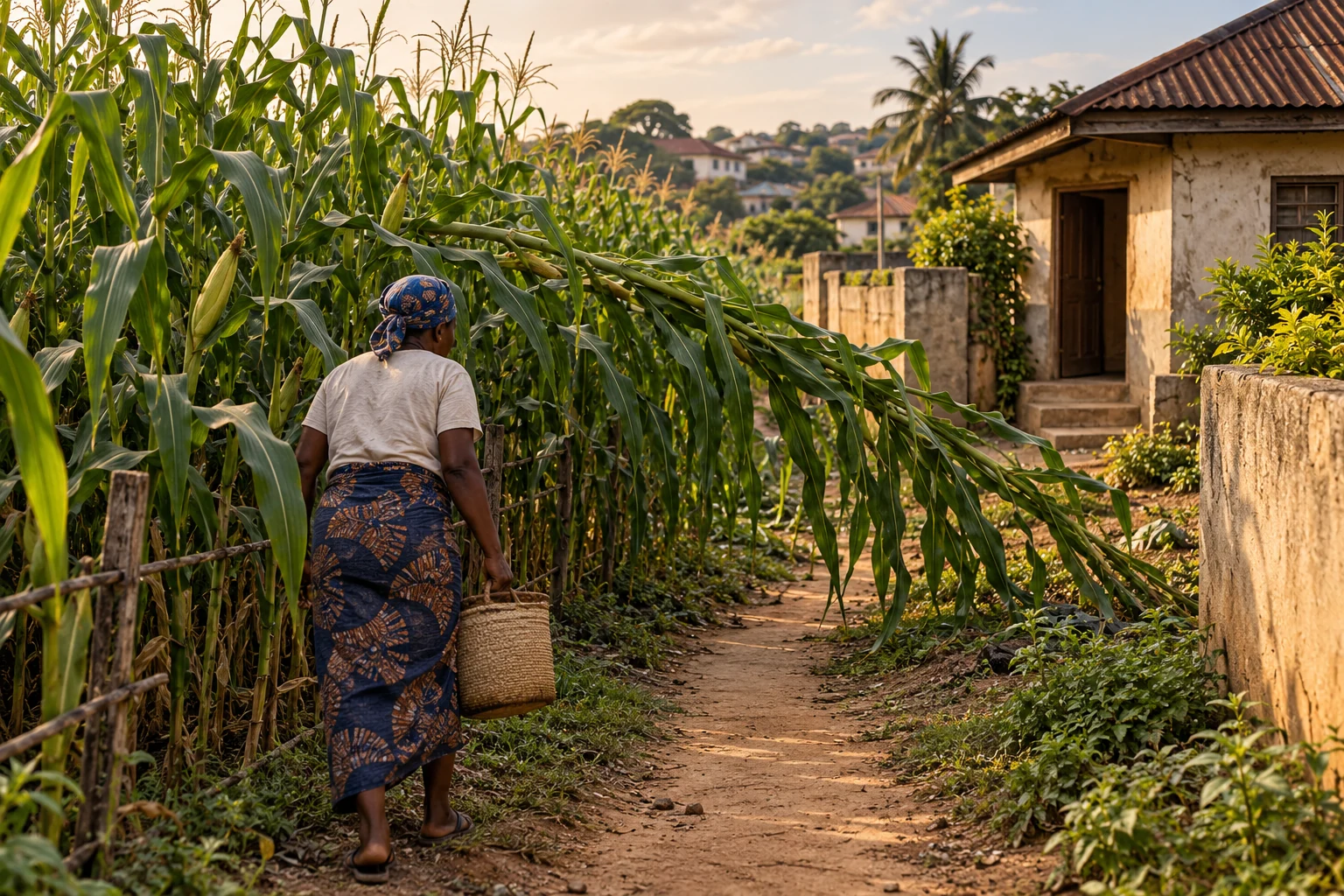
Elegua must pass a maize planting to reach his home at the edge of town. The crop repeatedly obstructs him, and he considers calling Ogun to clear the problem. The farmer consults, learns the cause of the neighbor’s anger, and makes an offer that averts escalation.
The planting is productive for one person but costly for another. That difference makes the boundary a shared matter rather than an automatic privilege of ownership. The source emphasizes a gift, while a fuller ethical reading should also ask whether the access problem itself is corrected. Appeasement is not identical to a fair long-term arrangement.
Narrative setting: Cuban/Lukumí patakín in a multilingual source compilation; no individual narrator is established.
The dog prepares for offspring but not their later bond
A dog consults about having young and receives a second counsel concerning the relationship after the young have grown. It undertakes the first religious commitment but not the second. The account then describes repeated fighting when mother and offspring meet after going their separate ways. The narrator uses that sequence as an etiology of canine behavior, and later extends it toward human dispositions. The selected motif is more exact than a general warning about quarrels: it distinguishes bringing a relationship into existence from sustaining its next stage. It is not a biological explanation of dogs or an assessment of actual parents and children.
The first desired outcome does occur. That is why the story cannot be summarized as refusal producing no success at all. The dog gains offspring while the later relation remains unprovided for within the witness’s religious logic. Sacred responsibilities have differentiated purposes and continue beyond acquisition. This adds a family scale to the earlier corn farm, where obtaining a worker’s return does not end the obligation to provide the promised payment. The neighbor’s path likewise remains a continuing condition rather than an issue settled simply by planting a crop.
A contemporary interpretation can ask what follows a successful beginning without claiming that real family conflict comes from a neglected rite. It should also leave room for relations that change legitimately when younger members depart. The source’s repeated fighting is one narrated result, not a command that all distance is betrayal or a reason to diagnose a reader’s family as inherently combative.
Narrative witness and setting: Translated excerpt in the multilingual compilation’s expressly attributed Cromwell Osamaro sequence, with Yoruba/Bini-facing material. The compilation’s language is not evidence of a Brazilian tradition.
The fiery divine member is invited back
Before earthly life, Shango receives counsel amid complaints from other powers about his aggression and the fire accompanying his speech. Later, exclusion from their company leads him to consult Orunmila. After his religious response, the other powers invite him to renewed association. He initially refuses, requiring them to come to his own house before reconciliation takes place. This version gives the assembly’s discomfort a volatile and disruptive setting rather than only a charge of excessive frankness. Its account therefore includes both a need for changed relation and the excluded figure’s position in how return is negotiated.
The source does not require choosing between an entirely innocent outsider and an entirely justified collective. Shango’s disturbing conduct is stated, yet the invitation alone does not complete repair. The sacred response participates in changing the relation, while the assembly’s visit gives reconciliation a visible social form. This has a different balance from the source variant associated with Obara Oyeku, where the group cannot identify a sufficient offense. A sign-specific study should preserve that difference instead of importing the other version’s defense.
The earlier angry-neighbor episode also begins with a real obstruction rather than arbitrary hostility, while the corn-farm grievance concerns a broken promise. Together the four stories make an exact account of conflict possible: what has happened, what remains due, and who must participate in repair? A contemporary analogy about mediation can follow, provided it does not replace Orunmila’s religious role or treat Shango’s fire as merely an angry personality trait.
Narrative witness and setting: Translated excerpt in the multilingual compilation’s expressly attributed Cromwell Osamaro sequence, with Yoruba/Bini-facing material. The compilation’s language is not evidence of a Brazilian tradition.
What was born in this Odù
“Born” can name an explicit traditional origin association or what emerges through a story: a capacity, relationship, practice or order of life. Interpretations drawn from a narrative are labelled below, so their basis remains clear.
The twins’ broken inseparability vow
Selected traditional source association.
The source associates the sign with a vow between twins that does not remain intact. The selected narratives do not explain that episode, so it should stay a limited motif of commitment rather than a fabricated twin story.
Tooth pain
Selected traditional source association.
This bodily experience is another listed origin association. No dental cause, diagnosis, or remedy follows from the card; it remains contextual evidence of the compilation’s range.
Correlations to life dimensions
These questions bring the selected stories into contemporary life. They are interpretive invitations for study.
Work and resources
A temporary staffing gap becomes an impossible workload for the remaining person. Compensation and capacity need to be assessed separately.
Reflect: What extra labor has become invisible because someone kept coping?
Relationships and family
The farmer’s plan blocks a neighbor’s ordinary journey home. A project’s boundaries should include the daily routes other people depend on.
Reflect: Who needs passage through or around what you are building?
Character and inner life
The owner remembers consultation only when losses become evident. Earlier listening could identify the grievance before retaliation hardens it.
Reflect: What complaint can be addressed before it becomes a crisis?
Community and responsibility
A gift may cool anger but leaves a question about structural access. Durable peace requires more than managing someone’s mood.
Reflect: What continuing agreement would prevent the conflict from returning?
A deeper reading of the sacred relationships
A sacred commitment can concern a later stage
The dog’s two counsels distinguish offspring from a durable relationship with them, while Shango’s later exclusion gives occasion for renewed consultation rather than making his earlier identity complete in itself. The corn-farm owner similarly has obligations after a worker returns, and the neighbor’s access remains relevant after a crop is established. Within the religious accounts, efficacy is temporal and relational: one favorable event does not abolish what follows. A contemporary discussion of maintenance can illuminate that pattern, but should not turn it into a claim that every family quarrel or work dispute proves spiritual omission. The source describes particular commitments and changes, not a diagnostic checklist for readers.
A grievance needs its own account before repair
Esu’s missed provision, the blocked route, the dog family’s recurrent meetings, and the divine assembly’s complaint each arise from different conditions. Their effects may all be called conflict, but that name does not explain them. A reference article should identify what is actually obstructed or owed before offering a shared theme. That source discipline also prevents the principal figure from receiving automatic innocence or blame. The neighbor has a concrete problem, the worker a promise, and Shango a disruptive reputation together with a claim in the return process. The contemporary comparative lens is therefore an inquiry into the particular grievance, while the religious actors retain their roles in changing it.
Reconciliation is not the same as the first overture
Shango’s refused invitation requires a further approach; paying Esu’s debt changes market access; and the gift to the neighbor averts an immediate escalation without fully narrating a redesigned path. The dog story, by contrast, ends in repeated hostility rather than reconciliation. These differences should be retained rather than replaced by one hopeful conclusion. A contemporary reading can ask what makes an overture credible and whether the original condition has changed. The religious narratives themselves provide uneven degrees of closure. Some describe a renewed community, some a resumed livelihood, and one only a recurring problem. Their boundaries are evidence of what each account actually claims to accomplish.
Questions that deepen the study
Does the dog story blame a mother for later conflict?
It personifies a dog in a religious account that distinguishes two preparations, then generalizes about the animal’s behavior. It does not provide evidence for blaming an actual mother or treating a child’s independence as failure. A contemporary interpretation can focus on the difference between beginning and sustaining a relationship, while keeping the sacred sequence visible as the story’s explanation. The later disagreements are not a diagnosis a reader should apply to their own household. The source’s exact contribution is temporal: a first wish can be fulfilled while another aspect of the resulting life still requires attention.
How is this Shango episode distinct from a generic story of unjust exclusion?
The witness expressly describes conduct the other powers experience as aggressive and fiery. That does not automatically validate every sanction, but it gives the conflict more than an unsupported dislike of frankness. Shango’s religious response and the group’s later visit then show repair as a changed relation involving both sides. A careful study should not borrow a different version’s grounds to make him wholly innocent here. The new witness adds a particularly useful tension: a person or power may have something to answer for and still have a legitimate position in how reconciliation occurs.
What do the new accounts add to the old maize stories?
They extend ongoing obligation from labor and neighborhood access into family and divine society. The dog’s first success does not settle later relations, just as a returning worker still needs payment. Shango’s re-entry requires more than an announcement, just as cooling the neighbor’s anger does not fully describe a sustainable route. These are contemporary comparisons grounded in distinct narratives, not a universal religious theory of conflict. Their value is precision about the next stage. A study can ask what remains after the initial aim is achieved, while keeping the particular sacred commitments and actors rather than replacing them with general advice.
What the four narratives reveal together
The added witness makes Okanran Owonrin’s ongoing obligations more explicit. The dog obtains offspring without the later bond it was advised to prepare for, while Shango’s changed relation to the divine assembly requires consultation, an invitation, and a further visit. The earlier corn farm and blocked path retain different material grievances. Their comparison supports an exact temporal question: what remains due after the first desired outcome? Religious responsibilities are active within the accounts, not merely names for modern maintenance habits.
Contemporary analysis can then examine a grievance and the credibility of repair without assuming all angry parties are unreasonable or all beginnings lead to the same future. The endings remain uneven, from repeated hostility to renewed association. That difference gives the reference study more substance than a general promise that generosity or compliance will end every conflict.
Living with this Odù
A continuing life or initiatory relationship
For someone whose received life or initiatory Odù is Òkànràn Ọ̀wọ́nrín, an achieved beginning can create a new responsibility rather than complete the relation. The farm owner's worker returns, but the promised provision remains due; the dog has offspring, while their later bond remains unprovided for in the witness. Across changing stages of work and family, these narratives ask what must continue after the first desired result. They do not explain actual family conflict through ritual omission or demand that younger members never leave.
The blocked path and Shango's negotiated return add concrete grievances that should be heard before repair is praised. The crop sustains one person while obstructing another, and the assembly's discomfort in this version includes disruptive conduct. Shango's refusal of the first invitation does not erase that conduct, while the assembly's visit makes reconciliation more than a verbal reopening. Long-term character can include naming what is owed and accepting one's own part without treating conflict as either total innocence or total blame. The sign is not a permanent combative temperament. It keeps religiously effective responses, changing commitments and the incomplete redesign of a path distinct from one universal promise of restored harmony.
A particular consultation and its question
A consultation yielding Òkànràn Ọ̀wọ́nrín can help identify the actual grievance underneath an apparent conflict. Is a completed contribution unpaid, is productive use obstructing a neighbor's passage or has a group responded to genuinely disruptive conduct through exclusion? The worker, path and Shango accounts give different answers. A practitioner should not replace them with a general demand for generosity or import the more innocent Shango variant from another sign.
The dog adds a temporal question about what has and has not been achieved. Offspring arrive, but the later relation does not follow automatically. Its sacred commitments remain part of the attributed account, not a diagnosis of an unknown household. Esu's farm and path roles also remain effective religious agencies without making ordinary financial difficulty proof of punishment. Consultation can ask whether an overture changes the original condition or merely averts immediate escalation. Shango's eventual reconciliation and the path's more limited ending should not be given identical closure. The present result addresses a particular question; it does not make the seeker permanently an unpaid worker, obstructed neighbor or volatile excluded member.
Constructive and adverse possibilities
Constructive relations could acknowledge a specified debt, answer a genuine access problem and make a first overture credible through further participation. Shango's assembly comes to his house within a religiously changed relation, while the farm's resumed circulation follows acknowledgment of what had remained due. Success and subsequent maintenance stay connected.
Adverse unfolding may arise when a favorable beginning is treated as sufficient for every later stage, a gift replaces correction of an obstruction or blame erases the facts that generated a grievance. Shango's conduct and his claim in the return process both remain relevant. These contrasts do not decide ìrè or òṣogbo for a particular divination. They ask what has actually been repaired, what remains owed and whether a restored association addresses more than the inconvenience felt by the party wishing the dispute would end.
An illustrative situation in everyday life
In a hypothetical shared farm, a landholder plants a profitable crop across a route a neighbor needs daily. After complaints, the landholder offers produce but makes no plan for a continuing passage. The path story helps distinguish averting a confrontation from correcting the original condition. A returning worker also requests an agreed meal or payment before further labor, adding a separate obligation rather than another version of the same demand. This illustrative interpretation offers no diagnosis of divine retaliation. It asks the participants to specify what each claim concerns, which response meets it and whether a productive beginning has left the relations that sustain it inadequately arranged for the next season.
Sources and reading context
The first two narrative witnesses
The two Cuban maize stories share a crop but present distinct disputes: labor obligations and right of passage. Ambiguous translations of ritual terms in the English farm version are not repeated as facts. The origin list’s bodily and sexual material is not turned into personal guidance.
Narrative motifs are summarized independently. The life-dimension reflections are contemporary interpretation. How these reference studies are built explains the wider source approach and the distinction between a reference article and personal divination.
Additional named witnesses
- Cromwell Osamaro Ibie. The surrounding sequence is expressly attributed to Cromwell Osamaro. These selected episodes are read through the multilingual compilation’s translated renderings; exact edition and original translation chain remain unverified.
The dog’s behavior is an etiology, not zoology or a judgment on actual families. This Shango version includes aggression and should not be conflated with another sign’s unjust-exclusion variant. The source’s later marital and disposition predictions are not carried into personal guidance.
Bibliographic identification
- C. Osamaro Ibie. Ifism: The Complete Work of Orunmila. Lagos; multivolume publication beginning 1986. Library catalogue record. Related bibliographic record for the named narrative witness. Exact volume, edition and page of the transmitted account have not been independently matched.
Read the source method and wider scholarly context.
The catalogue links identify published works and their authors. They are separate from proof of an individual episode’s wording or attribution. Contemporary comparisons and the synthesis above are editorial interpretation. The author’s books and Academy companions below provide further study; their sales links are separate from the source references.