
Òyèkú Ìròsùn is a mixed Odù in Ifá’s 256-part corpus. One narrative gives the Ibeji the power to expose a supposed peacemaker who has converted mediation into domination. Another has Oshun persuade an expelled Orunmila to return only when accompanied by children. These particular motifs focus on credibility, protective witnesses, and how a community can acknowledge the person it previously rejected. The source’s funerary honor imagery adds a distinct concern with collective recognition.
A question to carry through the study: What visible change would make an invitation to return trustworthy after a betrayal?
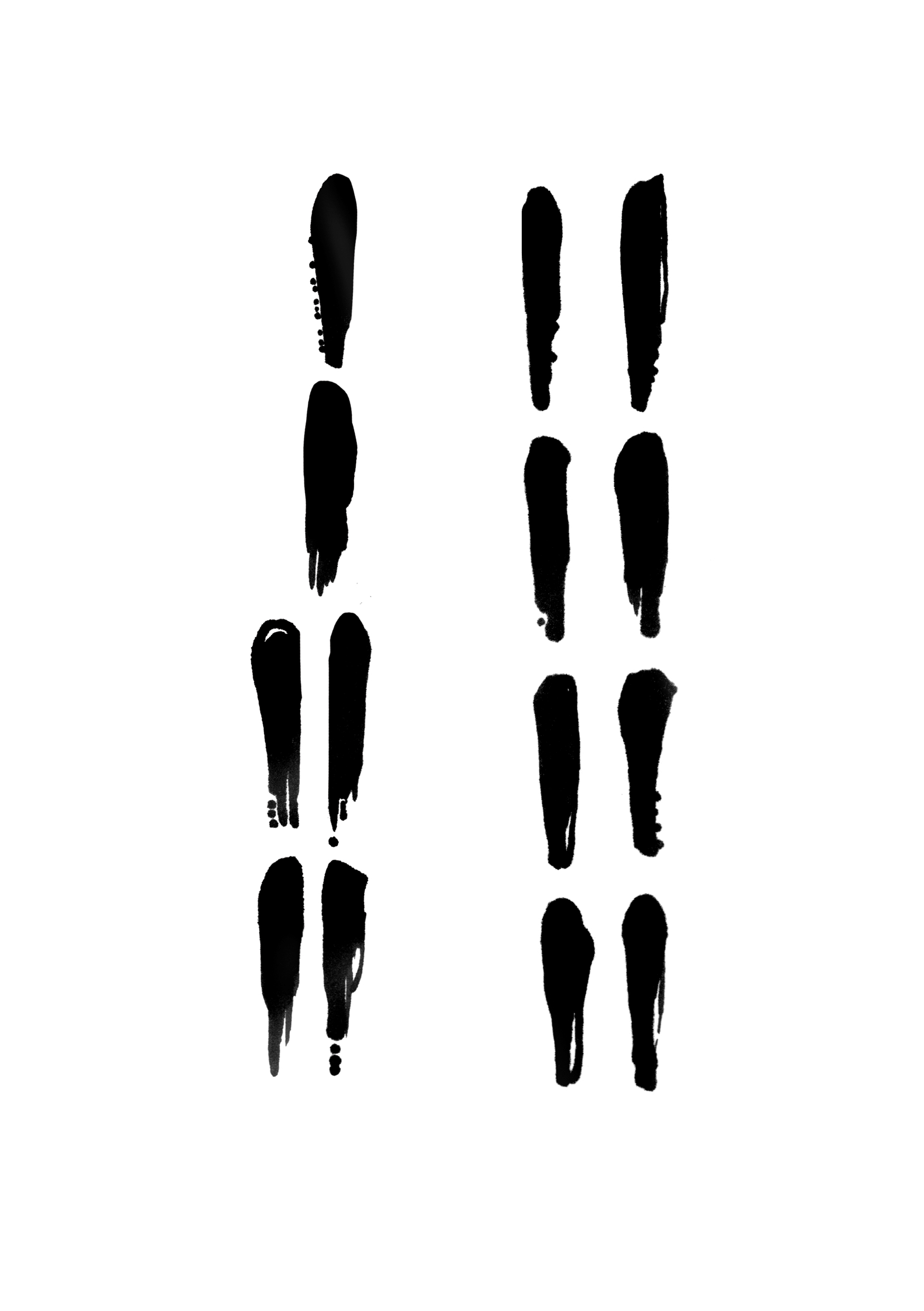
This Academy reads the right column first, then the left. Each row carries a single or double mark.

Where this Odù belongs
Òyèkú Ìròsùn belongs to the Òyèkú family in this Academy’s study sequence. It is a mixed Odù, distinct from Ìròsùn Òyèkú. The order matters. Its teaching is approached through its own narratives, rather than by adding two general descriptions of the principal signs together.
Key Òrìṣà and sacred relationships
The figures below are selected for their roles in the accounts discussed here. They offer connected reading paths through the tradition.
-
Ìbejì. The twins interrupt Abita’s command and name his deception, exposing an authority the other Orishas had accepted as a solution to their own conflict.
-
Òṣun. She approaches the exiled Orunmila and accepts his condition that children accompany the return, mediating between a damaged relationship and the town’s need.
-
Ọ̀rúnmìlà. He leaves after a hostile conspiracy and does not accept a renewed invitation until a credible escort addresses his fear that it is another trap.
Key myths and their meanings
The peacemaker exposed by twins
Olofin seeks a remedy for a leaderless earth where the Orishas compete for supremacy. Abita initially unites them, then takes control and issues commands. The Ibeji arrive and identify the deception. His appearance changes into a frightening form, the assembly rejects him, and he disappears. The mediator has become a ruler whose claimed service concealed a different aim.
The story distinguishes reduced conflict from legitimate governance: apparent unity may hide the concentration of control. The twins’ interruption supplies a voice outside the obedient assembly. The overtly devil-like transformation signals a culturally mixed narrative field, so we should not equate Abita with a universal African figure or convert the episode into a description of another religion.
Narrative setting: Cuban/Lukumí-labeled patakín in the multilingual source compilation; individual narrator and publication history are not established.
Children accompany the returning ruler
People conspire against Orunmila out of envy, driving him into the forest. Their town then declines, and invitations to return fail because he fears a trap. Oshun meets him and explains the need. He agrees only if she returns with children. The escort changes the terms of the approach, and Orunmila enters the town to resume his role.
The town’s need alone does not erase the injury done to the person it expelled. A concrete condition must address the credibility of the invitation. Children function within the story as signs of a different relation, but should not be turned into a practical recommendation to use children as shields. The larger issue is what acknowledgment makes repair believable.
Narrative setting: Cuban/Lukumí-labeled patakín in the multilingual source compilation; individual narrator and publication history are not established.
Two birds carry the traces of their preparation
Two related birds consult before coming to earth because they want offspring. Each receives a different religious preparation, and each is told that the materials will appear in the children’s bodies and habits. One account connects red marks on the feet and nest-building with one set of materials, including a pot. The other connects a white neck marking and a nest lined with sticks with another preparation. The birds subsequently praise the divination after their young arrive. The passage is a religious origin account of visible difference and habitual nesting, not an observation establishing how plumage, skin color, or reproduction works biologically.
The birds’ bodies remember a relation established before earthly life. Color and habit are therefore not arbitrary decoration within the account: they make a prior sacred response visible in the continuing life of descendants. The contrast also avoids requiring the related birds to become identical in order to share flourishing. Each receives a distinct preparation and carries a distinct trace. A depth study can explain that religious embodiment without converting it into genetic theory or assigning spiritual worth to human complexion.
The account’s translated bird names are not zoologically stable enough to support confident species identification. Its strongest theological contribution concerns how offerings, counsel, and bodily life are joined across generations. Contemporary interpretation can then ask what forms of inherited memory a community recognizes in ordinary gestures and appearances. That question is additional to the source’s spiritual explanation, not a substitute for it and not a warrant to read an actual child’s body as evidence of ritual success or failure.
Narrative witness and setting: Section explicitly headed revelations of Cromwell Osamaro; Portuguese rendering with Yoruba/Bini vocabulary.
A heated oath binds what its speaker no longer recognizes
Before earthly life, the protagonist receives a warning against making an absolute oath about food. Later, anger at a meal leads him to swear he will never eat it. His wife prepares another dish but reuses material from the rejected one, and he eats without recognizing the continuity. When he next attends the divinity inherited from his father, the usual signs of acceptance fail. Consultation identifies a breach of the oath, though he cannot initially locate it. A further religious response is attempted, but he dies at the shrine. The account makes a spoken commitment consequential beyond the speaker’s subsequent awareness of its terms.
The narrative’s religious logic gives words durability. Anger produces an absolute statement that continues to bind after the speaker feels reconciled and believes the meal has changed. The family divinity’s response reveals a relation not settled by the protagonist’s memory or intention alone. This does not justify adopting the source’s broad suspicion of wives or treating actual illness as evidence of an unwitting oath. It does permit a careful study of speech whose consequences exceed the moment in which it is spoken. The reused ingredient makes the continuity concrete rather than abstract: a new presentation does not necessarily create a wholly new act.
The wife’s role is also not reducible to an innocent misunderstanding, since the narrative depicts deliberate reuse after the oath. A contemporary reading can hold that deception and the speaker’s own rash promise together without distributing blame across all women or reducing the inherited divinity to a metaphor for conscience. The death remains an unresolved severe consequence, not a model of proportionate ordinary justice.
Narrative witness and setting: Section explicitly headed revelations of Cromwell Osamaro; narrative of an inherited family divinity and a meal.
What was born in this Odù
“Born” can name an explicit traditional origin association or what emerges through a story: a capacity, relationship, practice or order of life. Interpretations drawn from a narrative are labelled below, so their basis remains clear.
The funerary honor guard
Selected traditional source association.
The inventory associates the sign with an honor guard and the passing of a ceremonial tail over a deceased initiate. This is a specific funerary attribution, discussed as communal respect without transmitting liturgical directions or generalizing across lineages.
Facial scars
Selected traditional source association.
Facial scars appear in the sign’s origin list. Preserve that concrete body-marking motif without assigning one ethnic practice, medical meaning, or personal destiny to it; the selected narratives do not supply a corresponding account of how the marks began.
Correlations to life dimensions
These questions bring the selected stories into contemporary life. They are interpretive invitations for study.
Work and resources
Orunmila’s absence reveals a contribution the town failed to value while he was present. The story makes dependence visible only after a break. The story invites us to ask how institutions recognize necessary work before losing the person who performs it.
Reflect: Whose contribution is noticed only when absent?
Relationships and family
The return is negotiated rather than assumed. Oshun’s mediation and the agreed escort give the injured figure a say in the conditions. This supports examining reconciliation as a new agreement whose credibility depends on more than a request to forget.
Reflect: What condition would restore trust enough to meet?
Character and inner life
Abita’s initial success masks a growing claim to command. The twins notice the change and speak despite the assembly’s acceptance. Their role grounds a precise question about recognizing when a helper’s ambition has displaced the purpose of helping.
Reflect: Has the means become a claim to control?
Community and responsibility
Both episodes require a community to revise its judgment of authority. One rejects a deceptive mediator; the other recognizes a discarded contributor. The capacity to change course publicly matters more than maintaining the appearance that earlier decisions were correct.
Reflect: Can your community acknowledge that its judgment changed?
A deeper reading of the sacred relationships
Sacred relations persist through bodies, objects, and speech
The birds’ marks carry the memory of a pre-earthly response, while the oath persists in a meal whose ingredients have been rearranged. The earlier return of Orunmila depends on a condition made credible through Oshun and children, and the Ibeji expose Abita’s concealed identity. These are different manifestations of a relation not exhausted by surface appearance. Their religious worlds include effective offerings, inherited divinity, authoritative speech, and figures able to disclose what others cannot read. A depth treatment should explain those particular actions before adding contemporary lessons. It should not merge a bird’s bodily mark, a bound oath, and an exposed deceptive ruler into one universal system of signs.
A second presentation may preserve the first relation
The meal is new in form but carries material from the dish covered by the oath. Abita initially appears as a peacemaker, then reveals a form the assembly recognizes differently. The birds offer another case in which visible form genuinely records a prior relation rather than concealing one. Comparing these episodes makes appearance neither automatically false nor self-sufficient. The relevant question is what continuity produced it. Contemporary interpretation can ask what information is needed before declaring that a renamed action is a fresh beginning. The exiled ruler’s invitation adds a practical counterpart: words of welcome do not alone establish that the relation which caused the exile has changed.
Power to disclose does not settle every cost of disclosure
The Ibeji expose Abita, consultation discloses the oath’s breach, and Oshun clarifies the town’s need to the absent ruler. Each disclosure changes what can happen, but their endings differ: rejection, death, and a negotiated return. The birds’ praise supplies yet another outcome, acknowledgment rather than exposure. A depth study can preserve the religious authority of revelation while asking what consequences the narrative actually describes and what remains beyond it. Truth becoming visible is not identical to every relationship being repaired. That distinction is especially important when a source’s severe ending could otherwise become a generalized threat against contemporary readers rather than a particular account of spiritual responsibility.
Questions that deepen the study
Can the bird markings be explained spiritually without making biological claims?
The passage presents them as embodied remembrance of a relationship established through Ifa before the birds’ earthly lives. That religious explanation can be stated clearly without claiming scientific proof or using it to rank actual bodies. The two preparations remain different, and the birds’ shared flourishing does not require identical marks. Contemporary interpretation may ask how a community connects appearance, habit, and inherited memory, but should distinguish that reflection from the source’s account of sacred causation. The translated names do not support a secure modern species assignment, and the appended claims about human children are not carried into the research.
Why is the oath not simply canceled by the speaker’s change of mood?
Within the narrative, an oath establishes a durable relation that the inherited divinity recognizes. Feeling reconciled and receiving a newly presented meal do not automatically alter that relation, particularly when an ingredient connects the second dish to the first. The religious account therefore places responsibility on words beyond immediate emotion. Contemporary reflection can ask what promises require explicit release or renegotiation, while avoiding a claim that ordinary dietary accidents bring supernatural punishment. The wife’s deliberate reuse and the protagonist’s rash oath are both part of the specific plot. Neither supports a universal suspicion of spouses or a diagnosis of actual suffering.
What do these additions contribute to the returning ruler and exposed peacemaker?
They introduce continuity across forms and generations. The ruler’s return needs more than a repeated invitation, Abita’s attractive role conceals another identity, a new dish preserves an earlier material connection, and the birds’ bodies visibly carry a sacred past. The four accounts therefore distinguish credible change from mere relabeling without declaring every appearance deceptive. Their spiritual agencies remain specific: Oshun mediates, Ibeji disclose, the inherited divinity responds, and Ifa’s preparation becomes embodied. Contemporary interpretation can compare the obligations those relations establish, while preserving the different outcomes rather than forcing them into one lesson that revelation always ends in harmonious repair.
What the four narratives reveal together
The earlier Cuban pair examines a deceptive mediator and the conditions under which an injured ruler can return. The Osamaro-headed additions move the inquiry into embodied memory and binding speech. Two birds carry different visible traces of their religious preparation; a protagonist discovers that an angry oath remains active through a meal he believes has changed. Across the four, form and relation must be read together, but the forms do not all deceive.
Some disclose sacred continuity, others conceal intention, and another becomes credible through a negotiated escort. Their religious realities should remain explicit rather than reduced to psychological symbolism. The comparison also keeps outcomes distinct: praise, rejection, return, and death do not provide one universal model of justice. A depth study can therefore ask what actually changes a relation, how that change becomes knowable, and what responsibility remains when a first description proves insufficient.
Living with this Odù
A continuing life or initiatory relationship
For someone whose received life or initiatory Odù is Òyèkú Ìròsùn, trust may need visible conditions rather than an appeal to restored goodwill alone. The twins expose a mediator who has converted unity into command. Orunmila’s return requires a changed approach after the town has expelled him. These motifs distinguish a community’s need for someone from its credibility in asking that person to return. Long development can involve recognizing domination concealed within help and making repair concrete enough to be believable.
The birds’ differing preparations and the heated oath add questions about continuity. Related lives can flourish without identical traces, while a rash statement can remain consequential after its speaker believes the situation has changed. A person may need to notice both durable obligations and the limits of what another’s appearance can reveal.
The religious agency remains particular: Ibeji’s exposure, Oshun’s mediation, prior counsel, and the inherited family divinity do not become one generalized intuition. A received sign does not authorize suspicion of women, judgments from bodily marks, or predictions of punishment. Across changing circumstances, it can ask whether a promise was made with adequate understanding, whether a return has new terms, and whether apparent harmony leaves one participant with unexamined control.
A particular consultation and its question
In consultation, Òyèkú Ìròsùn can distinguish reduced conflict from legitimate shared authority. Abita’s apparent success as peacemaker does not settle the purpose of his command. The return narrative asks a different question: after rejection, what changed condition would make an invitation credible? A practitioner can examine control, acknowledgment, and actual safeguards without identifying an unknown helper as deceptive or recommending children as practical protection.
The oath account directs attention to the durability of words beyond the anger that produced them. Has a statement been treated as temporary emotion by its speaker while others continue to act on its terms? The reused meal makes continuity concrete, but the story does not justify diagnosing present misfortune as an unrecognized oath. The birds similarly establish religious embodiment within their narrative, not a method for reading an actual child’s body.
A particular result retains its question and religious guidance. It does not make the visitor permanently distrustful, destined for exile, or bound to an invented prohibition. Interpretation may clarify a compromised mediation, a proposed return, a statement needing exact acknowledgment, or differences that a group need not erase. The source’s sparse identities and severe outcomes should remain limits on certainty rather than invitations to fill gaps with predictions.
Constructive and adverse possibilities
Constructively, an assembly can hear a voice outside its obedient pattern, and a return can take place through terms that acknowledge a prior betrayal. Related birds can carry different traces while sharing flourishing. Speech can also be treated seriously enough that commitments are not casually denied once their immediate emotional occasion has passed. Religious relations give these developments force within the accounts.
Adversely, mediation can become domination, need can pressure an injured person to return without changed conditions, and anger can create an absolute promise whose consequences exceed the speaker’s later awareness. Deception around the meal remains a separate responsibility from rash speech. The narrated death does not define proportionate ordinary justice or predict an actual outcome. Iré and adverse conditions belong to the consultation. The motifs sharpen inquiry into whether unity, return, and continuity preserve accountable relationships or conceal unequal control.
An illustrative situation in everyday life
Hypothetically, a facilitator ends a dispute by making every participant accept his decisions without review. People initially welcome the quiet, but two junior members ask why the promised shared process has disappeared. The twins’ intervention distinguishes peace from concentrated command. A previously excluded organizer is then invited back because the group needs her skills. The return motif asks what has actually changed beyond the group’s need. She can request a public explanation of her role and a process for disagreement before agreeing. The imagined situation concerns credible repair and scrutiny of mediation. It does not cast the facilitator as Abita, reproduce the narrative’s frightening transformation, or suggest that young participants should carry the responsibility for everybody’s safety.
Sources and reading context
The first two narrative witnesses
Two Cuban-labeled patakines are selected. Abita’s devil-like imagery indicates a mixed diasporic register rather than a universal Yoruba identification. Children are narrative witnesses, not practical security instruments. The funerary association is described without directions or claims of uniform lineage practice.
Narrative motifs are summarized independently. The life-dimension reflections are contemporary interpretation. How these reference studies are built explains the wider source approach and the distinction between a reference article and personal divination.
Additional named witnesses
- Cromwell Osamaro. An explicit heading precedes both the related birds’ differing bodily/nesting traces and the oath-and-meal narrative.
The inherited divinity is not securely named. Bird names and gender pronouns shift in translation. Religious embodiment and oath efficacy are preserved without biological or clinical claims. The source’s blanket suspicion of women and prescriptive personal taboos are excluded; exact edition/pages remain unverified.
Bibliographic identification
- C. Osamaro Ibie. Ifism: The Complete Work of Orunmila. Lagos; multivolume publication beginning 1986. Library catalogue record. Related bibliographic record for the named narrative witness. Exact volume, edition and page of the transmitted account have not been independently matched.
Read the source method and wider scholarly context.
The catalogue links identify published works and their authors. They are separate from proof of an individual episode’s wording or attribution. Contemporary comparisons and the synthesis above are editorial interpretation. The author’s books and Academy companions below provide further study; their sales links are separate from the source references.