
Òyèkú Ìwòrì is a mixed Odù in Ifá’s 256-part corpus. A personified head acquires eyes, ears, and hair through encounters on a journey; a town suffers after an unresolved promise to Shango becomes a collective burden. These motifs give the sign a particular tension between what an individual lacks and what a group owes. The origin inventory explicitly names family formation and the alternation of day and night, making change relational rather than simply private.
A question to carry through the study: Which responsibility is being left unresolved because everyone assumes it belongs to someone else?

This Academy reads the right column first, then the left. Each row carries a single or double mark.
Where this Odù belongs
Òyèkú Ìwòrì belongs to the Òyèkú family in this Academy’s study sequence. It is a mixed Odù, distinct from Ìwòrì Òyèkú. The order matters. Its teaching is approached through its own narratives, rather than by adding two general descriptions of the principal signs together.
Key Òrìṣà and sacred relationships
The figures below are selected for their roles in the accounts discussed here. They offer connected reading paths through the tradition.
-
Ṣàngó. He appears as the creditor in the town’s unfulfilled-promise narrative; his punitive action creates the story’s ethical difficulty about collective consequences.
-
Ọ̀rúnmìlà. He identifies the unresolved obligation after other efforts fail and receives the completed head’s acknowledgment, linking inquiry to the clarification of a particular lack.
Author’s further study: The Myths and Revelations of Odù Òyèkú Ìwòrì develops this sign at book length. The inherited accounts discussed here retain their named witnesses and religious settings.
Key myths and their meanings
The head’s new inhabitants
At the world’s formation, the head lacks eyes, ears, and hair. It consults Orunmila and sets out. Hair appears as a pair that settles and multiplies; the eyes and ears also find places in the head. Returning, the head acknowledges having gained the features it lacked. The body is imagined as a dwelling made complete through successive arrivals.
The plot does not make completeness instantaneous or solitary. Different capacities arrive through different encounters, and the head recognizes their contribution. The hair’s family imagery is especially distinctive beside the sign’s family-origin list. We can keep this as a mythic account of embodiment, without suggesting that disability or bodily difference means an incomplete spiritual person.
Narrative setting: Cuban/Lukumí-labeled patakín in the multilingual source compilation; individual narrator and publication history are not established.
The debt the town finally addresses
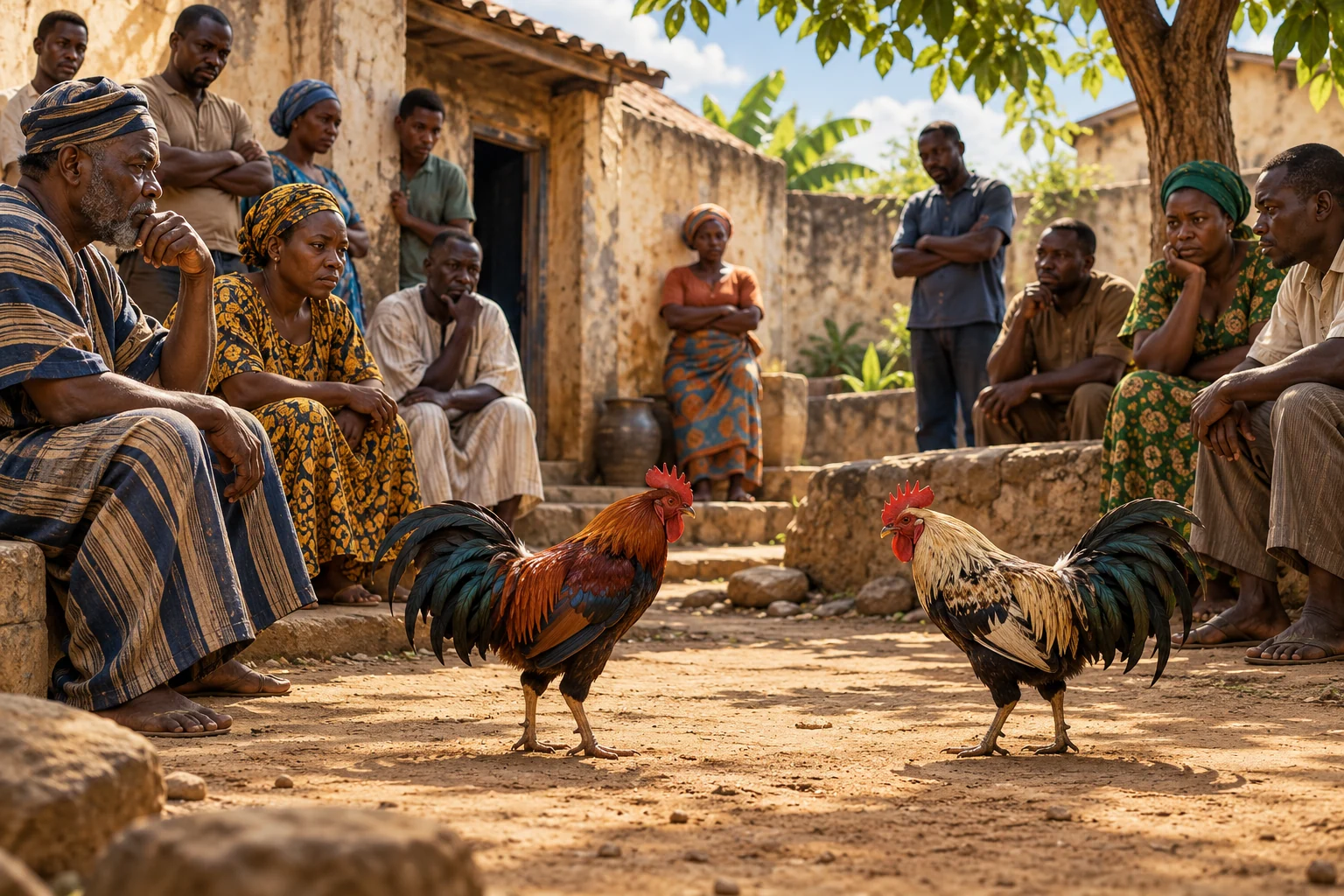
A man has promised Shango two roosters but refuses payment, saying he has not received what he asked for. Shango, disguised in the town, turns to the dead and the population suffers. A resident consults Orunmila and identifies the debt. After the original debtor dies without settling it, the remaining people collectively pay, and Shango withdraws the spirits.
The individual’s disputed promise becomes everyone’s problem, raising an issue of collective liability rather than simply praising payment. The debtor’s objection suggests an unresolved disagreement about reciprocity. The story can ground inquiry into clarifying commitments before consequences spread, but its illness and death must remain narrative events rather than explanations for actual community suffering beyond this story.
Narrative setting: Cuban/Lukumí-labeled patakín in the multilingual source compilation; individual narrator and publication history are not established.
The hunted clients prepare beneath their meeting place
Oyeku-bi-wori holds meetings for birds and forest animals, advising them against enemies. Ogun cultivates friendship with him to reach two conveners he wants for his festival. The diviner tells Ogun when their calls will indicate the meeting, but separately prepares the clients to take refuge beneath the room after a religious response. At the appointed time Ogun hears the signals and arrives to find the host alone. Invited to sit, he falls into a concealed pit while the animals escape. The account then locates a continuing hunter-prey conflict in Ogun’s unsuccessful pursuit rather than narrating a lasting reconciliation among all parties.
The host is tested between a powerful friend’s request and the safety of people who consult him. His outward agreement with Ogun therefore cannot be read as the whole of his allegiance. Within the account’s religious reality, divination and the response involving Eshu make a prepared refuge possible, while the familiar convening calls are used to draw the hunter into another interpretation. The clients’ trust is sustained through concealment rather than full disclosure to every participant. This is not a universal professional rule permitting deception, and the pit’s violence remains an ethical difficulty.
Its specific question concerns conflicting obligations when a request would make a counselor’s knowledge available against those who depend on him. The ending is also important: the escape does not abolish predation. The animals gain a particular interval of safety while Ogun continues hunting, showing a religious account of protection that need not become a promise of permanent immunity from all future danger.
Narrative witness and setting: Section explicitly headed revelations of Osamaro; Yoruba/Bini-framed narrative.
The soaked traveler reaches home while others remain sheltered
Orunmila and other divinities prepare to travel to earth and receive counsel about a journey interrupted by rain. Orunmila alone completes the prescribed religious response. Eshu brings a prolonged downpour at the boundary. The others settle into shelter along the route. Orunmila pauses with Egungun, receives hospitality and a cap, but continues onward and reaches a household that welcomes him with dry clothing. The rain persists so long that the others make their stopping places into lasting residences. The narrative explains contrasting places of religious service through this journey, distinguishing Orunmila’s domestic arrival from the roadside and outdoor locations of the other figures.
The cap matters because the account does not oppose all help or all stopping to the completion of a journey. Egungun offers shelter, yet his hospitality also equips the traveler to continue when the traveler declines to remain. That distinction gives religious support a particular form: it does not absorb the guest into the host’s place but sustains the direction disclosed through consultation. Eshu’s rain is an active intervention, and the other divinities’ locations become meaningful through their different responses within this narrative.
The explanation should not be universalized into a claim that every Orisha is always served outside or that people should ignore dangerous weather. A contemporary reading can instead ask when temporary refuge has quietly become a destination and how a household helps someone arrive without treating their difficult passage as a failure. The story’s long rain converts a delay into a lasting ritual geography, making time, care, and place inseparable from its religious meaning.
Narrative witness and setting: Section explicitly headed revelations of Osamaro; Yoruba/Bini-framed descent narrative.
What was born in this Odù
“Born” can name an explicit traditional origin association or what emerges through a story: a capacity, relationship, practice or order of life. Interpretations drawn from a narrative are labelled below, so their basis remains clear.
The formation of family
Selected traditional source association.
Family creation appears explicitly in the origin list. The hair’s paired settlement provides a nearby narrative image, but neither source establishes a single historical family form or makes one household structure universal across Ifa traditions.
Day into night and night into day
Selected traditional source association.
The origin inventory attributes the alternation of day and night to the sign. This supports a local cosmological association with successive change, not an etymology or an empirical account of the earth’s daily cycle.
Correlations to life dimensions
These questions bring the selected stories into contemporary life. They are interpretive invitations for study.
Work and resources
The town tries many responses before identifying the specific unresolved promise. Its effort remains ineffective while the underlying disagreement is unnamed. We can examine how a shared project identifies the actual obligation rather than multiplying activity around an undefined problem.
Reflect: What agreement needs to be made explicit?
Relationships and family
Hair becomes a pair and multiplies within the head’s dwelling image. The story makes arrival and settlement central to the formation of a whole. That image supports questions about accommodating new members without deriving a prescribed household structure from the fable.
Reflect: What place is available for a new contributor?
Character and inner life
The head notices what it lacks and undertakes a journey. Its self-assessment leads to encounters rather than a claim that it can supply every capacity itself. The useful distinction is between acknowledging a need and defining a person entirely by that need.
Reflect: Can a need be named without becoming an identity?
Community and responsibility
The town eventually assumes a burden created by one person’s disputed commitment. The episode invites scrutiny of how communities distribute liability and whether a resolution protects the vulnerable or merely shifts costs away from an unwilling participant.
Reflect: Who should share the cost of an unresolved promise?
A deeper reading of the sacred relationships
Sacred place emerges through a relation of arrival
The descent story explains Orunmila’s domestic reception and other divinities’ locations through actions within a spiritually consequential journey. Egungun’s cap carries care beyond the immediate shelter. The earlier head story similarly acquires capacities through encounters before returning to acknowledge what has been gained, while the debt episode asks the town to locate a neglected relation with Shango. These are different religious explanations of how a place or person becomes properly situated. They do not produce one universal map of shrines or bodies. A depth study can describe the specific relation among consultation, response, and location while preserving the account’s spiritual agencies rather than reducing place to convenient scenery.
A counselor’s access creates responsibilities to several parties
Ogun can approach the meeting through his friendship with its host, while the animals depend on that same host for protection. The older Shango-debt story creates another conflict of obligations: one person disputes a promise while the town bears its consequences. Both accounts show why a religious relationship cannot be judged from one participant’s request alone. The counselor’s knowledge or the community’s liability connects people who may not share the same purpose. Contemporary interpretation can ask what has been entrusted and who would be exposed by disclosure or refusal. The answers remain situated; the protective pit is not automatically a fair model for every professional conflict.
An immediate rescue can leave the larger relation unchanged
The animal clients escape the meeting, but Ogun continues to pursue prey. Orunmila reaches home, while other powers form their own continuing places along the road. The debt town obtains relief, but the source gives little agreement about the original debtor’s objection. These outcomes distinguish a successful passage from a complete settlement among all actors. A depth reading can honor protection and arrival without pretending that every danger or dispute disappears. It can also ask which form of continuity matters: the head gains a more complete embodied place, the traveler a welcoming household, and the animals renewed opportunity to live despite an unresolved hunter-prey relation.
Questions that deepen the study
Does Orunmila’s refusal to remain under shelter mean hospitality is wrong?
The narrative gives Egungun a helpful role: he welcomes the traveler and supplies a cap when the traveler continues. Hospitality becomes support for the direction disclosed by Ifa rather than a demand that the guest stay. The contrast is therefore between a temporary stopping place and a settled destination, not kindness and isolation. Contemporary interpretation can ask whether assistance equips someone to proceed toward their own purpose. It should not convert the episode into weather advice or a universal ban on accepting refuge. Its long rain and resulting places of worship belong to a particular religious origin account.
Is the meeting host simply betraying Ogun?
The account first establishes that the birds and animals are his clients and that Ogun’s friendship is intended to reach them as victims. That prior relation changes the meaning of the host’s apparent agreement. He preserves the clients through religious preparation and a concealed refuge, but also uses a violent trap against the hunter. A contemporary reading can recognize the protective responsibility without treating every chosen means as beyond question. The religious story does not present a neutral exchange of information; it depicts knowledge entrusted within unequal relations. Its final ongoing hunting conflict limits any claim that the particular rescue creates lasting peace.
What do these stories add to the head’s gains and Shango’s debt?
The earlier pair concerns capacities acquired through encounter and obligations left unresolved within a town. The additions place those concerns within travel and a protected gathering. A cap permits continuation, a convening call becomes evidence interpreted differently by host and hunter, and a stopping place becomes a shrine location. Read together, the four accounts ask how knowledge and responsibility place people in relation to others. Their spiritual logic remains specific to Ifa, Eshu, Egungun, and Shango rather than an anonymous lesson about networking. Contemporary reflection can compare the relations without assuming that every obligation requires the same response or produces the same kind of closure.
What the four narratives reveal together
The new Osamaro-headed narratives extend the earlier Cuban head and debt stories through two distinct forms of passage. One protects clients inside a meeting whose knowledge a hunter wants to appropriate; the other carries a soaked traveler toward a domestic arrival that becomes religiously meaningful. Consultation, sacred response, and named powers actively determine these events. Their comparison is therefore more than a modern reflection on planning. It asks how a person or power becomes situated through obligations, encounters, and a place others acknowledge.
The outcomes also leave different limits: the head gains its features, the town obtains relief, animals escape without ending predation, and divinities retain different locations after the rain. A depth treatment can preserve those differences while examining disclosure, temporary refuge, and the difference between immediate safety and a fully reconciled relation among all participants.
Living with this Odù
A continuing life or initiatory relationship
For someone whose received life or initiatory Odù is Òyèkú Ìwòrì, completion can develop through successive relations rather than a demand to be self-sufficient at the beginning. The head receives capacities as arrivals whose contribution it later acknowledges. The town’s unpaid promise exposes the opposite movement, where an unresolved individual obligation spreads into collective suffering. A person may need to distinguish receiving support from silently transferring the cost of a dispute to others.
The hunted clients and rain-interrupted journey add questions about refuge. A counselor’s knowledge can endanger those who trust him if handed to a powerful friend. Temporary shelter can also become an unchosen destination when the conditions of continuing are left unexamined. Egungun’s hospitality is distinctive because it equips Orunmila to proceed rather than absorbing him into the stopping place.
A received sign does not make bodily difference a spiritual deficiency or predict communal illness. Its religious field includes Shango’s disputed claim, Eshu-related preparation, Egungun’s aid, and divinatory direction in distinct arrangements. Across changing circumstances, long study can ask who is being housed, protected, or burdened, and whether a helpful enclosure supports the next stage of life or quietly takes the place of the journey itself.
A particular consultation and its question
In consultation, Òyèkú Ìwòrì can distinguish a capacity not yet assembled from a responsibility deliberately left unsettled. The head’s encounters concern receiving different contributions; the town’s debt concerns a disputed promise whose consequences no longer remain with its original maker. A practitioner can ask what support is needed and whose commitment is being transferred without treating every collective difficulty as punishment for someone’s debt.
The hunted clients raise a professional conflict of allegiance. Does a powerful acquaintance’s request require using information against people who depend on the counselor? The rain account makes another distinction between shelter that equips a traveler and shelter that becomes a permanent stopping place. A present question about belonging may require examining that difference rather than urging either endless movement or immediate settlement.
Religious agency remains active in the clients’ prepared refuge and Orunmila’s counsel-guided arrival, while the stories’ traps and prolonged weather are not practical instructions. The actual result must establish relevance. It does not make the visitor incomplete, identify a community debtor, or prescribe outdoor or domestic worship from a general narrative. Interpretation can sharpen the difference among growth through relation, shared liability, protective concealment, and the completion of a journey.
Constructive and adverse possibilities
Constructively, separate capacities can find a place in a shared body, a community can face an unresolved commitment, and a counselor can protect those whose trust would otherwise become a hunter’s access. Hospitality can also sustain a traveler’s direction while permitting onward movement. These narrated religious relations support completion without requiring every participant to possess all resources alone.
Adversely, a disputed promise can be left for others to carry, friendship can compromise the safety of clients, and temporary refuge can become a lasting place without a renewed decision. The trap’s escape does not abolish future hunting, just as the town’s resolution does not make collective liability automatically fair. Iré and adverse conditions remain findings of a particular consultation. The motifs help ask whether protection has a defined purpose and whether a shared arrangement permits people to continue becoming rather than fixing them permanently in dependency or inherited burden.
An illustrative situation in everyday life
Hypothetically, a junior adviser joins a cooperative and gradually learns separate skills from several colleagues. She initially feels ashamed of needing those contributions. The head’s successive arrivals make supported completion thinkable without calling her deficient. Later a powerful member asks her to reveal confidential information about clients, arguing that friendship should take priority. The hunted-clients motif clarifies the conflict between personal allegiance and entrusted safety. She can acknowledge the support that developed her while declining to turn the resulting knowledge against those who rely on it. A temporary mentoring arrangement may also need revision as she becomes able to proceed. This hypothetical example concerns differentiated obligations and growth through relation, not a claim about bodily origins, protective traps, or a universal professional rule allowing deception.
Sources and reading context
The first two narrative witnesses
The head story and the Shango-debt episode are separate Cuban patakines. Osun, the rooster-associated Cuban power in nearby material, is not silently equated with Oshun. Punitive sickness imagery is contextualized, and body-origin motifs are not converted into judgments about actual bodies.
Narrative motifs are summarized independently. The life-dimension reflections are contemporary interpretation. How these reference studies are built explains the wider source approach and the distinction between a reference article and personal divination.
Additional named witnesses
- Osamaro. The explicit heading governs both the animal-conveners account and the divinities’ rain-interrupted descent; Yoruba/Bini terms occur in the first narrative.
The local heading names Osamaro without a verified edition or full bibliographic identity. The descent’s claim about domestic/outdoor worship is local narrative theology, not a universal practice statement. Trap details are summarized without actionable construction, and weather or bodily predictions are excluded.
Bibliographic identification
- C. Osamaro Ibie. Ifism: The Complete Work of Orunmila. Lagos; multivolume publication beginning 1986. Library catalogue record. Related bibliographic record for the named narrative witness. Exact volume, edition and page of the transmitted account have not been independently matched.
Read the source method and wider scholarly context.
The catalogue links identify published works and their authors. They are separate from proof of an individual episode’s wording or attribution. Contemporary comparisons and the synthesis above are editorial interpretation. The author’s books and Academy companions below provide further study; their sales links are separate from the source references.