
Òyèkú Ògbè is a mixed Odù in Ifá’s 256-part corpus. The selected stories contrast a promise kept under pressure with a message deliberately altered by religious specialists. José’s assistance to his ill father emerges through an ancestral helper who gathers resources; Olofin’s divination is protected when Eshu reveals the sign the practitioners concealed. The source’s night and funerary associations therefore sit beside a practical ethical question: how can important obligations survive distance, scarcity, and an intermediary’s private judgment?
A question to carry through the study: Where are you responsible for passing on information without substituting your own preferred result?
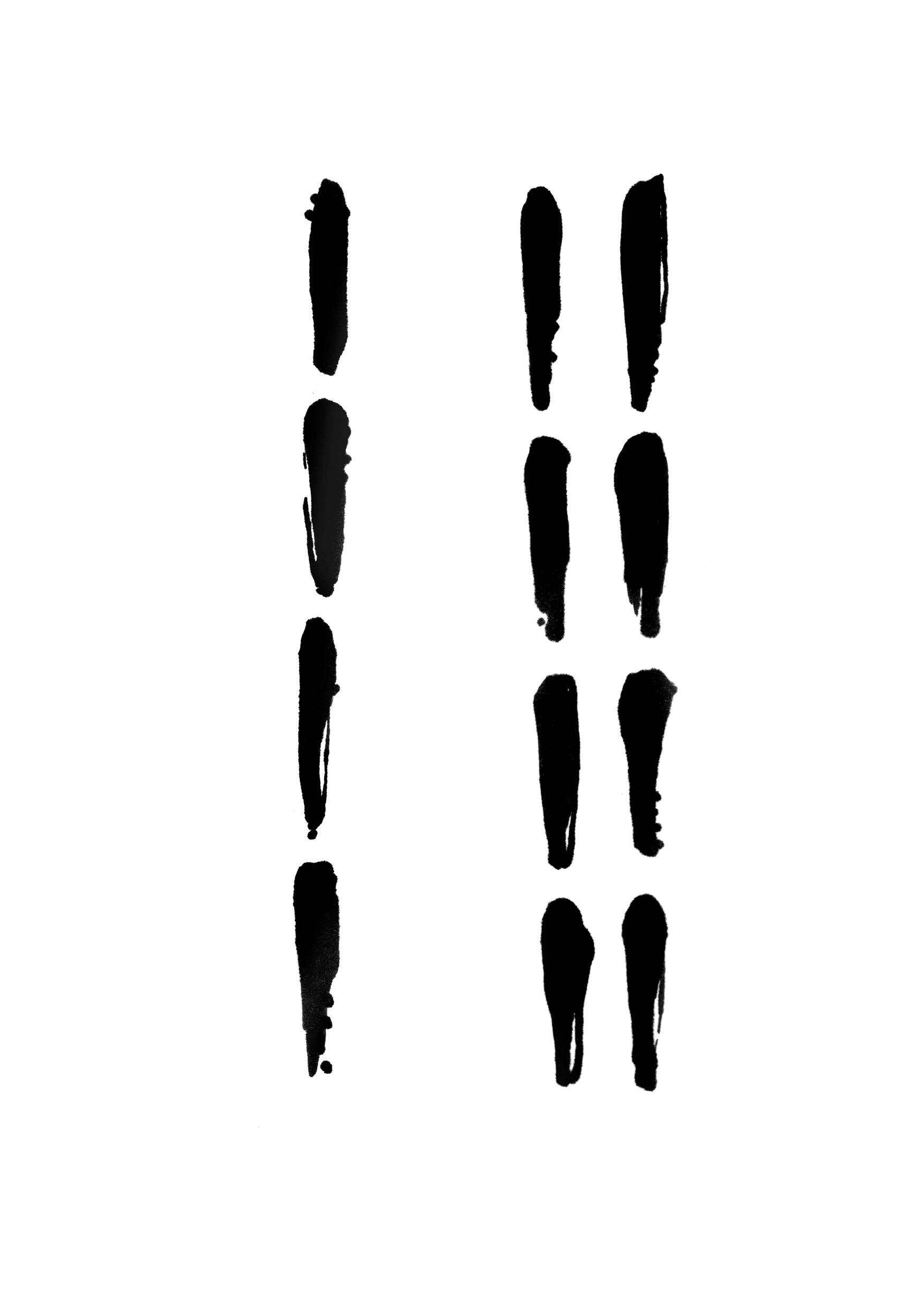
This Academy reads the right column first, then the left. Each row carries a single or double mark.
Where this Odù belongs
Òyèkú Ògbè belongs to the Òyèkú family in this Academy’s study sequence. It is a mixed Odù, distinct from Ògbè Òyèkú. The order matters. Its teaching is approached through its own narratives, rather than by adding two general descriptions of the principal signs together.
Key Òrìṣà and sacred relationships
The figures below are selected for their roles in the accounts discussed here. They offer connected reading paths through the tradition.
-
Baba Ẹ̀gún. An ancestral awó hears José’s distress, gathers money among other spirits, and meets him as promised, making assistance collective rather than a solitary miracle.
-
Èṣù. He observes the altered divination and communicates the actual result to Olofin before the practitioners arrive, exposing a breach in entrusted transmission.
-
Ọ̀rúnmìlà. His consultation is the institution whose message must be transmitted faithfully; the narrative scrutinizes practitioners’ conduct rather than treating professional status as sufficient integrity.
Author’s further study: The Myths and Revelations of Odù Òyèkú Ògbè develops this sign at book length. The inherited accounts discussed here retain their named witnesses and religious settings.
Key myths and their meanings
A meeting kept for the father
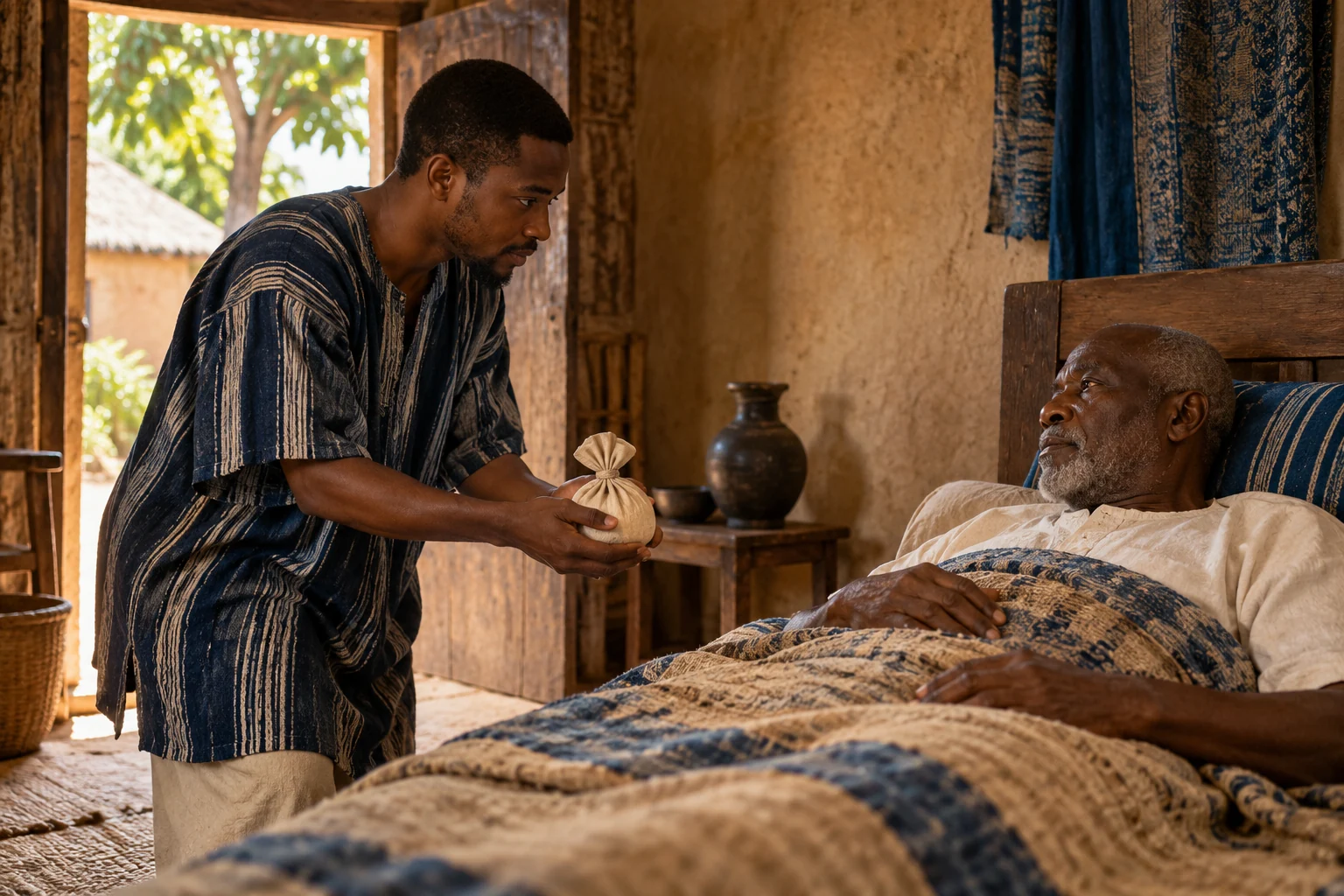
José is struggling while his father is seriously ill. During a walk he encounters an ancestral awó and agrees to meet again. Although others urge him to remain at home, he keeps his word. Meanwhile the helper has collected resources among the ancestors and gives him money. The story places paternal care within a network extending beyond the visible household.
The practical center is a commitment made amid competing obligations. Leaving briefly is represented as part of caring rather than abandonment, because José is pursuing promised help. The religious account includes a claimed remedy, which should not be repeated as treatment. Its useful social image is pooled assistance reaching a household whose resources have been exhausted.
Narrative setting: Cuban/Lukumí-labeled patakín in the multilingual source compilation; individual narrator and publication history are not established.
The sign that was changed
Olofin sends practitioners to obtain a divination and sends Eshu to observe. They decide that the result promises more honor than a ruler already needs and replace it. Eshu goes ahead, communicating the actual sign through whistling. When the practitioners arrive, their substitution is known; they must acknowledge the breach and seek pardon for having distorted an entrusted message.
The fault lies in allowing a private opinion about someone’s needs to override a duty of accurate reporting. Eshu’s intervention makes an otherwise invisible alteration answerable to the recipient. This supports inquiry into professional integrity and access to one’s own information. It does not require treating every intermediary as suspect or assuming that expertise eliminates the need for transparency.
Narrative setting: Cuban/Lukumí-labeled patakín in the multilingual source compilation; individual narrator and publication history are not established.
Quarreling strangers leave wealth in the mediator’s house
Orunmila and sixteen rulers are warned that fighting strangers will enter their houses. Only Orunmila completes the advised religious response. The strangers visit the rulers in turn, begin fighting, and are expelled. At Orunmila’s house he tries to calm them rather than dismissing them. Money, beads, and precious objects fall during the struggle, and he collects them as the disturbance continues. His house becomes full of valuables. The passage distinguishes rulers who possess wealth without peace from Orunmila’s resulting tranquility and connects royal counsel with the role of babalawos. It does not provide a separate judgment about who owned the strangers’ falling goods.
The account makes mediation and religious preparation matter, but it does not depict a simple altruistic intervention whose benefits are ethically transparent. Orunmila tries to pacify the strangers while also gathering what their conflict releases. The duration of the fight complicates the image of the entirely successful peacemaker: days of continuing disturbance produce accumulation before tranquility is proclaimed. Within the religious teaching, the contrast with the rulers establishes the importance of counsel and a response to Ifa that rank alone cannot replace.
Contemporary interpretation can ask whether helping a conflict and benefiting from it remain compatible, and what responsibility belongs to a mediator when the parties’ valuables are involved. The source does not identify the strangers as ordinary travelers or named divinities, so neither should be invented. Its most productive tension lies between the public office of maintaining peace and the private advantage a host can gain from a situation others have refused to accommodate.
Narrative witness and setting: Section explicitly headed revelations of Epega Afolabi; Portuguese rendering of African Ifa material.
The light bearer withdraws when intermediaries fail
A great Goat carries light through the world yet lacks wealth and children. It consults two diviners representing heaven and earth and follows their direction. The diviners have neglected their own obligations while accepting its offering, and Legba refuses the compromised exchange. Not knowing the reason its request fails, the Goat stays inside, withdrawing light. A ruler consults during the darkness, but restoring the diviners’ response does not immediately persuade the injured figure to emerge. The ruler’s mother visits and pleads. The Goat finally returns, then rises to heaven; the account gives its eyes and children the forms of sun, moon, and stars.
The failure belongs to intermediaries who accept responsibility while neglecting the relation required of themselves. The Goat has acted as directed and therefore cannot understand the refusal from the visible exchange alone. This gives the religious logic a precision lost in a generic command to comply: the offering’s efficacy depends on a sacred network whose integrity includes the specialists. Legba’s refusal enforces that network, yet it leaves the compliant petitioner bearing the immediate loss. The ensuing withdrawal makes the world dependent on a contributor whose ordinary importance people had not fully understood.
The ruler’s mother succeeds through direct contact after institutional correction proves insufficient by itself. A contemporary interpretation can ask what acknowledgment is owed to someone harmed through a failed process, while retaining the solar transformation as the account’s actual religious cosmology. The story should not become a claim that every unsuccessful rite proves corrupt mediation, nor a universal equation of a Goat with celestial bodies across traditions.
Narrative witness and setting: Fon Fá narrative under an explicit Bernard Maupoil heading; Portuguese rendering does not make it Brazilian.
What was born in this Odù
“Born” can name an explicit traditional origin association or what emerges through a story: a capacity, relationship, practice or order of life. Interpretations drawn from a narrative are labelled below, so their basis remains clear.
The ancestral staff
Selected traditional source association.
The origin list associates the pagugu, an ancestral staff, with the sign. It is a local funerary and ancestral motif, not evidence that one historical object or one identical practice belongs to all African and diasporic traditions.
Night
Selected traditional source association.
Night is separately named in the source’s origin inventory. It can be retained as a cosmological association, without inventing an etymology or inferring that the sign’s practitioners have a particular personality or a special relation to literal darkness.
Correlations to life dimensions
These questions bring the selected stories into contemporary life. They are interpretive invitations for study.
Work and resources
The ancestral helper gathers money from others before meeting José. Resources appear through coordination and trust, rather than through private wealth alone. The scene can invite reflection on how a community mobilizes aid while preserving the recipient’s dignity.
Reflect: Who can help coordinate assistance?
Relationships and family
José’s promise and his father’s needs initially seem to compete. The narrative connects them through the purpose of the meeting. Care therefore requires judging the meaning of an action in context, rather than equating physical presence with the whole of responsibility.
Reflect: What action supports care beyond remaining present?
Character and inner life
The practitioners justify changing the sign because they think Olofin already has enough honor. Their reasoning may feel sensible to them, yet it violates the task entrusted to them. The story isolates the danger of unannounced substitution.
Reflect: Have you changed a message because you preferred another outcome?
Community and responsibility
Eshu’s observation creates accountability between specialists and the person they serve. The story gives a concrete role to an independent witness. We can examine what kinds of verification let expertise remain useful without becoming an unchecked control over information.
Reflect: What independent check protects faithful transmission?
A deeper reading of the sacred relationships
The intermediary is answerable within the sacred exchange
The Fon account makes the diviners’ neglected obligations consequential to a petitioner who has followed their counsel. Legba does not treat receipt of an offering as sufficient by itself. The earlier altered-sign story likewise places an ethical failure inside the professional transmission of Ifa, while Eshu communicates the suppressed result. These are distinct religious mechanisms, but both resist locating every failure in the person seeking help. The mediator-strangers unit adds a positive account of counsel whose benefits are not reducible to rank. A depth treatment can preserve divinatory efficacy and specialist responsibility together, explaining why religious authority is a relation maintained through truth and obligation rather than a title exempt from scrutiny.
Correction of a process does not immediately repair injury
Heaven and earth eventually fulfill their obligations, but the Goat remains withdrawn until the ruler’s mother visits. The changed institutional fact therefore does not exhaust what the injured contributor needs. José’s ancestral helper offers a different scene of assistance: resources are gathered and a promised meeting is kept before the household receives relief. In each case, direct acknowledgment matters alongside a religious or collective process. The comparison should not be simplified into personal kindness replacing divination, because consultation remains active in both accounts. It asks what additional relationship is required for a corrected procedure to become a credible invitation to participate again.
Benefiting from conflict requires a separate ethical question
Orunmila’s house gains valuables from the fighting strangers, whereas Eshu’s observation in the older transmission story exposes an unauthorized alteration without claiming the message as his private property. The Goat’s luminous service creates a third relation: everyone benefits before acknowledging its needs. These differences distinguish a mediator’s gain, a witness’s duty, and a community’s dependence. A depth study can ask who owns what a conflict or service releases, rather than treating every beneficial outcome as automatically legitimate. The religious accounts give positive roles to counsel and sacred exchange, but they need not close inquiry into the worldly terms on which the resulting resources and recognition are distributed.
Questions that deepen the study
Does the Goat’s disappointment mean it failed to do what was required?
The narrative explicitly assigns the problem to heaven and earth, whose diviners accept its response while neglecting their own. That is why the Goat’s refusal to leave its illuminated house is more than impatience. It does not know the hidden reason for the failure. Within the Fon religious account, Legba’s intervention protects an order of obligation, but a vulnerable petitioner experiences its disruption. Contemporary interpretation can ask how responsibility is explained when a process fails despite a person’s compliance. It should not generalize the episode into a diagnosis of every failed ritual or assume a particular specialist is corrupt without evidence.
Is Orunmila’s mediation entirely disinterested in the strangers episode?
The passage says he tries to pacify them and also gathers the money and valuables falling during their continuing fight. Both actions need to remain visible. Its religious conclusion honors his response to Ifa and contrasts peace with the rulers’ anxiety, but it does not supply a property settlement for the strangers’ goods. A contemporary reader can ask what obligations accompany benefiting from an intervention. That question does not cancel the source’s esteem for counsel; it distinguishes the purpose of mediation from the private advantage it may produce. The account is more informative when that unresolved tension is preserved rather than hidden beneath a simple generosity label.
What connects these additions to José and the changed divination?
All four concern a relation carried through intermediaries: ancestral contributors gather aid, practitioners transmit or alter a sign, diviners maintain or neglect sacred obligations, and a host receives a conflict others expel. The similarities do not make the intermediaries equivalent. Some fulfill a promise, some betray a message, some fail their own religious duty, and one benefits while trying to pacify strangers. The comparison therefore deepens responsibility without turning it into generalized distrust. A contemporary interpretation can ask what was entrusted, how its performance can be known, and what the people affected still need after the immediate transaction or crisis appears complete.
What the four narratives reveal together
The earlier Cuban stories concern kept promises and faithful transmission; the African-attributed additions ask how the whole network behind an exchange remains answerable. Epega’s strangers make counsel produce both peace and private accumulation, while Maupoil’s Fon light bearer shows a compliant petitioner suffering through intermediaries’ neglected obligations. Together the four distinguish assistance, information, sacred duty, and mediation rather than assuming all are versions of one benign helper. Their spiritual worlds remain active: ancestors pool resources, Eshu communicates what was concealed, Ifa differentiates the host’s response, and Legba enforces a relation linking heaven and earth.
Contemporary analysis can ask what each process entrusts to its participants and how injury is acknowledged when it fails. That preserves theological substance while leaving the ownership of the strangers’ valuables and the delayed repair of the Goat’s withdrawal as real narrative questions, not problems to be erased for a reassuring conclusion.
Living with this Odù
A continuing life or initiatory relationship
For someone whose received life or initiatory Odù is Òyèkú Ògbè, responsibility may repeatedly pass through intermediaries whose own judgments affect what reaches another person. The altered sign makes accurate transmission a duty that private opinions about a ruler’s needs cannot cancel. José’s kept meeting makes another distinction: leaving an exhausted household briefly can serve care when it maintains a real route to promised help. A life cannot always be judged from the visible location of the person acting.
The fighting strangers and luminous Goat complicate the position of helper. A host may attempt mediation while collecting benefits whose ownership remains unresolved. Specialists can accept a petitioner’s response while neglecting their own religious obligations, leaving the compliant person to bear the failure. Long development can therefore concern the integrity of a whole chain rather than mere personal compliance.
The religious relations remain particular, including ancestral pooled assistance, Eshu’s disclosure, Ifa preparation, and Legba’s refusal of a compromised Fon exchange. A received sign does not make every intermediary corrupt or every unsuccessful process evidence of sabotage. Across changing circumstances, it can ask whether care reaches its intended person intact, what acknowledgment follows a failure, and whether private advantage has altered the responsibility one accepted.
A particular consultation and its question
In consultation, Òyèkú Ògbè can distinguish a person’s failure to respond from an intermediary’s failure to carry an entrusted responsibility. The changed sign is deliberately altered because specialists believe they know how much honor its recipient deserves. The luminous Goat follows the direction given, yet the process fails through obligations the diviners have neglected. A practitioner can examine where responsibility lies without asking a visitor to infer corruption whenever an outcome disappoints.
José’s meeting raises a different question about competing duties under scarcity. Is an absence abandonment, or part of obtaining help for the household? The fighting strangers ask whether mediation and personal gain have become entangled. A useful inquiry concerns ownership, disclosure, and the beneficiaries of a continuing conflict rather than a presumption that every peacemaker is disinterested.
The source’s religious agency should remain intact: ancestral help is not merely informal networking, and Legba’s refusal is not an ordinary administrative error. Their contemporary relevance lies in distinctions they make available. The actual divinatory result belongs to its question and guidance. It does not identify a hidden ancestral helper, promise money, or make one consultation a permanent identity as a betrayed client or uniquely honest messenger.
Constructive and adverse possibilities
Constructively, a kept commitment can allow pooled help to reach an exhausted household, and an entrusted message can arrive accurately despite another person’s attempt to substitute it. Institutional correction can also be followed by direct acknowledgment of the person harmed, as the ruler’s mother approaches the withdrawn light bearer. Religious efficacy and human responsibility work through a network rather than isolated intention.
Adversely, private judgment can distort another person’s access to their own information, specialists can neglect obligations while accepting a petitioner’s response, and mediation can become profitable without settling ownership or conflict. The Goat’s withdrawal makes the wider world feel a loss its failed process first imposed on one contributor. These possibilities do not establish a reading’s condition in advance. Iré and adverse circumstances remain specific. Interpretation asks whether the chain carrying care and knowledge is intact and whether repair includes the injured person rather than only the institution’s restored procedure.
An illustrative situation in everyday life
Hypothetically, a community advocate carries an application result to an older resident. She privately thinks the resident already receives enough recognition and is tempted to report only part of the favorable decision. The altered-sign motif makes her reporting duty distinct from her opinion about deservingness. In another case, residents have supplied all requested information, but an organization’s own omitted step prevents assistance from arriving. The luminous Goat motif asks where the failure belongs and what acknowledgment the residents need. The advocate can transmit the actual result and explain the institutional omission rather than imply that the applicants failed. This imagined situation concerns truthful mediation and repair; it does not assign spiritual causes to an unsuccessful application or equate a modern office with Fon ritual specialists.
Sources and reading context
The first two narrative witnesses
The selected Cuban/Lukumí episodes differ from African association lists elsewhere in the compilation. Ancestral assistance is described contextually, and the father’s claimed cure is not transmitted. The source’s colloquial terms and ritual instructions do not establish universal professional or funerary rules.
Narrative motifs are summarized independently. The life-dimension reflections are contemporary interpretation. How these reference studies are built explains the wider source approach and the distinction between a reference article and personal divination.
Additional named witnesses
-
Epega Afolabi. An explicit section heading precedes the sixteen rulers and fighting strangers.
-
Bernard Maupoil; Fon Fá tradition. The luminous Goat narrative explicitly names bokonos, Legba, Metolonfin, and heaven/earth obligations under the Maupoil heading.
The first unit’s mediator benefits from unresolved property transfer, which the source does not adjudicate. The Fon cosmology is retained locally rather than universalized. Translated celestial and bodily names are not used as verified etymologies; no exact edition/pages or Brazilian lineage is inferred.
Bibliographic identification
-
Afolabi A. Epega and Philip John Neimark. The Sacred Ifa Oracle. San Francisco: HarperSanFrancisco, 1995. Library catalogue record. First-edition bibliographic record. The particular edition underlying the narrative witness has not been established.
-
Bernard Maupoil. La Géomancie à l’ancienne Côte des Esclaves. Paris: Institut d’ethnologie, 1943. Library catalogue record. Historical bibliographic context for the Fon Fá witness; Fon and Yorùbá traditions retain their distinct settings.
Read the source method and wider scholarly context.
The catalogue links identify published works and their authors. They are separate from proof of an individual episode’s wording or attribution. Contemporary comparisons and the synthesis above are editorial interpretation. The author’s books and Academy companions below provide further study; their sales links are separate from the source references.