
Ìwòrì Ìròsùn is a mixed Odù in Ifá’s 256-part corpus. A merchant dismisses the sister whose speech trained the parrot that now attracts his customers; elsewhere a seeker calling ancestors discovers that Eshu is answering and must lead him to Aganju. The selected material turns attention toward the source of an apparent voice and the labor hidden behind a successful imitation. It also asks how new help can be recognized without erasing earlier contributors.
A question to carry through the study: Who created the conditions for the apparently effortless success now receiving all the credit?
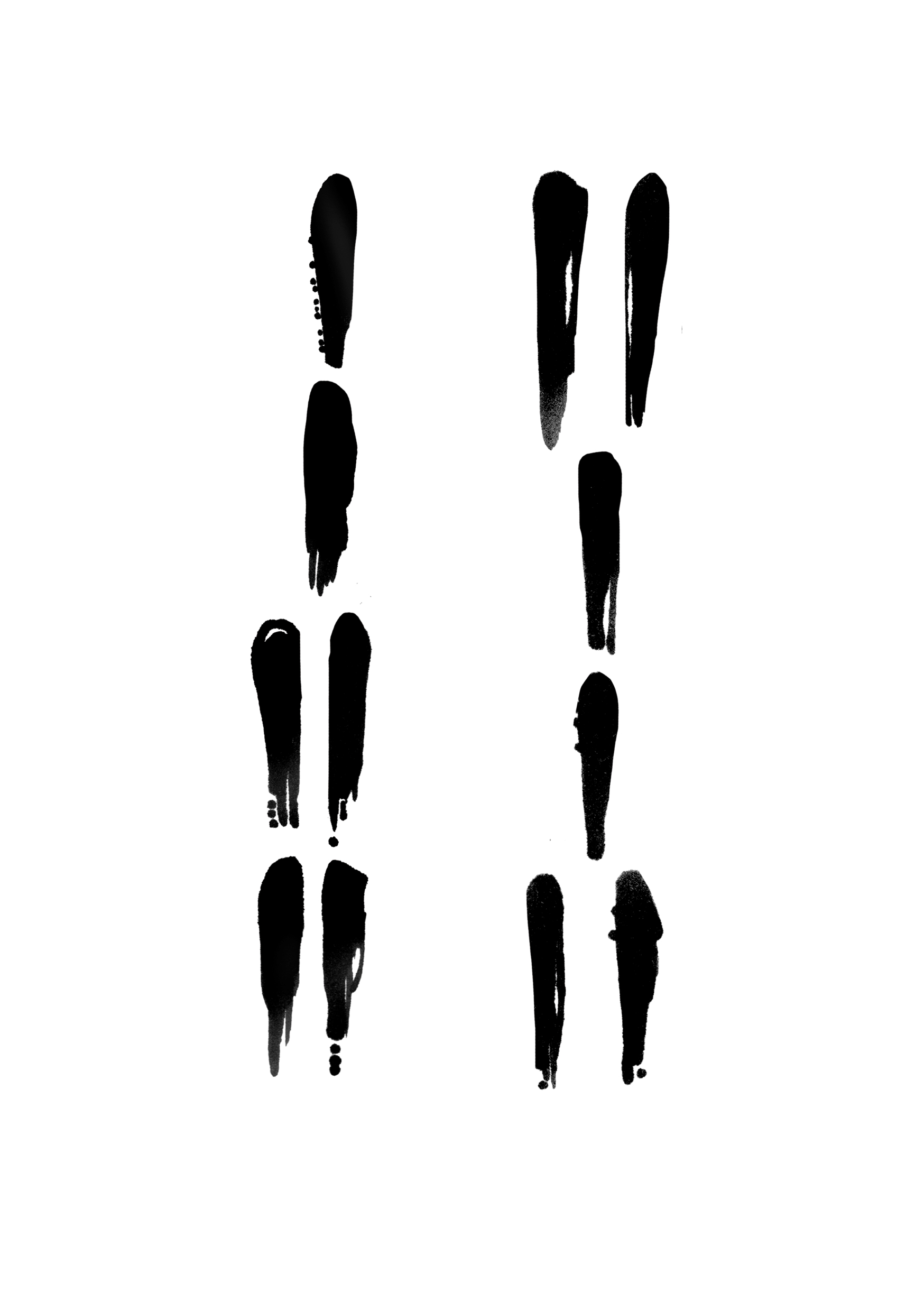
This Academy reads the right column first, then the left. Each row carries a single or double mark.
Where this Odù belongs
Ìwòrì Ìròsùn belongs to the Ìwòrì family in this Academy’s study sequence. It is a mixed Odù, distinct from Ìròsùn Ìwòrì. The order matters. Its teaching is approached through its own narratives, rather than by adding two general descriptions of the principal signs together.
Key Òrìṣà and sacred relationships
The figures below are selected for their roles in the accounts discussed here. They offer connected reading paths through the tradition.
-
Èṣù. He is the actual respondent when Omo Oribale calls to the ancestors and directs the seeker toward Aganju rather than claiming to supply every form of help himself.
-
Aganjú. He appears as the powerful dancer by the river, climbs the palm, and returns with material for the seeker’s Osanyin-associated preparation.
-
Òsanyìn. He is associated with the preparation made from what Aganju provides; the narrative links plant knowledge to a sequence of assistance rather than a solitary revelation.
Key myths and their meanings
The parrot repeats the sister’s work
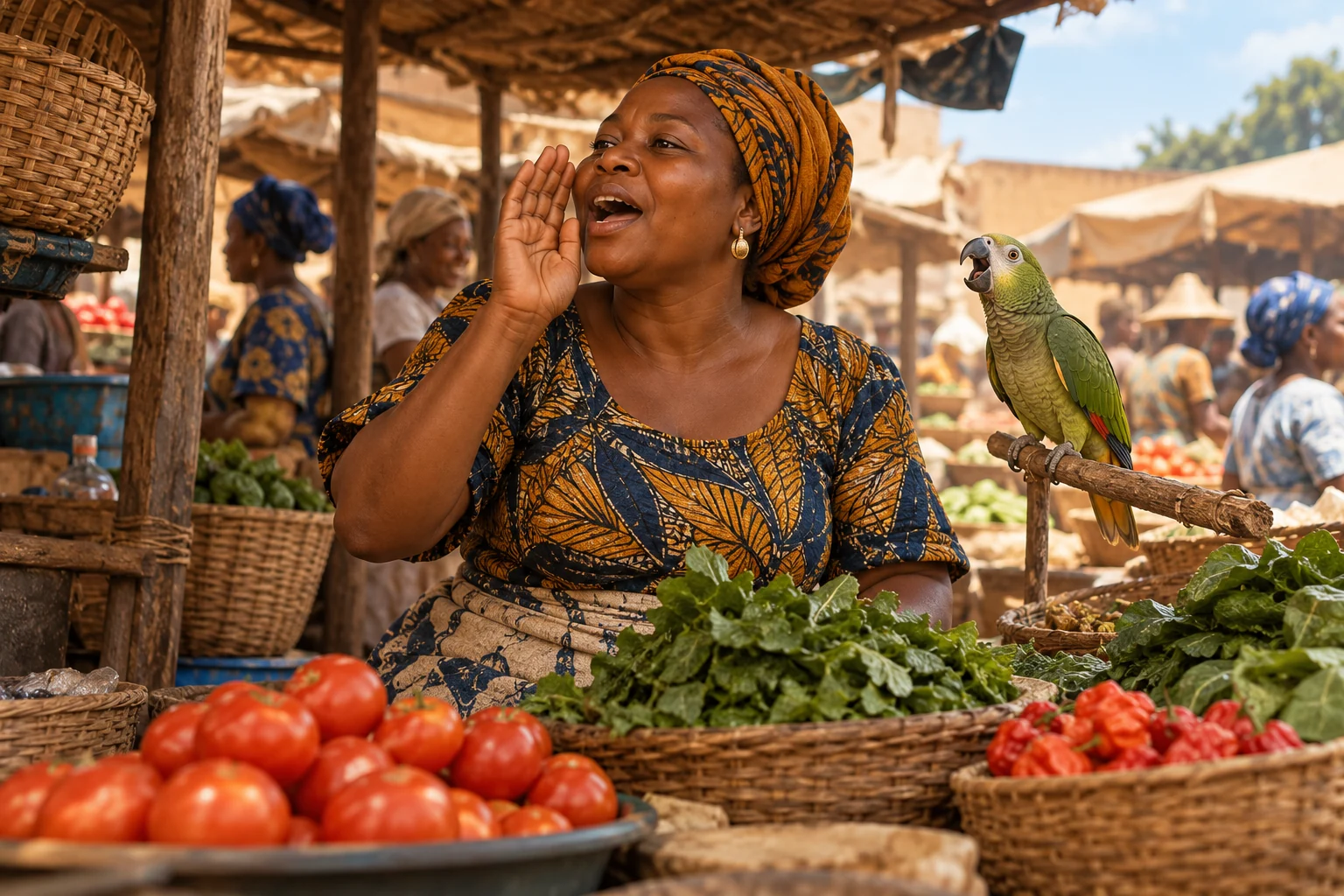
A merchant employs his sister to attract customers through spoken promotion. A small parrot accompanies her and eventually repeats her words, drawing attention through its novelty. The merchant dismisses her. Returning in anger, she kills the bird, and the business declines. The outcome destroys both the imitating attraction and the relationship with the worker who created its speech.
The narrative gives a particularly concrete account of displaced labor: the new performer has learned from someone whose contribution is then made invisible. The sister’s retaliatory act harms the enterprise and does not repair that injustice. We can hold both responsibilities together, asking how novelty is credited and how a worker’s grievance can be addressed before a destructive response.
Narrative setting: Cuban/Lukumí-labeled patakín in the multilingual compilation; individual narrator and publication history remain unverified.
The voice was not the one expected
Omo Oribale repeatedly calls for ancestral communication, but Eshu is the figure responding. Eshu says that help requires a journey to Aganju. At the river, the seeker encounters a large dancing man whom Eshu identifies. Aganju climbs a palm and returns with leaves for an Osanyin-associated preparation. The anticipated direct answer becomes a sequence of introductions and material assistance.
The seeker’s first interpretation of the voice is corrected rather than simply confirmed. The episode makes discernment depend on identifying who is actually participating and what each can offer. Aganju remains a distinct figure; his role should not be folded into Shango. The source’s later prescriptions about a person’s mediumship are not warranted as general claims about contemporary readers.
Narrative setting: Cuban/Lukumí-labeled patakín in the multilingual compilation; individual narrator and publication history remain unverified.
Apada’s refusal to return leaves the ground without nourishment
Apada, a fresh green leaf, declares that it will no longer descend to the ground. The narration explains that fallen foliage ordinarily nourishes the soil, so the refusal affects more than the leaf’s own location. The ground seeks consultation from Iwori Irosun and completes the response that is requested. Eshu then calls upon the cold, dry harmattan. The season dries the leaves, which fall despite their announced separation from the ground. The account closes by connecting the motif to a return compelled through sacred intervention. It supplies no separate reconciliation or agreement spoken by Apada after the fall.
The scene links nourishment to a movement that the leaf wishes to stop. What looks from the branch like independence appears from the ground as the interruption of a sustaining relation. The religious response does not persuade Apada through argument: Eshu brings a seasonal power that changes the leaf’s actual condition. That causality should remain explicit, rather than turning the harmattan into a mere metaphor for the passage of time. At the same time, the compiler’s personal application about forcing relatives to return should not become a recommendation to control another person.
A contemporary interpretation can examine the dependencies hidden inside claims of complete self sufficiency while leaving consent and coercion open to ethical scrutiny. The episode explains a return, but it does not establish that every return is healing. Its strongest supported relation is between the soil’s nourishment, a refusal of descent, consultation, and the power that makes the leaf’s original intention impossible to maintain.
Narrative witness and setting: Cromwell Osamaro’s explicitly headed narrative of the green leaf and the ground.
Two half brothers meet the ancestral power on the road
Two half brothers receive counsel to acknowledge the power of their ancestral place and to obtain the needed resources together. The elder declines to contribute but travels ahead. The divinity has taken the form of a large snake along the route. The elder steps on it and dies from the encounter. The younger travels at night with the resources, watching the ground despite the moonlight. He sees the snake, obtains a stick, kills it, and carries it home. There he learns of his brother’s death. The following day the family continues to the community shrine for the intended acknowledgment.
The ancestral divinity appears before the travelers reach its formal shrine, so the road is already part of the religious encounter. The elder’s priority of arrival does not compensate for his refusal to share responsibility. The younger combines material participation with attention to the path, while the moon’s beauty does not distract him from what lies below. The ending is theologically difficult: he kills the snake identified with the divinity, yet the family still proceeds to serve the sacred power.
The excerpt does not explain that relation fully, and an analyst should not invent a doctrine to make it effortless. Contemporary reflection may discuss the gap between claiming an inheritance and contributing to its obligations, but this should not turn into a command to attack snakes or a judgment on actual siblings. The narrative binds sacred responsibility, practical attention, and unequal participation together while leaving some aspects of divine embodiment unresolved within the surviving witness.
Narrative witness and setting: Cromwell Osamaro’s explicitly headed account of two half brothers returning to their ancestral home.
What was born in this Odù
“Born” can name an explicit traditional origin association or what emerges through a story: a capacity, relationship, practice or order of life. Interpretations drawn from a narrative are labelled below, so their basis remains clear.
Hypocrisy
Selected traditional source association.
The explicit origin list associates hypocrisy with this sign. It can support investigation of a mismatch between professed regard and actual treatment, such as the merchant’s dismissal, but that connection is interpretive analysis and not an accusation against anyone receiving the sign.
Respect at the mat’s boundary
Selected traditional source association.
A Portuguese source note attributes a prohibition on stepping onto the mat with shoes to this sign. Discuss it as a local ritual-space association, without imposing it as a personal taboo or claiming uniformity across lineages.
Correlations to life dimensions
These questions bring the selected stories into contemporary life. They are interpretive invitations for study.
Work and resources
The parrot’s performance depends on speech repeated from the sister’s daily labor. The merchant rewards the novel surface while dismissing its source. The episode supports examining attribution and compensation when an enterprise substitutes imitation for the worker who taught it.
Reflect: Who should share credit when imitation creates value?
Relationships and family
Employment and kinship overlap in the merchant’s household, making dismissal both economic and relational. The story’s revenge does not resolve either dimension. The story invites us to ask what fair process would let a grievance be heard without relying on family status alone.
Reflect: How can a relative’s workplace grievance be heard fairly?
Character and inner life
Omo Oribale must revise the identity of the respondent to his repeated calls. The story permits uncertainty about the source of an experience. Its useful question concerns how interpretation is tested before being treated as settled, without diagnosing an actual person’s perceptions.
Reflect: What would make an interpretation more carefully grounded?
Community and responsibility
Eshu leads the seeker to a different helper instead of absorbing the whole role. The chain preserves distinct capacities and relationships. This contrasts with the merchant’s erasure of a contributor and invites inquiry into how communities name the people behind successful assistance.
Reflect: Can help include an introduction to someone better placed?
A deeper reading of the sacred relationships
Ancestral acknowledgment begins before arrival at the shrine
The half brothers’ encounter places the divinity on the road rather than safely confined to a ritual destination. The requested journey therefore has a sacred dimension throughout, and participation includes obtaining resources together and moving attentively. Apada’s scene similarly makes the ground an active seeker who turns to divination when a sustaining relation breaks. The earlier Omo Oribale account adds another distinction: calling for one power does not mean that the power actually responding is the same. A depth treatment should preserve these specific agents and relations. It should not replace them with a vague claim that every landscape feature simply represents an unconscious feeling or an abstract family memory.
Seniority and contribution are separate claims
The elder brother departs first but refuses the shared purchase, while the younger bears the material responsibility and notices the road’s danger. Seniority remains part of their relationship without becoming sufficient evidence of fulfilled duty. The earlier merchant and parrot motif also distinguishes possession of a place in a household or business from the contribution that sustains it. Apada’s attempted separation makes a similar distinction at another scale: the leaf’s position above the soil does not make the soil dispensable. Contemporary interpretation can ask whether an inherited role is accompanied by actual care for its supporting relations. The sources do not provide a universal rule that younger relatives are better or elders inherently unreliable.
A compelled return does not necessarily complete repair
Eshu’s harmattan brings the leaf down, but the account gives Apada no speech of recognition or renewed agreement. The half brothers’ return is also permanently altered by the elder’s death, even though the shrine visit goes ahead. These endings differ from a restored harmony in which every participant returns unharmed and understands the relation anew. The earlier merchant’s decline after the parrot’s removal adds another irreversible consequence. A contemporary lens can distinguish the physical resumption of contact from a repaired relationship. That distinction does not deny sacred efficacy in the leaf story; it clarifies what the efficacy actually accomplishes and prevents a researcher from adding a consoling reconciliation that no witness narrates.
Questions that deepen the study
Is Apada simply being punished for wanting independence?
The story describes a refusal that interrupts the ground’s nourishment, so its internal concern is a sustaining relation rather than independence in the abstract. Eshu’s intervention then makes the declared separation impossible. A contemporary reading can consider dependence and reciprocity without endorsing the compiler’s extension into forcing relatives to return. The text does not record Apada’s later understanding or consent, which remains a meaningful limit. Nor should the seasonal fall be treated as scientific proof of a moral law. It is a sacred personification through which the witness explains how an attempted refusal encounters powers beyond the leaf’s own intention.
Why does the younger brother’s attention to the ground matter?
The names and narrative contrast looking toward the moon with noticing the snake below. The younger does not rely only on possessing the requested materials; he also watches the path while carrying them. That combination makes his action different from the elder’s earlier departure without contribution. The sacred power is encountered in an ordinary route, so practical attention and religious responsibility are not opposed. The story does not establish that moonlight is spiritually harmful or that people should imitate the killing. Its supported contrast concerns the actual conditions of this journey and the responsibilities each traveler accepts before entering it.
How do these additions deepen the parrot and ancestral call stories?
The parrot’s removed contribution becomes clear through the merchant’s decline, while Omo Oribale’s invocation reaches an unexpected responder. The new accounts extend both concerns: Apada overlooks the ground’s dependence on falling leaves, and the brothers discover that an ancestral relation acts before they reach the shrine. Together they ask what a person knows about the relations supporting a desired outcome. That is more precise than a general warning against speech or disobedience. The witnesses also preserve unequal and severe endings, so comparison should not promise that acknowledging a dependency always restores every participant or reverses the consequences of earlier conduct.
What the four narratives reveal together
The four motifs make sustaining relations visible through their disruption or unexpected form. The merchant discovers the value of a removed voice, and Omo Oribale’s call receives a response that complicates the intended sacred address. Apada’s refusal exposes the ground’s dependence on returning foliage, while the half brothers meet the ancestral divinity along the route to its shrine. These are religiously active worlds: Eshu, seasonal power, and the ancestral place are participants rather than decorative symbols. Contemporary inquiry can consider contribution, attention, and reciprocity, but the outcomes resist an effortless lesson about reunion. One return is compelled, one brother dies, and the business does not simply recover. Keeping those limits visible gives the sign a more exact account of responsibility than treating every conflict as a temporary misunderstanding resolved by good intentions.
Living with this Odù
A continuing life or initiatory relationship
For someone whose received life or initiatory Odù is Ìwòrì Ìròsùn, the apparent source of a successful voice may require patient examination. The parrot repeats speech learned from a worker whose contribution the merchant then removes. The seeker expecting ancestors discovers Eshu’s response and a route through Aganju and Osanyin-associated assistance. Long development can involve distinguishing recognition of a new contributor from erasure of the relations that made the contribution possible.
Apada’s refusal and the half brothers’ journey add a harder account of dependence and inherited obligation. The leaf’s desired separation leaves the ground without nourishment, yet compelled return is not thereby consensual repair. The brothers’ different participation makes inheritance active before arrival at the shrine, while the snake’s divine identity and later killing remain an unresolved theological tension.
A received sign does not validate forced family return or diagnose mediumship. Aganju, Eshu, Osanyin, and the ancestral power retain distinct roles. Across changing circumstances, the person can ask whose labor is being imitated, which presence actually responds, and what a claimed independence leaves unsupported. Ethical reflection also needs to ask what freedom remains in a restored relation, rather than treating every return or recovered contribution as automatically healing.
A particular consultation and its question
In consultation, Ìwòrì Ìròsùn can distinguish novelty from the labor it reproduces. The merchant’s attraction appears effortless only after his sister has supplied the words. A practitioner can examine credit and replacement without making retaliation a justified solution to displacement. The seeker’s misidentified voice asks a different question: who is actually participating, and what relation must be followed rather than assumed? The account does not support substituting a familiar deity for the figure explicitly named.
The leaf and ground ask what sustaining exchange is hidden in a claim of complete independence. Yet the sacred intervention compels descent, so the outcome cannot supply a general permission to control another person’s return. The half brothers add the difference between claiming an ancestral place and contributing to its acknowledgment. Their road encounter begins before the formal destination.
The actual result determines which distinction addresses the question. It does not establish that a visitor hears a particular spirit, must return to relatives, or should act against a snake. Consultation can clarify attribution, discernment, dependency, and shared obligation while leaving the surviving theological tension unresolved. Its particular religious account is not a permanent personality description of an ungrateful worker or a self-sufficient family member.
Constructive and adverse possibilities
Constructively, an apparent success can be traced to its contributing labor, and an anticipated direct answer can become a more exact sequence of distinct religious relationships. Shared inheritance can include actual participation rather than merely earlier arrival or seniority. The narratives make voices, nourishment, resources, and attention consequential to belonging.
Adversely, novelty can conceal a displaced worker, a grievance can become destruction that repairs neither livelihood nor relationship, and independence can be claimed while a sustaining recipient is left unsupported. Compelled return also raises a question of consent that its narrated effectiveness does not settle. The half brothers’ divine-snake ending should remain difficult rather than become a universal doctrine or prognosis. Iré and adverse conditions belong to the actual reading. Interpretation asks what has been made invisible by the visible result and whether restored exchange acknowledges both contribution and freedom.
An illustrative situation in everyday life
Hypothetically, a shop replaces a worker with recorded announcements modeled on the phrases she developed. The new attraction receives praise, while the owner says her labor is no longer needed. The parrot motif makes the hidden history of the apparently effortless voice visible. Angry, she considers damaging the equipment, though that would not secure credit or fair compensation. The story permits those responsibilities to remain distinct. A negotiated response can address attribution, payment, and continuing work without requiring either erasure of her contribution or destruction of the business. This hypothetical example interprets displaced labor and harmful retaliation; it does not equate a recording with a living sacred participant or claim that new technology is inherently a betrayal.
Sources and reading context
The first two narrative witnesses
Two Cuban narratives are selected; the nearby punitive spirit and illness accounts are excluded. Aganju, Eshu, and Osanyin remain distinct. The mat association comes from a separate Portuguese rendering and is described as local ritual context, without prescribing conduct to readers.
Narrative motifs are summarized independently. The life-dimension reflections are contemporary interpretation. How these reference studies are built explains the wider source approach and the distinction between a reference article and personal divination.
Additional named witnesses
- Cromwell Osamaro. The explicit section heading governs Apada and the ground, and the later narrative of the two half brothers.
The snake is identified as the divinity’s form, but the excerpt does not fully explain the later killing and continued shrine service. No doctrine resolving that tension is invented. Compelled-return applications and personal ritual prescriptions are not reproduced as guidance.
Bibliographic identification
- C. Osamaro Ibie. Ifism: The Complete Work of Orunmila. Lagos; multivolume publication beginning 1986. Library catalogue record. Related bibliographic record for the named narrative witness. Exact volume, edition and page of the transmitted account have not been independently matched.
Read the source method and wider scholarly context.
The catalogue links identify published works and their authors. They are separate from proof of an individual episode’s wording or attribution. Contemporary comparisons and the synthesis above are editorial interpretation. The author’s books and Academy companions below provide further study; their sales links are separate from the source references.